



Maya el Hajj's «Burkini
Le Regard Libre N° 31 - Rebeca Negash
A Muslim painter torn between her choice to be veiled and her need to be a woman in order to feel she exists. This is the heart of journalist Maya el Hajj's first novel. Review.
Is a veiled woman condemned?
«And if I had to use a word to represent the life I lead, I couldn't think of a better one than Burkini, a term coined by an Australian Muslim woman that combines two words: Burqa and Bikini, to designate a swimsuit she has created for herself and for any woman whose veil prevents her from accompanying her friends and family to the beach.
So many times I've seen the Burkini on veiled friends who live in countries without women-only swimming pools. But I could never imagine myself in such an outfit. Either bikinis in women-only pools, or no swimming at all. Because what I love about swimming is immersing myself in the water and letting the drops sparkle on my body. I really live between two worlds, between my chaste clothes and my liberated ideas, between a veil that covers me and naked bodies that fascinate me, between the burqa and the bikini.»
These are the words of a Muslim painter. A few years ago, she chose to wear the veil. Her family, friends and acquaintances were shocked. How could a young woman from a religious but non-practicing culture, who insisted on her freedom as a woman and as an artist, decide to step aside? Wearing a veil didn't just mean wearing a headscarf.
This gesture, this ritual, had an entirely different magnitude. A magnitude that the woman in question would realize only too late. Indeed, following a rendezvous with her beloved, she found herself confronted with her first great love. What a surprise to find herself face to face with a resplendent woman, her head uncovered and her hair dancing in the wind! This episode raised a multitude of questions for the young artist. Why had her man chosen her and not someone else? If she removed her veil, would he appreciate her more? Was he playing a double game? Was she still a woman, even when veiled? Why had she chosen to wear that scarf?
First solo step
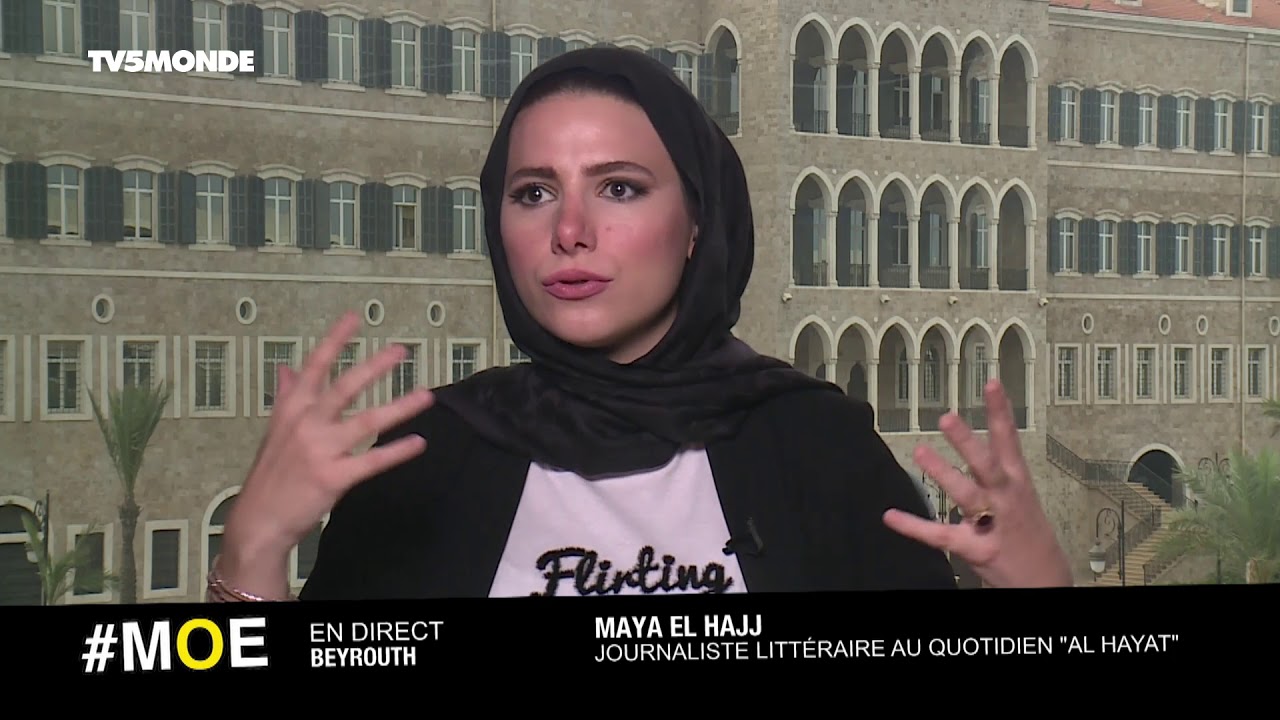
With her first novel, Maya el Hajj, literary journalist for the pan-Arab daily Al Hayat, questions the concept of woman in an oriental society. Far from condemning or, on the contrary, inciting the wearing of the veil, she raises questions often overlooked by those who think they know the subject. As she so aptly puts it, «does a woman's beauty boil down to loose hair and highlighted curves?»
In this book, the approach is different. The characters have no names and the cities are unknown. The context in which the protagonist lives suggests that she lives in a free and open society, which nevertheless maintains close links with the Islamic faith. Thanks to this deliberate vagueness, you don't have to be a woman, a Muslim, a practitioner of any religion or even have any knowledge of the Arab world. Such vagueness opens these doors to everyone. What's more, the central theme is not so much the wearing of the veil, as one might think at first glance, but rather the role and place of women.
A subject for everyone
Browsing through these pages, the reader will no doubt have the impression of being part of the main character, of being in his or her thoughts. While the fact that the novel is written in the first person singular plays a role, it should not be forgotten that it is divided into seven chapters, each representing a key place or period in the main character's life.
The novel dares to ask the real questions surrounding the wearing of the veil. Sometimes, however, the reader is distracted from the book's central subject. By dint of pointing out the uneasiness of a woman torn between her choice to wear the veil and her desire to be free, between her role as a woman and her role as an artist, the atmosphere in the book becomes almost heavy. The reader easily understands that the main character is at an impasse. He is confronted with many questions about the choices he has made and those he still has to make. However, the young painter's thoughts are so repetitive that they become tedious.
However, these areas of slackness are offset by an unexpected ending, both for the reader and for the main character herself. Despite these few redundant passages, the desire to know the future of this woman and the consequences of her actions is much greater. So it's with a keen eye that we follow Maya el Hajj, who has certainly found an interesting way of examining delicate subjects, and making them accessible to all!
Write to the author: negash.rebeca@hotmail.com
Photo credit: © YouTube / TV5 Monde

Vous aimerez aussi



 French
  German
  English
Laisser un commentaire