




«La fin de la tristesse», writing so as not to fade away
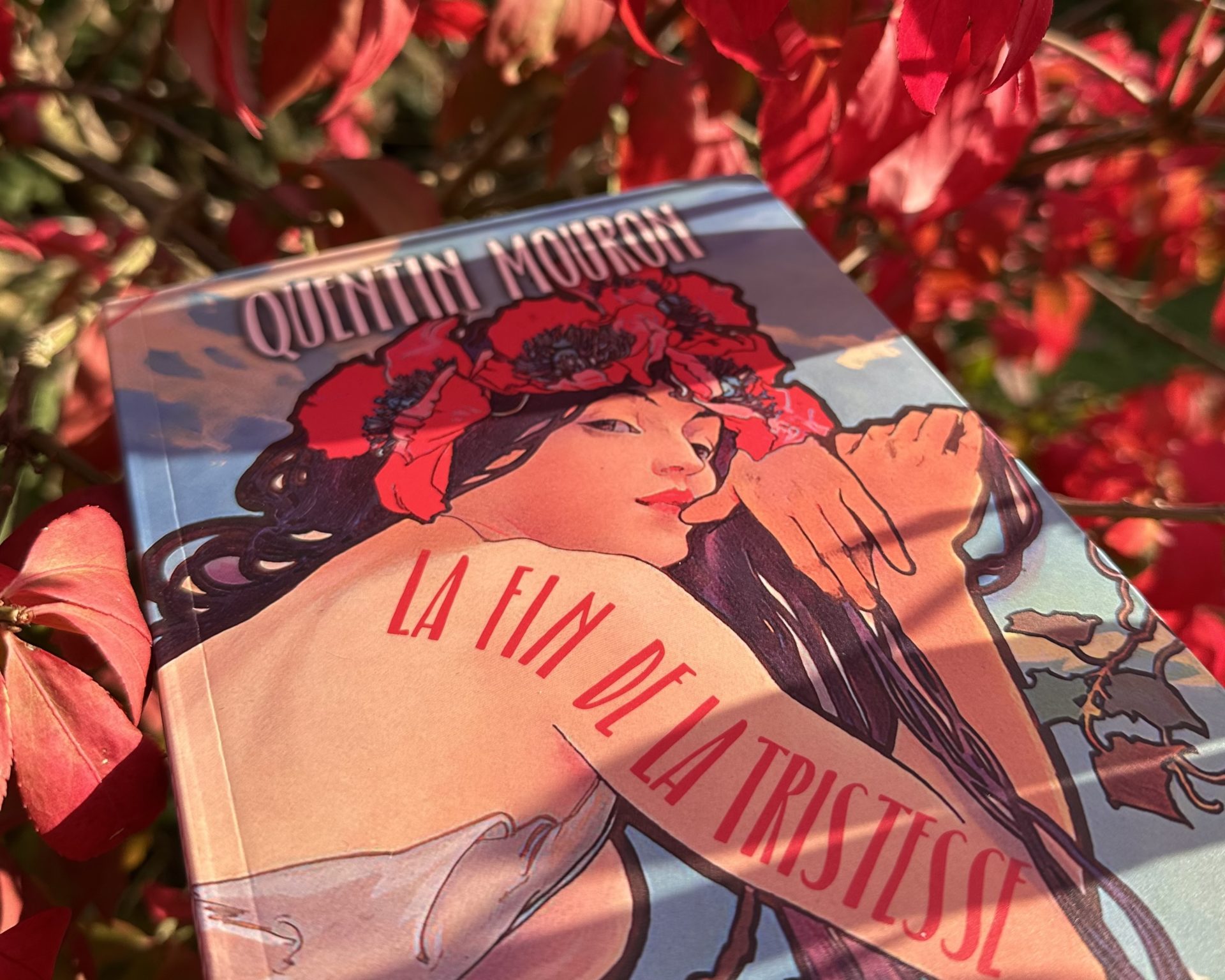
Photo: Quentin Perissinotto for Le Regard Libre
Every month, our literary critic puts a work through a kaleidoscope, collecting the images it projects and reconstructing their diffractions. Even if the flashes of genius turn out to be shards of glass.
A year after the release of his previous opus, Quentin Mouron returns to titillate bookshops in French-speaking Switzerland. In his seventh novel, he takes a closer look at love relationships, with two opposing stories. And then a third slips in, in the embrasure of nostalgia.
Let's face it: the ugliest thing about Quentin Mouron's latest novel is the Diddl-like cover of a pixelated Mucha painting. Fortunately, everything else is beautifully crafted.
«La fin de la tristesse», is the story of a man who seeks to cure himself of emptiness by looking it squarely in the face, the tale of characters who thought they could love without lying to each other, only to discover that everyone is playing a part, and they're the first to do so. Between love, fatigue and lucidity, a man and others cross the desert of an era without promise, seeking not happiness, but a reason to still believe in it.
«One never returns with impunity to the scene of a murdered love».»
In the bright July light, amidst children's laughter and the rolling of the waves, Anastasie unscrews the cap from a jerry can, strikes a match and exits the room, just as Antonin had exited their relationship five years earlier. A few moments later, the flames will have completely ravaged the apartment where they last vacationed, as well as the one above, where Gilles and Clémence, a couple mired in their routine, are staying. The protagonists had no reason to cross paths, but as in a play, their destinies are trampled on, then accommodated.
In a world where passions burn out faster than they ignite, «La fin de la tristesse» recounts the drift of a few modern souls who, after the calcination of a love and the ruin of certainties, try to reinvent a possible form of gentleness. We read about the weariness to love, the beauty that stubbornly persists, the tenderness that slips between doubts.
Strong prose, minor flaws
If the first pages of «La fin de la tristesse» take up the writing mechanics of La dernière chambre du Grand Hôtel Abîme (short chapters, long sentences without periods, a narrative poem as a conclusion), you soon realize that you're dealing with a masterpiece.
Quentin Mouron seems to have built on the resources of his previous novel, but erased its flaws and dross, its rough draft. The process has matured, and the strength of the images and stylistic breaks is now in full bloom. The author's distended prose wraps itself around sharp sentences and well-prepared lyricism.
And while there are some lengthy passages and narrative misunderstandings (the long scenes set against the backdrop of the social crisis and summer riots of 2023), the novelist skilfully regains control of his work by inviting himself into it, with a stroke of his self-fictional magic wand. It's undeniably a book that provokes inner debate and makes you want to question the author's writing choices and aesthetic biases. With Mouron, sadness never quite dies; it simply learns to speak better.
Quentin Perissinotto is a literary critic for Regard Libre. Write to the author: quentin.perissinotto@leregardlibre.com
You have just read an open-access review from our print edition (Le Regard Libre N°121). Debates, analyses, cultural news: subscribe to support us and access all our content.

Quentin Mouron
«La fin de la tristesse»
Editions Favre
August 2025
160 pages

You'll also like




 French
  German
  English
Leave a comment