




«La vagabonde»: Colette? or our wounded heart in the mirror?
Les bouquins du mardi - Literature in retrospect - Anaïs Sierro
La vagabonde invites us to follow the life of Colette Renée - a character far too similar to the author to dissociate them - throughout her long hours of performing, but not only... This novel is to love what The foreigner is to life. We go along, following the life of a woman for whom the presence of a man imposes itself, while at the same time we seemingly get slapped in the face. The proof is that, after reading it, we question our view of love, after having experienced the first one. The one we «remember for the rest of our lives», they say... But what of the good memories, the first times or the pain of losing it, do we remember for the rest of our lives? That's the deep, personal question that Colette's lively, free-wheeling writing allowed me to ask. So, I warn you: you lovers of love: run away! or hang on... Colette offers us her truth. Unless, of course, it's «our» truth...
As a woman who prefers action to complaint, I have always felt great admiration—even fascination—for the women of the early decades of the last century, who wore the scent of freedom around their necks, the belt of emancipation around their hips, and the grace of nonchalance in their hairstyles. Thus, I found in women like Coco Chanel and Colette examples of strength and tenacity in the name of their freedom. Examples that convey this truth to us: «We take our place; we embrace our personality; and we hold on to our freedom!» In that sense, I could hardly wait to finally read Colette’s debut novel. The very one that followed the deeply scarred separation from her first husband, Henry Gauthier-Villars—caricatured here as Adolphe Taillandy—and which therefore promised me a writing style with the imagined strength and incisiveness born of a biased expectation. Yes, I was quickly disillusioned.
«I can still picture her seductive face all too clearly—her dreamy eyes, her childlike yet sly mouth, and the way she would deliberately flare her nostrils whenever a scent drifted by…”
Ugh! All this fuss, all this drama surrounding love—surrounding something we can’t even call love—would I really encourage it or imitate it?
Poor Dufferein-Chautel! Sometimes it seems to me that you’re the one being deceived here, and I should tell you… tell you what? That I’ve become an old maid again, free from temptation, and shut away—in my own way—within the four walls of a music-hall dressing room?
No, I won't tell you, because—just like in the tenth lesson at the Berlitz School—we can only exchange basic phrases, in which words like “bread,” “salt,” “window,” “temperature,” “theater,” and “family” feature prominently…
You're a man—too bad for you! […]
»After hesitating for so long, I choose silence..."
While my initial reaction was one of ecstasy at the pleasure of reading such masterful, poetic, and assertively masculine writing, I was quickly confronted with a Colette—both the character and the author—who was not as independent as she seemed, or perhaps only falsely so; the ghost of a wounded first love serving as a bond to the past, to betrayal. That’s when this emotional journey begins—the very one that oscillates between rebellion and contentment, between disappointment and satisfaction, between «But why?» and «Oh, really?» That same emotional journey that certain tasteless series force-feed us until it’s ingrained in our very bones, keeping us glued to our couches in an endless wait for the next episode, insatiable for these sensations.
Read also: The Story of the Pen by Colette
Because, yes, The Wanderer It is no longer just Colette; rather, it is Colette herself who forces us to become her, as her shifts in behavior and mood send us on a wild ride through every twist and turn of our emotions, even if it means tempting us to close this book, annoyed to discover the fallibility of a historical heroine whom the adjective “noble” merely ennobles rather than truly defines. It is therefore with faith in a stronger and freer evolution that we make our way through pages that are at times long and devoid of descriptions of a daily life of spectacle, conveyed without passion or reverence, despite what was promised on the back cover.
«What do I know about the man I love and who loves me?»
When, through Max, the great and sacred subject of all artists, of all men, hits us full force: love! But make no mistake—this isn’t the grand, true love, the kind that singers catering to teenage girls cloy our lives with their petty, misguided utopia. No, Colette is speaking to us here of love «after the first, lost love.» And here, in twenty-five years of life and books devoured—during which I have never read a single line about this post-first-love state, whose misdeeds we know all too well— I find myself facing a reality—that of Colette, both the character and the author—which, as the pages turned, became nothing less than «our» reality, universal.
Read also: BreakingYann Moix is ridiculous
Is this situation perhaps still too fresh? Or is it simply a heightened sensitivity to Colette’s writing? In any case, I found myself unable to put down this journey through the emotions, feelings, questions, and dramas of this wounded yet free woman—a journey that compels us to engage in personal introspection.
«The first obstacle I stumble over is this woman’s body lying there […] ready to perish rather than leave the place of her joy… […] Could I also overcome—a hundred times more dangerous than the ravenous beast—the abandoned child who trembles within me, weak, nervous, quick to reach out her arms and implore: «Don’t leave me alone!» She fears the night, solitude, illness, and death; in the evening, she draws the curtains over the black window that frightens her, and pines for the sole sorrow of not being cherished enough… And you, my beloved adversary, Max, how will I ever overcome you, while tearing myself apart?»
So if The Wanderer This seems meant for everyone—those of you who haven’t yet experienced your first love, run away at the risk of being turned off by it, or hold on tight. For everyone else, dive into these pages so you won’t forget the lessons offered by the reflections of a reluctant expert—one for whom love after first love is only attempted because we ourselves stand in the way of «escape.» We, bearing the open wound of a first love, and who, to soothe our pain, succumb to the mistake of seeking comfort in the present. False comfort to silence for a moment the pain—yet so piercing—of an unchanging reality…
Write to the author: [email protected]
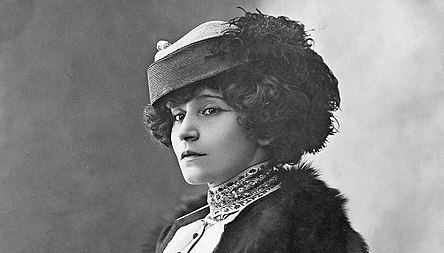
Photo credit: Henri Manuel/Wikimedia Commons

Colette
The Wanderer
Albin Michel
1992 [1910]
222 pages
You'll also like





 French
  German
  English
Leave a comment