

Tuesday books - Hélène Lavoyer
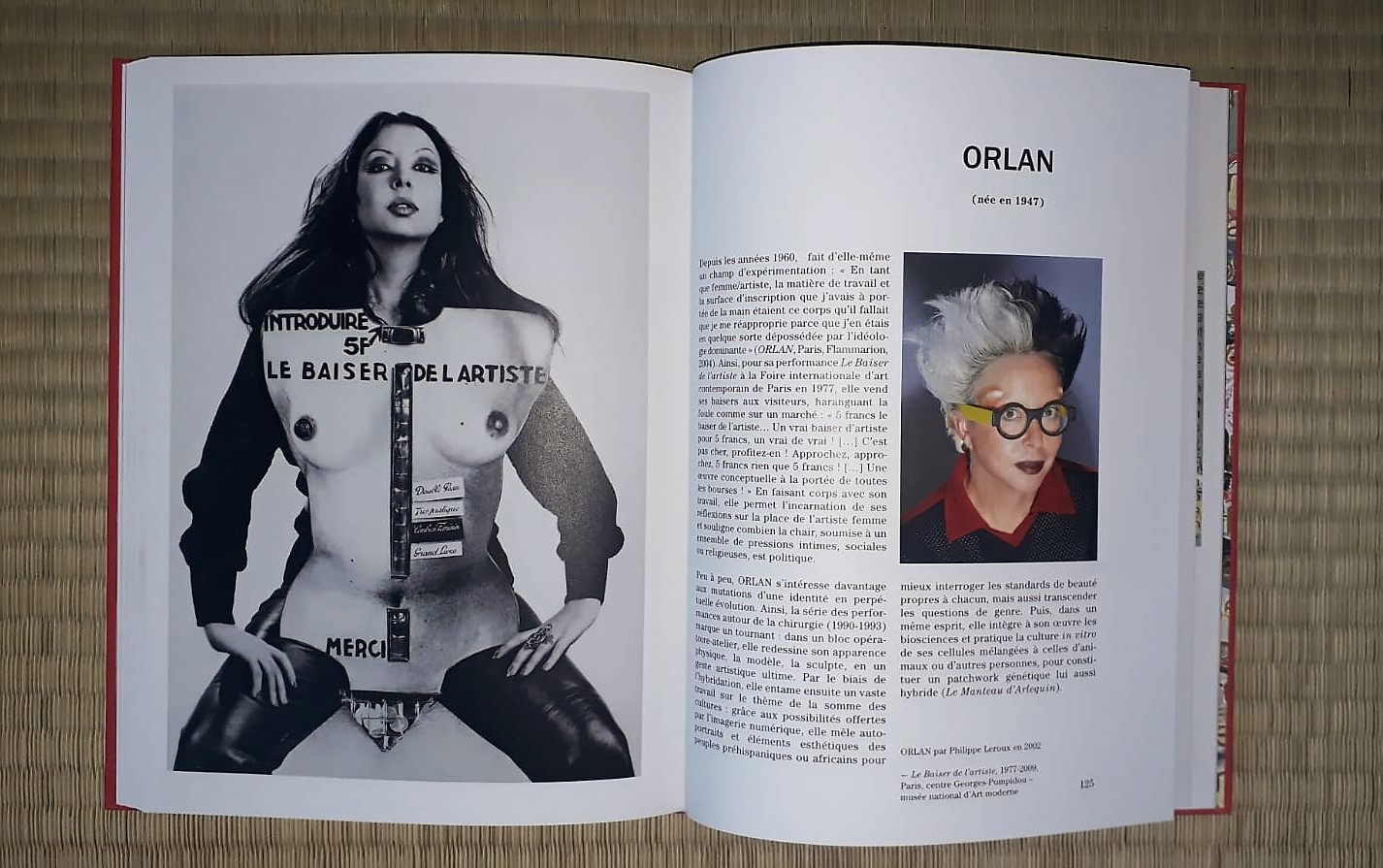
One is a journalist, essayist and historian, notably of feminism in the 19th and 20th centuries, the other an independent researcher and art historian. Laure Adler and Camille Viéville are two women, but above all two individuals who have joined forces in a battle that, although centuries old, has lost none of its relevance or necessity: the struggle undertaken by many women to carve out a place for themselves in fields that have always been ruled by men. In this book, published by Editions Flammarion, they draw up portraits of some fifty women creators.
For anyone interested in art, this book is a treasure trove of discoveries of new stylistic «griffes». But for all those who are interested in women's history and want to know how the how, in concrete terms, the patriarchal world has weighed heavily on her expression on her expression and integration into the world of art, this is a landmark work not to be left on bookshop shelves. And this both for its subject matter and the way and the way it is presented, in a sharp but fluid style, categorical with reason.
«Is there a need for a history of “gendered” painting? Certainly not; being a woman doesn't give you a particular way of seeing or doing, nor a particularity that would signal the “essence of woman”. On the other hand, being female does not link you to any particular school or movement. [...] Unlike Impressionism - which was one of the first movements to welcome women - or Surrealism - which often praised them - no pictorial “feminism” brings together aesthetic trends or currents.»
The very first work that readers encounter sets the tone the color of what's to come. It is a poster produced by the Guerilla Girls which asks the question Do women have to get naked to get into the Met. Museum?« question. Museum?»). In fact, and this is written below on the yellow-backed paper, less than four percent of the artists exhibited in the the «Modern Art» section of the museum are women, while some while some seventy-six percent of the nudes depict women. A paradox.
Before the short biographies of the painters, sculptors and photographers painters, sculptors and photographers chosen to evoke women's art and its diversity and diversity, ten pages of this high, wide-ranging volume provide a historical its publication with a historical overview. The latter questions the legitimacy legitimacy of the gaze that directs art history, a discipline that has «for as long as anyone can remember, has been thought out, written down, published, transmitted by men for a predominantly male audience...». By raising these issues, this book lays the groundwork for a new way of thinking and and disseminate it.
«Neither woman nor man, old nor young. Painter, just painter. Neither abstract expressionist nor post-impressionist. Considering the will to invent something to be a male obsession, Joan Mitchell simply claims the right to paint, just to paint, and to keep on painting; there are many of them [...] who claim nothing except to be able to spend their lives, until their last breath, painting, in the desire not to show but simply to exist.”
Yoko Ono, Frida Kahlo, Artemisia Gentileschi as well as Yto Barrada or Lola Gonzàlez, women whose hats are as diverse as those as those worn by the authors. Their life stories inspire deep admiration and illustrate a number of points, not least that the works of these women adored in their time, are or have been too often overshadowed by the obscured by art history. Precise portraits that speak as much of influences and inspirations, as well as the specificities and struggles these these artists had to fight.
«This book is about [these] creative women: it restores the force of their thought and conveys their perception of beauty, which continues to move us and make us think across the centuries separating us.»
Write to the author: helene.lavoyer@leregardlibre.com
Camille Viéville and Laure Adler
Women artists are dangerous
Editions Flammarion
2018
158 pages
Credit photo: © Hélène Lavoyer pour Le Regard Libre
 French
  German
  English
1 comment
As a committed visual artist, I'd like to respond to your article. A small proposal: a contemporary vision of traditional iconography for critical purposes...
Among other things, I work on the representation of the female body through religious aberrations or virile societies.
To discover:
Ecce Homo: https://1011-art.blogspot.com/p/ecce-homo.html
Vera Icona: https://1011-art.blogspot.fr/p/vera-icona_5.html
Corpus Christi: https://1011-art.blogspot.com/p/corpus-christi.html
Or Noli me Tangere : https://1011-art.blogspot.fr/p/noli-me-tangere.html