




Giving a voice to women denigrated by history

DR
History has always been written by men. On the eve of a new day of feminist mobilization in Switzerland, we take a look at one of the books that aims to give women back their rightful place.
They're not what you thinkThe title chosen for this collective work, published this spring by Editions Rageot, sets the tone from the outset. Its ambition is to «shake up clichés (to) restore to great historical figures their true personality, the reality of their choices and the full scope of their deeds».
The book's premise is simple: men have always written history. And this has inevitably influenced the way they have described women and their influence on their era. In an attempt to disentangle the true from the false, five journalists from the feminist magazine Causette have immersed themselves in the latest research findings.
The process is not new. They're not what you think is part of a wave of publications, podcasts and video capsules that have been giving women back their rightful place in history for several years now. One example is Titiou Lecoq's remarkable essay The great forgotten ones, why history has erased women or the comic book series Les Culottées by Pénélope Bagieu. In Switzerland, too, a number of projects aim to shed light on personalities who, from Marie Heim Vögtlin to Anna Weckerin, have not necessarily made it into school textbooks.
On the hunt for clichés
But They're not what you think goes a step further, focusing on «the falsified, the camouflaged, the counterfeited... those whose stories have been told in the wrong way». In 240 pages, the five authors set out to deconstruct the clichés and false beliefs that have surrounded these characters.
So Neanderthal women didn't just sweep the cave floor. Like her male counterparts, she hunted and defended the tribe. The Queen of Egypt was more than just a treacherous femme fatale. A scholar and polyglot (she spoke seven languages fluently), she was above all a shrewd politician and a formidable strategist. As for Charlotte Corday, the murderer of French revolutionary Marat, she was called the «bitch of Calvados» after her crime. This overlooks her commitment to the revolution and the political aspect of her crime. In all, eight women, from prehistory to the present day, are brought to light by the authors of Causette.
So why has history treated these personalities so badly, vilified, ridiculed and so often forgotten? For the authors, it was a question of removing all legitimacy from their actions. «Thus goes the logic of patriarchy, which cannot tolerate the fact that women have been able to think, act and intervene in the organization of society», they note. Deploring the fact that certain clichés about these women have sometimes carried over into the early 21st centuryth century.
Each author was free to choose how she wished to approach her subject. Unfortunately, this makes for a somewhat disjointed whole, and it's sometimes difficult to find the historical reality beneath the veneer of diary, epistolary exchange or first-person narrative. Lovers of hard-core human sciences will therefore want to skip this one, in favor of more specialized, referenced works.
However, this book has the merit of appearing in a collection, «Grand Format», aimed at teenagers and young adults. It will enable a new generation to reflect on the representation of women in history, and offer them the chance to discover new role models in the form of these strong personalities who dared to go beyond what was expected of them to realize their destiny.
Write to the author: sandrine.rovere@leregardlibre.com
You've just read an open-access review. Debates, analysis, cultural news: subscribe to support us and get access to all our content!
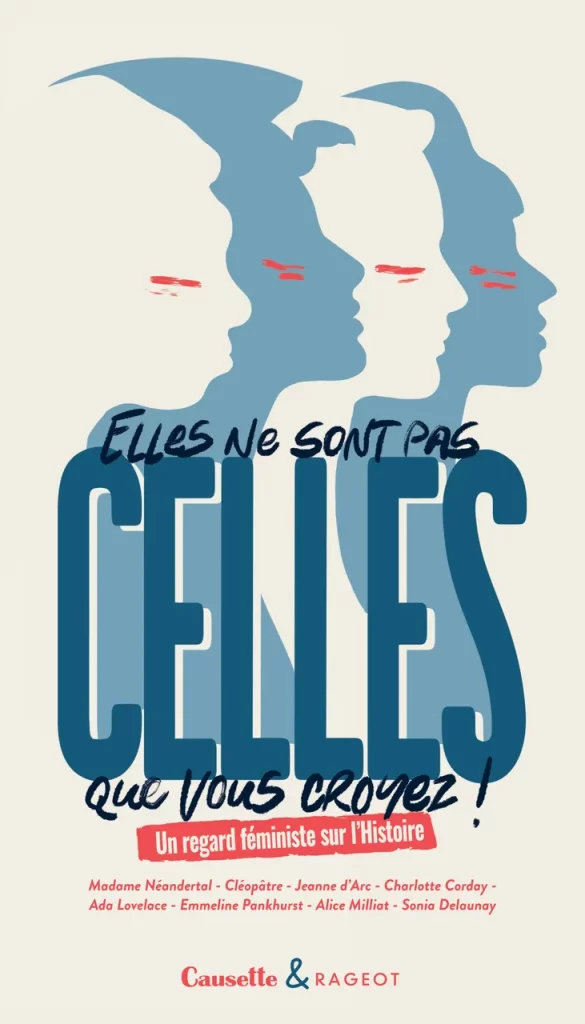
Collectif
They're not what you think!
Editions Rageot
2023
240 pages
You'll also like




 French
  German
  English
Leave a comment