



Antoine Vuille against the culture of clash

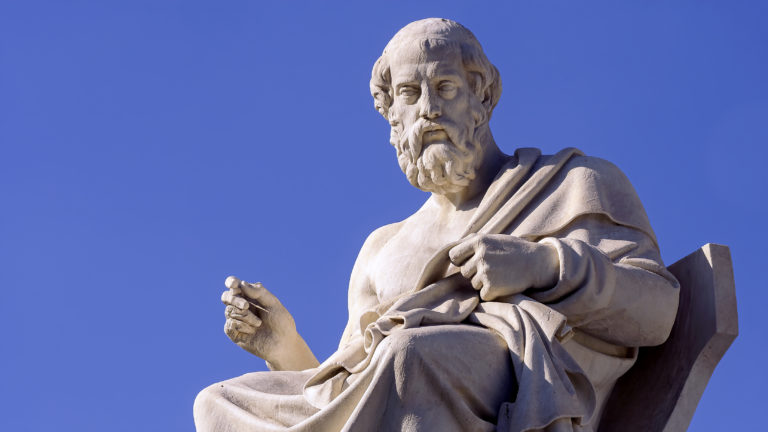
Jonas Follonier has read «Contre la culture du clash» by Antoine Vuille. Image generated with the help of artificial intelligence (Midjourney)
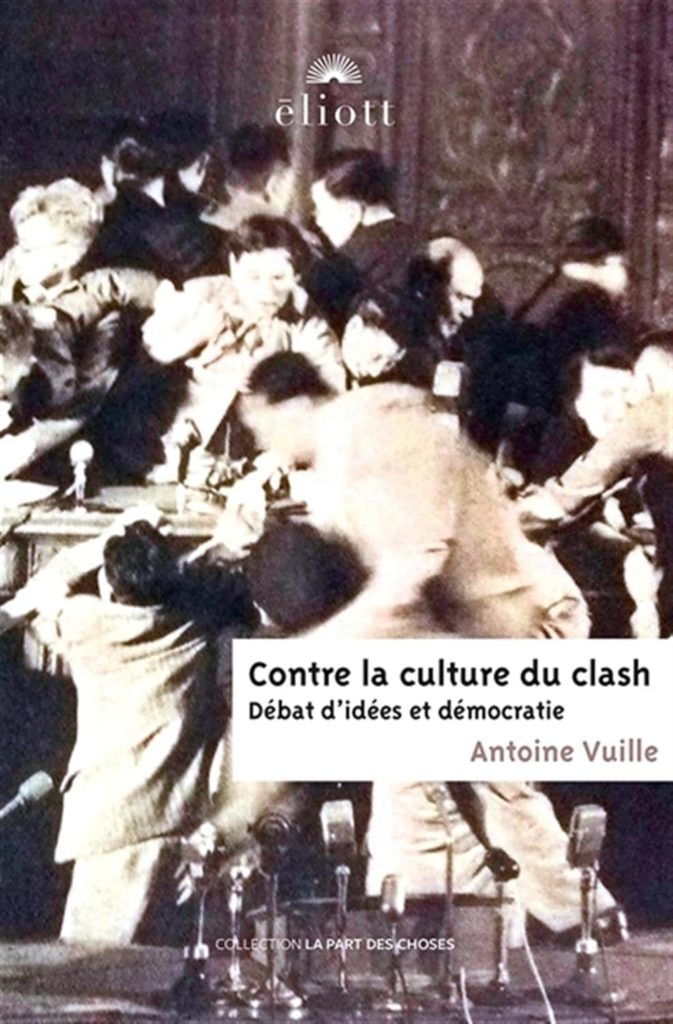
As debate becomes polarized and personal, Antoine Vuille defends the importance of rigorous argumentation. The philosopher invites us to avoid the vices that weaken the exchange of ideas in a democracy, not without avoiding a few vexing questions.
Putting argumentation back at the heart of debates. This is the invitation extended by Antoine Vuille in his essay Against the culture of clash. Debate and democracy, published by Editions Eliott in November. Readers committed to rational debate in a democracy can only welcome such an appeal. All the more so as Switzerland, as the author shows, is not immune to the cult of personality and polarization of opinions that can be observed just about everywhere.
On the other hand, as the essayist also points out, this country's system already provides incentives for in-depth discussion, starting with direct democracy. Voters regularly express their views on issues, not individuals. According to Antoine Vuille, we need to nurture this culture by avoiding the «argumentative vices» that undermine the debate of ideas and encourage dishonest confrontation and show politics.
Read also | Neither reason without debate nor debate without reason
The philosophy and French teacher at the Gymnase de Bienne et du Jura bernois lists four types of trap to avoid. First, arguments ad hominem, These are not arguments, but criticisms. A recurring example is a politician's criticism of the gap between what he says and what he does. For example, while he advocates cycling in the city, he still travels by car. Antoine Vuille rightly reminds us that «just because someone behaves in a way that is inconsistent with the ideas they are defending doesn't mean they are wrong». And a debate is about ideas, not people. «Someone who is immoral and depraved can, on the other hand, form very good arguments», sums up the philosopher.
A second argumentative vice comes down to confusing arguments with causal explanations. «If a progressive is asked why there are so many people who support the conservative party, the progressive might be tempted to answer: “Because people are misinformed”, “Because the conservative party manipulates citizens (...)”, or even, more abruptly, “Because people are racist” (...).» According to the essayist, this «causal fallacy» implies that there is no possible justification for these ideas, no argument to be found in their favor, but only causal explanations of the psychological, sociological, etc. type. And it is this implicit discrediting and a priori of a type of idea that poses a problem for the author.
Read also | Frédéric Taddeï: «People don't like debate anymore»
Antoine Vuille's third obstacle to genuine debate is bad faith. For a debater, this consists in dismissing an opposing argument out of hand, simply so as not to lose face, even though he or she knows (or at least believes) that the argument is true. The author rightly insists on this point in his book: in a good debate, it's important for all parties to examine each argument put forward by their interlocutors, and to evaluate them as such.
One of these arguments may well be true, but it may not carry enough weight. It's possible - and desirable - to recognize that one's discussion partner is on to something, which doesn't necessarily mean that one agrees with him or her on everything. It's the assessment of the number of reasons to support or not support an idea, and the weight of these reasons, that motivates the position on the whole.
The fourth pitfall explored by Antoine Vuille has become a regular feature of neuroscience in recent years: confirmation bias. This describes an individual's tendency to take into consideration only those facts that suit his or her argument. Facts that would nuance or even invalidate the argument are then neglected. The author gives the example of the Brexit: several years later, those who opposed the UK's exit from the European Union consider the effects of the Brexit to be negative, while its supporters consider it to be positive...
Read also | Philosophy has more to offer than a soul supplement
With a doctorate in philosophy from the University of Neuchâtel, Antoine Vuille is convinced that open and careful argumentation, as practiced in his discipline where disagreement is taken seriously, is an example to follow for the debate of ideas in general. His demonstration is persuasive, and his logical analysis of different types of argument very useful. It is regrettable, however, that certain vexing questions are not addressed, such as the conditions for genuine freedom of expression, or the risk of a «tyranny of minorities» - only that of the majority is tackled. Let the discussion continue!
Graduate in philosophy and journalist by profession, Jonas Follonier is the editor-in-chief of Regard Libre.
You have just read a review from our print edition (Le Regard Libre N°114).
Antoine Vuille
Against the culture of clash. Debate and democracy
Eliott Editions
November 2024
168 pages

You'll also like


 French
  German
  English
Leave a comment