




«We must turn the page on cars in cities in the 21st century».»
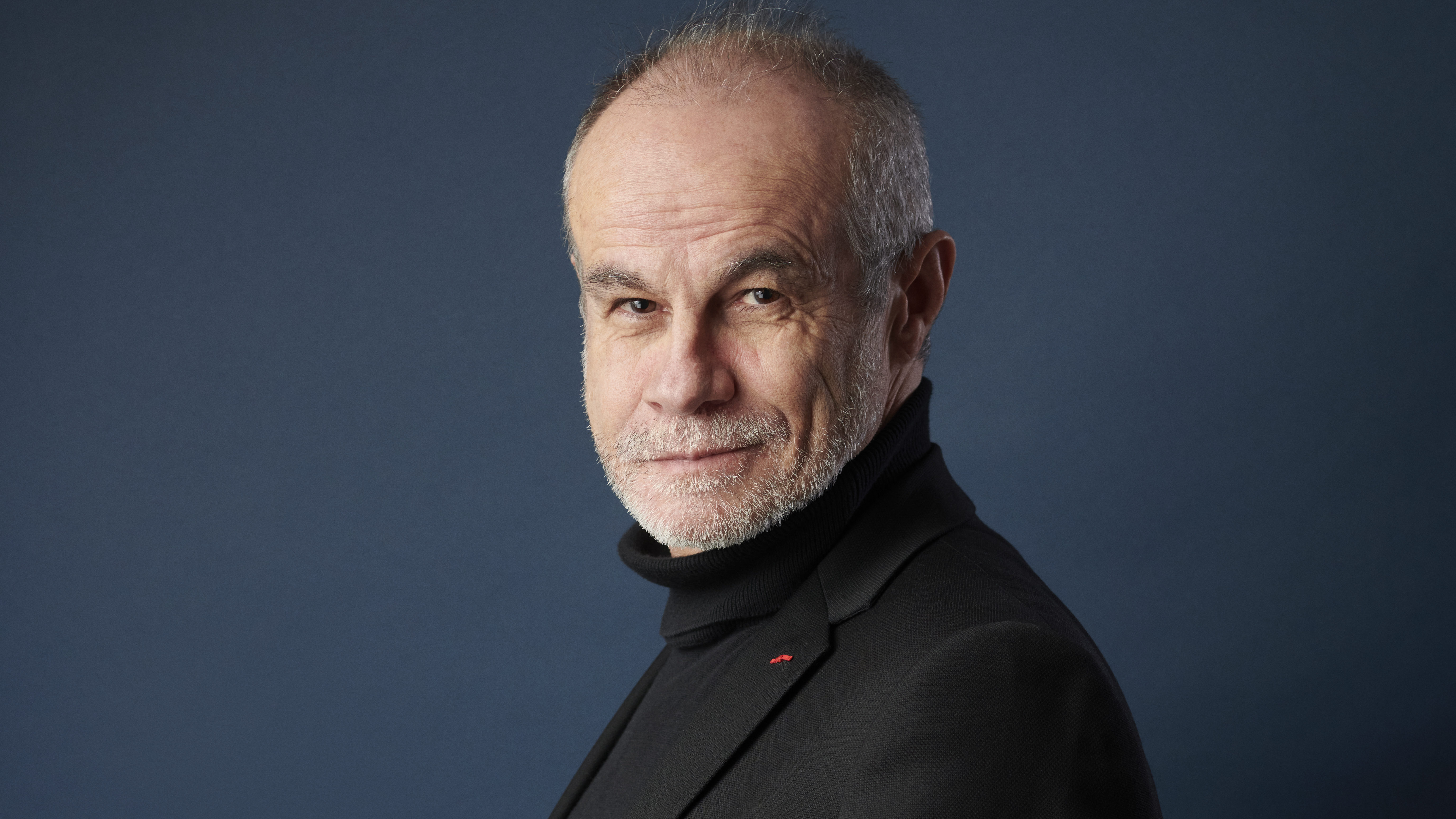
Urban planner Carlos Moreno is a professor at the Institut d'administration des entreprises (IAE) Paris-Sorbonne. Photo: Thomas Baltes
The role of the automobile is the subject of major debate in many cities. Between the challenges of mobility, the environment and quality of life, a number of avenues are emerging for rethinking urban spaces. Interview with urban planner Carlos Moreno.
The car has long been perceived as the symbol of individual freedom. Today, its place is being called into question in many urban areas, which are rethinking their modes of mobility and public spaces. Franco-Colombian urban planner Carlos Moreno is one of the leading figures in this movement. A professor at the Institut d'administration des entreprises (IAE) Paris-Sorbonne, his concept of the «quarter-hour city» has inspired public policies the world over.
Le Regard LibreYou regularly state that the car has no place in the city of the 21st century. Why do you say this?
Carlos Moreno: I'm convinced that the private car, and even more so the combustion-powered car, no longer has a place in dense urban areas, where many people live today. These areas require, above all, thoughtful use of public space in order to guarantee a good quality of life. In these areas, however, cars monopolize an inordinate share of traffic lanes, often for inefficient use. They are frequently used by a single driver and are merely passing through. In some cities, if surface roads and parking lots are included, as much as 60 to 70% of public space is devoted to cars. This pattern of occupation is simply not compatible with quality urban living. In concrete terms, what are the negative impacts of cars in densely populated areas? First and foremost, the deterioration in the health of residents living in these dense areas, who are in constant contact with combustion-powered cars. It's not just CO2 - one of the main gases responsible for global warming - but also fine particles, in particular PM2,5, They represent a serious, silent threat to public health. They are invisible but formidable pollutants, comparable to a slow poison like sugar. The debate is not simply about being for or against the car. Above all, it's a question of spatial justice. In densely populated areas, there are other ways of getting around: on foot, by bike, by public transport. A city should be a place for social interaction, not a place where we give ourselves the right to pollute at the expense of others. All the more so as public space, financed collectively, represents a high cost. When it is monopolized by a minority of people in one-ton, nuisance-generating vehicles, it raises profound questions about our social model.
You mentioned combustion-powered cars. Their banning from sale in 2035 in the European Union raises many issues. But in terms of urban planning, are electric cars really a game-changer?
The reason I've focused on the combustion-powered private car is that it is still widely used in metropolitan areas, often for very short distances. According to data from the annual French transport survey, more than 50% of car journeys are less than 6 km long. (editor's note: in Switzerland, the average distance between home and work is 14 km, and 50% of commuters use the car as their main mode of transport, according to data from the Swiss Federal Statistical Office dating from 2023).. It makes no sense in dense urban environments. As for electric cars, they don't solve the fundamental problem. A traffic jam remains a traffic jam, whether it's made up of thermal or electric vehicles. Congestion remains one of the main urban nuisances. It's also important to dispel certain preconceived ideas: electric cars also emit fine particles. These come from brake wear, polymer tires and contact with the road surface. These particles remain suspended in the air, and their impact on health is very real. The electric car may have a place in low- or medium-density areas, provided it is used on a shared basis, with several people on board. But in densely populated areas, the only way forward is alternative mobility: walking, cycling and public transport. We need to turn the page on cars in the city in the 21st century.
You often highlight the occupation of space by cars. Why is this an urban planning issue?
It's a legacy of the 20th century. For decades, especially in Western countries, it was considered normal for cars to park freely in public spaces, often outdoors. In Europe, this practice is widespread, unlike in some parts of Latin America, where safety concerns limit this phenomenon. Take Rome, for example: the city has almost as many cars as inhabitants, and the majority of these vehicles «sleep» outside. This represents an unjustified appropriation of public space. This is known as «car vacuuming». On average, a car is used less than 3% of its lifetime. The rest of the time, it is stationary. When a car is parked above ground, this is at the expense of space that could otherwise be used for green spaces, children's playgrounds or meeting places. It's this logic that is prompting more and more cities to do away with surface parking, introduce parking meters or redevelop these areas for other uses. This new constraint leads drivers to question the real necessity of owning a car. All the more so since it is estimated that around 25% of cars on the road in the city are driven solely to find a parking space.
You are behind the concept of the «quarter-hour city». Can you give us a brief summary?
The «quarter-hour city», also known as the «city of proximity», is based on a simple idea: to reorganize the city in such a way as to bring essential services closer to residents. The idea is to create a polycentric city, where each district offers easy access - ideally within short walking or cycling distances - to the main needs of daily life: shops, healthcare, schools, culture, green spaces and social areas. The aim is to ensure that where people live is not reduced to a simple «roof over their heads», forcing them to travel long distances for work, healthcare or shopping. On the contrary, it's about fostering a rich, active and connected neighborhood life, where social ties can be strengthened. It's a way of restoring the city to its fundamental role: offering quality of life without systematically relying on the car or forced travel.
Some cities have already started implementing your recommendations. What are the initial results?
The results are very positive, on every continent. Take Mexico, for example: who would have imagined that Mexico City, one of the world's largest metropolises, would develop «Utopías», or local territorial units? These are areas where you can find a combination of cultural, educational and commercial services within 15 or 20 minutes' walk or bike ride. Another example is the highly connected city of Busan, South Korea. During the last municipal elections, the quarter-hour city project was at the heart of the debate. The mayor-elect has transformed the city by developing multi-use areas, including in City Hall itself, which now houses a multimedia meeting place for children. In the city, an incentive system has also been set up: using a QR code, residents who frequent local shops or activities accumulate points on a card, which become vouchers. If they walk, they can earn extra points when they reach 10,000 registered steps. This creates a circular, local economic dynamic. What's interesting is that these success stories are not confined to major metropolises. The concept also works perfectly well in medium-sized and small towns, as it is not linked to density or size.
In the city of the quarter-hour, the car takes a back seat. But in some cases, isn't the cost of making the necessary changes very high?
It's important to distinguish between two types of investment. On the one hand, there are low-cost developments. This involves transforming existing infrastructures into social infrastructures. In concrete terms, this means that a physical location can be used for several purposes: a town hall that also hosts cultural or community activities, a shop that becomes a place for living, training or meetings. Above all, it's about rethinking uses, rather than rebuilding. On the other hand, there are investments in mobility infrastructures. This involves, for example, widening sidewalks, reducing the number of lanes dedicated to cars, and creating safe bicycle paths. I stress the word «safe»: a simple line on the ground is not enough. There needs to be a physical separation between cyclists and cars, with barriers. These investments may seem substantial, but they pay off in spades. As Fred Kent, founder of the Placemaking movement, once said: «If you plan cities for cars, you'll get cars. If you plan cities for people and places, you'll get people.» This is exactly what we're seeing in Paris, where we now have over 1,200 kilometers of bike lanes, making the capital comparable to Amsterdam in terms of bicycle use.
Can the quarter-hour city model really be transposed to all cities?
As each city has its own specific context, the aim is not to copy and paste the "quarter-hour city" concept, but to adapt it to each territory. Nor is it a magic wand that transforms a city overnight. What we're talking about here is deconstructing almost 70 years of urban planning based on long distances, the individual car and the strict separation of urban functions with monofunctional zones: residential districts, commercial zones, business zones and so on. It's a logic inherited from the post-war era, but one that has its roots in the 1930s, when Henry Ford began producing cars on a large scale. Since then, cities have evolved, giving ever more space to the automobile. Today, it's a question of reconnecting with another history of the city. By the end of the 19th century, certain urban planners had already understood that making the car the center of the city would mean losing part of our humanity. This led to garden city projects. Throughout the twentieth century, other urban planners proposed more humane cities. Changing this logic requires long-term strategic plans. If Paris has become a benchmark for urban transformation, it's because the work began over 25 years ago. You can't redesign a city in four or five years.
What about American cities, where the car plays a predominant role in urban organization?
The case of American cities is a fascinating debate. In June, during the celebration of the 10th anniversary of the Paris Agreements, the mayor of Phoenix, in the state of Texas, one of the most oil-dependent, since its economy is largely based on this resource, was present. Phoenix is now fully committed to a community-based approach. In Cleveland, Ohio, a former capital of the automobile industry, Mayor Justin Bibb is also fully involved in this process. In Portland, Oregon, proximity has been at the heart of the city's strategy for years. So it's not a foregone conclusion. Just because a city was built around the car doesn't mean it's doomed to stay that way. In the case of Los Angeles, for example, it is indeed a geographically fragmented city, designed for the car, but this means that we need to reverse our way of thinking. I'm often told, «American cities are like that. My answer is that they don't have to stay that way forever. We have to start sometime.
Behind the idea of proximity, isn't there a normative vision of urban planning and mobility that dictates how people should live, get around and shop?
I hear this with a smile, because nobody dictates anything. Fortunately, we live in democracies, even if some of them have been weakened. The concept of the local city doesn't impose anything. On the contrary, it proposes and offers alternatives. If there's a bakery a stone's throw from my home, but I'd rather drive an hour to buy my bread elsewhere, I'm free to do so. No one forbids it. On the other hand, driving through an entire city center to do so, polluting public space, is no longer acceptable. What we're putting in place are collective rules, based on issues of public health, urban justice and the environment. Darwin said that human intelligence is above all our ability to adapt. What we've observed is that when local services are created in a neighborhood, behavior naturally changes. People prefer to go close to home rather than cross the whole city.
In particular, you have worked with Anne Hidalgo, the Socialist mayor of Paris, as well as Valérie Pécresse, the Republican president of the Ile-de-France region. Does the local city model transcend political divides?
It's a model that puts the quality of life of its inhabitants first. In 2023, Valérie Pécresse told me that she wanted to launch a strategic plan for Ile-de-France, the SDRIF-E. A large proportion of the region's inhabitants make long daily journeys to Paris to access services. She therefore wants to develop new centralities. She also told me that some of her advisors were reluctant, as they felt that such a program would amount to «copying» the «quarter-hour city» promoted by Anne Hidalgo, her political rival. She replied: "I'm not copying Anne Hidalgo, I'm inspired by Professor Moreno's work. She asked me to come to a working meeting to explain it. I supported her publicly. It just goes to show that this is first and foremost a question of 21st-century urban planning.
The car has long symbolized freedom: the freedom to set off on great journeys, the idea of individual autonomy. Today, some even see it as a symbol of resistance to environmental policies. Does your vision of urban transformation also involve a cultural battle?
Absolutely. The Italian thinker Antonio Gramsci was already talking about this: whoever wins the cultural battle sets the course for society to follow. In his Prison notebooks, he wrote: «The old world is dying, the new world is slow to appear, and in this chiaroscuro monsters are emerging. Here we are: a world shaped by the car refuses to disappear. Yet this is a very recent world in human history. Cars have only been ubiquitous for 90 years or so, while cities have existed for 5,000 years if we go back to the oldest in Mesopotamia. Its place in history is therefore marginal, but its spread has been global and rapid. In just a few decades, the car has become a central object in our lives. It also symbolized social status, in a very masculine world. We remember the images used for a long time: a beautiful car, with a seductive woman on board to deify this object. This world resists. It's based on an idea of freedom that isn't freedom at all: freedom in the libertarian sense, i.e. »Me, me, me«, without any social ties or collective vision. So the battle I'm fighting is against »I want to drive my car everywhere, because that's what I want«. We have a different, humanist vision of the city, with local urban planning where ecology, economy and social interaction go hand in hand, urban planning with services for quality of life.
Journalist and consultant, Pablo Sánchez is an editor at Regard Libre. Write to the author: pablo.sánchez@leregardlibre.com
You have just read an interview from our feature «The car under the magnifying glass» published in our paper edition (Le Regard Free N°119).

Carlos Moreno
Droit de cité. From the «world city» to the «quarter-hour city»
Editions de L'Observatoire
November 2020
192 pages
You'll also like



 French
  German
  English
Leave a comment