




Regimes come and go, countries stay

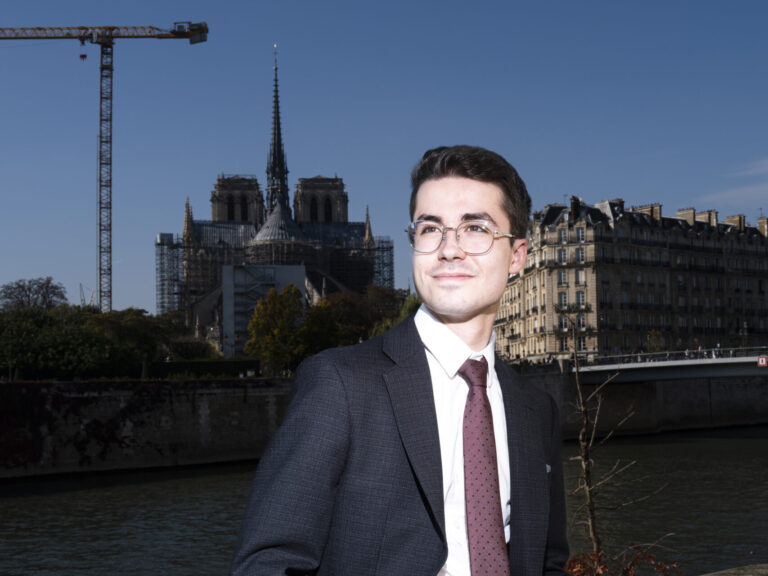
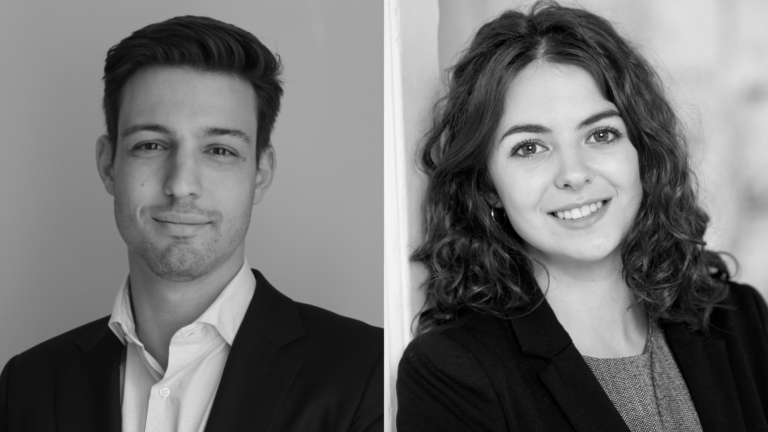
Antoine-Frédéric Bernhard, deputy editor-in-chief of Regard Libre. Drawing by Nathanael Schmid
The Iran-Israel crisis has revived an old Western temptation: regime change. The illusion of immediate political transformation, however, runs up against the fact that regimes come and go, while peoples, their history and culture remain.
The Iran-Israel conflict heated up to an unprecedented degree between June 12 and 24. During the acute phase of the conflict, which lasted twelve days, the United States intervened (on June 22) to bomb strategic sites linked to Iran's nuclear program. During this crisis, a notion reappeared in the media: that of «regime change».
The question has been raised as to whether the Israeli and, to some extent, American strategy is aimed at bringing about regime change in Iran. Some political leaders have asserted as much, including US President Donald Trump, who has explicitly communicated to this effect. In any case, the idea has once again animated public debate, as it did during the Libyan crisis and the Arab Spring in 2011, or the invasion of Iraq by a Western coalition in 2003.
The idea of bringing about regime change in a third country has deep roots in the West. It was at the heart of the foreign policy of George W. Bush, President of the United States from 2001 to 2009, but its roots go back much further. The French Revolution, the founding event of the modern West, bears witness to this to some extent: many of its advocates made it their mission to export the Revolution around the world.
Even today, the idea that we could, indeed should, continue to «export democracy», whatever that means, continues to haunt the Western political imagination. This theme has the merit of illustrating a crucial point that we sometimes tend to forget: the political regime is not the whole of a country. The case of Iran illustrates this perfectly: today, this state is a Shiite Islamic republic. But it hasn't always been, and probably won't always be. Even if Iran were to become a democracy one day, it would still be the heir to thousand-year-old Persia, to its language and culture, which far transcends the political ups and downs of its history.
In the same way, Germany was Nazi, before it wasn't, today it isn't, but it's still Germany. We could multiply the examples: Vladimir Putin's domination is just one episode in Russia's long history, China's communist regime is the latest in a history that goes back three millennia, and the French Republic itself is not France. In two centuries, this country has already seen five republics and two empires.
In the West, because democracy has such a strong identity character, we tend to downplay this distinction. We believe, often without even realizing it, that democracy is not simply a form of government, but the very essence of our societies. We think of our countries as «democracies», just as we think of them as nations, cultures and peoples. Yet democracy is nothing more, and nothing less, than a way of organizing power. It says nothing, in itself, about the profound realities on which it rests: history, languages, territories, inherited compromises, sometimes even founding traumas.
It is precisely this distinction that a case like Switzerland brings to light. Where one would expect to find the expression of a classic nation-state, it is federalism that organizes the coexistence of distinct peoples, languages and cultures. Swiss democracy is based on a patiently constructed balance between the cantons, on a concrete history of local autonomies and diplomatic neutrality. It is not democracy that has made Switzerland; it is Switzerland, in its own configuration, that has shaped the form that its democracy has taken.
It is therefore essential to understand that political regimes, even those we consider the most legitimate, are never absolute. They are rooted in particular histories, superimposed on previous realities, and must adapt to them if they are to endure. To hold democracy up as a universal, self-sufficient model is to ignore this fundamental dimension. It's believing that a change of regime can suffice to profoundly transform a country, whereas very often the regime changes, but the reality remains.
Every month, a member of the editorial team takes a stand on a subject related to the issues addressed in Le Regard Libre. Write to the author: antoine.bernhard@leregardlibre.com
You have just read an open-access editorial from our print edition (Le Regard Free N°119). Debates, analyses, cultural news: subscribe to support us and get access to all our content!

You'll also like

 French
  German
  English
Leave a comment