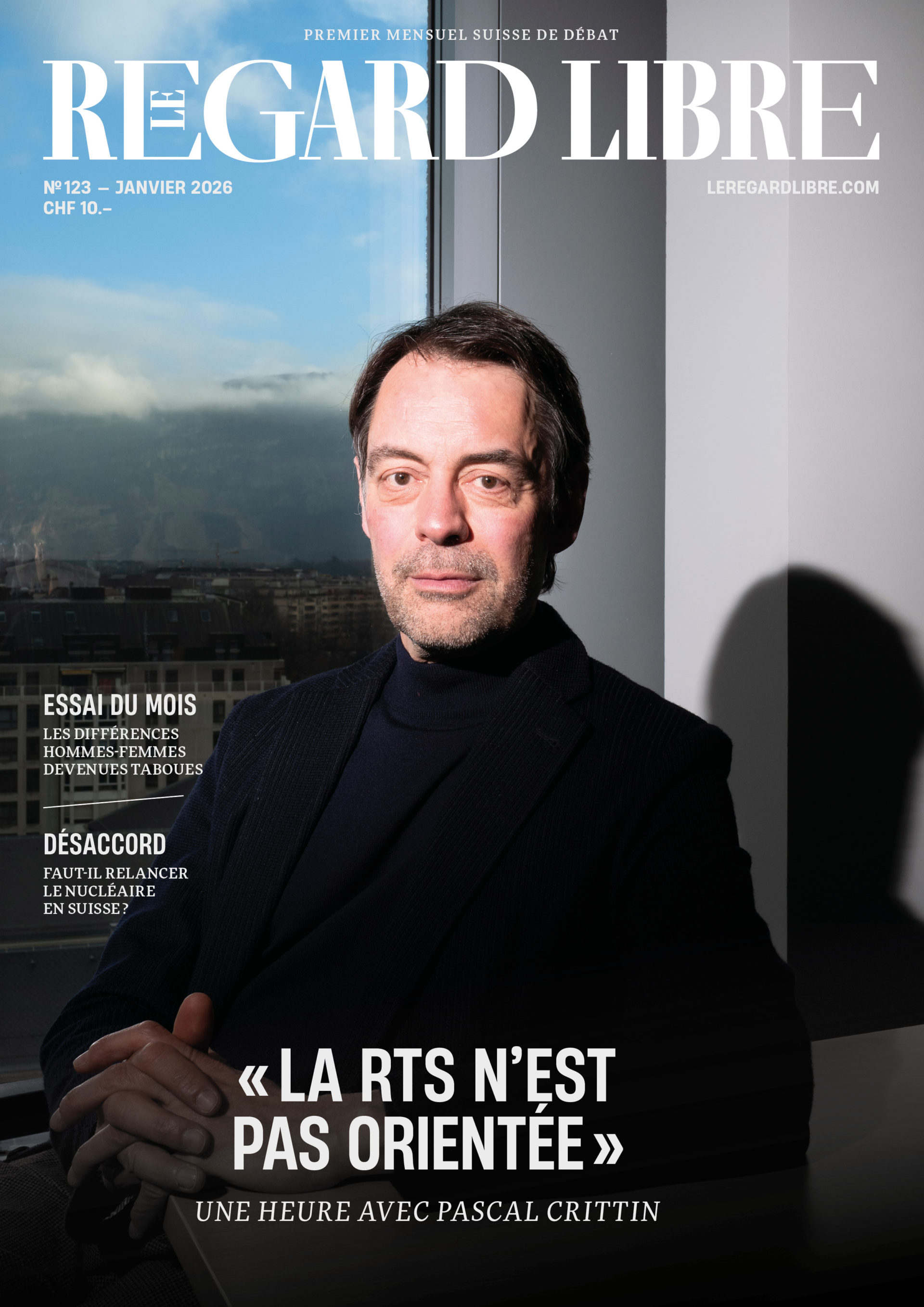




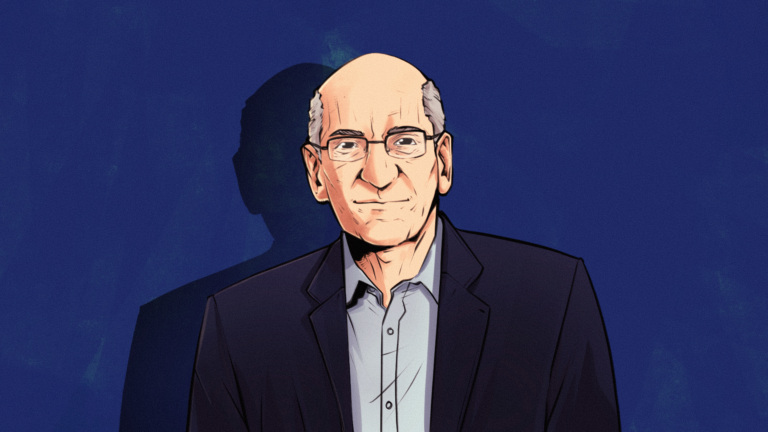
Didier Burkhalter: «I feel the need to express myself freely».»

Special report Didier Burkhalter writer
Le Regard Libre N° 49 - Hélène Lavoyer and Alexandre Wälti
Didier Burkhalter has been writing novels ever since he retired from the Federal Council. After childhood on earth followed Where lake and mountain talk, Surrogate mother and Mined earth, all published by Editions de l'Aire. Our literary critics take a close look at these works and offer an unfiltered assessment. But first, Didier Burkhalter talks to us about his passion for literature.
Le Regard LibreFrench politicians François Bayrou, Ségolène Royal and Nicolas Sarkozy have taken up the pen to write political novels and essays. In Switzerland, the practice is not so common. Is this because the public is disinterested in politics?
Didier Burkhalter: I'm not a politician who writes books about his political life. I'm a man who's passionate about writing and who's taken up literature, with a passion for historical novels. Clearly, my life spent in the world of political commitment has had an influence on my vision of the world and humanity. But my only desire in this area is to put the values I hold dear into books, into stories of hope and courage, into the destinies of characters we can feel close to us, into the human comedy that surrounds us, sometimes suffocating us and sometimes allowing us to breathe.
Childhood is a recurring theme in your novels. The past and memory are the foundation of the characters; can we extend these roots to a region, a country or a continent?
Our past never ceases to explain us, to bewitch us, sometimes to haunt us or even to sublimate us. This past, and the way in which we remember it or would like to remember it, is made up of a multitude of colors that we draw from the palette of our feelings, our childhood experiences, our relationships with those close to us and those «not so close», our attachment to or rejection of our terroir, our land more or less mined, more or less happy; in short, our culture.
In the final analysis, the burning issues in your books and the ideas you defend in them are the same as those of Didier Burkhalter, President of the Confederation: youth, peace and communitarianism. Have your concerns therefore not changed? How is writing a better vehicle than the political arena?
In fact, I believe that there are values within us that do not change throughout our lives. They're like beacons deep within ourselves, constantly trying to light the way, whatever road we've taken and whatever era we're living in. So, in the book of my life, there have been many chapters devoted to politics. Today, I wanted to open a whole new chapter, that of paper covered in ink, that of pages to be discovered, also to be covered in words. So it's not a «better medium», but it's what corresponds, deep in my heart and according to my passions, to this new period of my life.
Although your works are more fictional than realistic, they still challenge certain policies, past or present. I have the impression of sensing a sense of commitment in your stories.
Writing is a commitment. Poetry is a discourse. The novel is a projection. Human beings have always felt the need to light up their lives, to put on their firefly costume and shed light on destiny. I don't believe that writers hold the truth, but they can shed a little light so that we can ask ourselves questions about our itinerary and our destination as individuals and as humanity.
In Mined Earth, Ancestors are particularly important. Do you have a special bond with yours?
Everyone has a special relationship with their ancestors. Sometimes we feel very close to one of them, without really knowing why. Such is my connection with my grandfather, who was as poor as he was a fisherman, and who inspires passages in my book Where lake and mountain talk. Although I didn't like fishing, I felt immense respect for him. And then there's the immensity of the dance of generations, of that infinite string of pearls (or infinite string of wishful thinking) that we sometimes feel when we reflect in silence or gaze up at the stars. Then, as suddenly as surreptitiously, we can - if we really want to - hear a small voice from far away calling us to harmony; perhaps that of one of our very first ancestors, or that of nature itself.
Read also: Didier Burkhalter, vision of a mined earth
To what extent do you think that experiencing lands at war or in remission, in situations of poverty or abandonment, influences the awareness that a person from a «rich and developed» country like Switzerland might have of the world?
Treading on a land blighted by tragedy, war, poverty, lack of rights, injustice and corruption cannot be forgotten. Some pages can never be turned. Our footsteps on such a land resonate in our little eternity. They follow us into every second of the life to come, like a tireless shadow. So much so, in fact, that it's sometimes difficult to come back, to imagine that we're living on the same planet, to «reconnect» with the life we had before. Writing plays a role in this. It allows you to share, to describe without having to feel limited by the costume of a function, to express your thoughts from the heart in complete freedom.
You celebrate the «memory of the heart», which differs from conventional memory. What events inhabit this memory?
Our world has gradually been built on the cement of materiality, reason and technology. Cold has replaced heat. Connections and networks have taken the place of nature and solidarity. The memory of the heart allows us to give voice once again to the foundations of human life, even where it is not considered, even where it no longer counts, or worse, has never counted. In the gaze of a child in a minefield, which - at three or four years of age - already has adult reflections, there is an immeasurable strength; provided we know not to look away. The same goes for the expression of a newborn baby abandoned in a war-torn country. But for that, we have to put the heart first.
What are these essential values that «cement the bonds between men» and that you evoke to explain the bond of friendship between Enor and Marius, that all should separate?
I don't believe that apparent differences can almost automatically explain the distance between two human beings. Big differences in age, origin or even opinion are nothing compared to the differences between people. to the culture of life. So, for example, curiosity or listening skills, the capacity for wonder, dialogue or change are far more important in creating a sense of closeness. In other words, sharing fundamental values is much stronger than blood ties or belonging to the same community or group. You don't have to have the same cell phone subscription to respect each other.
Writing seems, in your book Mined Earth, to promote tolerance and understanding. Has this activity reconciled you with the idea of real power to change things?
I don't need to be reconciled with anything. But I do feel the urge to express myself freely, having devoted many years of my life to government activities at local, national and even international levels. As for the rest, I'm convinced that we need to be very modest in our approach to power. The true value of power lies in the power of fundamental human values. Not in the intoxicatingly dangerous impression that it is invested in you personally.
Marius is a historian. Yet, as you make clear at one point, «what he considers important is elsewhere, as almost always turned towards the future». Do you believe that knowledge of history is essential to building a future? Why do you place so much emphasis on this idea?
Marius is in fact a historian-prophet. He is both a sort of archaeologist of the past, excavating the events that have already taken place, and a forecaster, constantly imagining what might emerge from these remains. In my opinion, this dual attitude - towards the past in order to better understand, and towards the future in order to better predict - should be encouraged. If only to avoid regularly - and dramatically - falling back into the same oceans of error. If only to listen to the voices immersed in history, urging us to renounce doing what can only undermine our land.
The first of your books, childhood on earth, was only published a few weeks after your resignation. To what extent did your aura as a former President of the Swiss Confederation and a politician appreciated for his humanity influence the reception and purchase of your books?
When I talk to readers about this period and my books, I find that the decision to make a fresh start is interesting; intriguing at first, coming from a «former president». Then it becomes clear that it comes from deep within me. For my part, I want to put my energies into writing, without devoting time and energy to the labels we love to stick on people for no real reason. I've left politics, but I'll probably never leave the values I love. If that were to have some kind of aura, that would be enough.
Is writing an ideological choice or the choice of a lover of letters?
It's the choice of a lover of books, of stories that make us dream, that give us courage and hope; it's the choice to live a passion for writing to the full, and, modestly, to share it through the discreet and personal bond of reading.
Which authors have influenced you and why?
I don't like the idea of being influenced to write. For me, writing is a personal, individual expression, completely free. That said, there are some authors who touched me when I was young. In my early teens, for example, I devoured practically every book by Jules Verne, to the point where I couldn't sleep! Then it was Malraux with L'Espoir and The Human Condition which accompanied my desire to understand and engage with the world. Then it was Dostoyevsky and Camus, but also Ramuz, who became, through books, fellow travelers. And then, if you don't have time to read a book and want to immerse yourself in the extraordinary force of the words of History, read the few lines written by Abraham Lincoln for his Gettysburg Address. I talk about it in my latest book, Mined earth.
Why build childhood on earth like a kaleidoscope of destinies?
Perhaps because I felt that way about the world after having traveled through it far too fast, constantly changing places and perspectives; having to leave too quickly scenes that were gripping and that remained imprinted on me like indelible tattoos; and imagining what the fate of the children and young people I had to leave far behind after trying to capture their sometimes harsh daily lives might be. The book childhood on earth was written in my heart, in the personal ink of impressions. All I had to do was open a small door and the stories would come out on their own. What mattered to me was to tell them in their foundation based on real facts, and then to imagine a future with hope, in order to demonstrate the fundamental importance of creating perspectives for young people in this world, if we want our history not to turn out too badly.
You've left out the description of the various atmospheres in which your characters evolve. Why not?
I give priority to feelings and personal experience. I describe what I consider to be of essential importance. Thus, it's the cries and silences, the looks and gestures, the hopes and disappointments, the terrible sadnesses and wonderful joys that take pride of place. In fact, everything that never gets such space in the rational life of geopolitics.
In childhood on earth, You repeatedly praise international aid institutions. Why such insistence when some NGOs have also created dependencies?
I don't wish to insist, but to state my opinion. Without such mutual aid - which, of course, will never be perfect - our world would disappear into the abyss of inhumanity. Without the presence of those who, every day, stake their lives on helping others, bringing opinions closer together and calming fronts, it would be difficult to keep the lights of hope burning. A bit like the fact that we would sink into the night if we lost the freedom to express ourselves and write about our world.
Write to the editor: redaction@leregardlibre.com
Photo credit: © YouTube
-
 Le Regard Libre - N° 49CHF10.00
 -
 Standard subscription (Switzerland)CHF100.00 / year
 -
Support subscriptionCHF200.00 / year
You'll also like
 French
  German
  English
Leave a comment