



An «ideal national defense» to strengthen cohesion
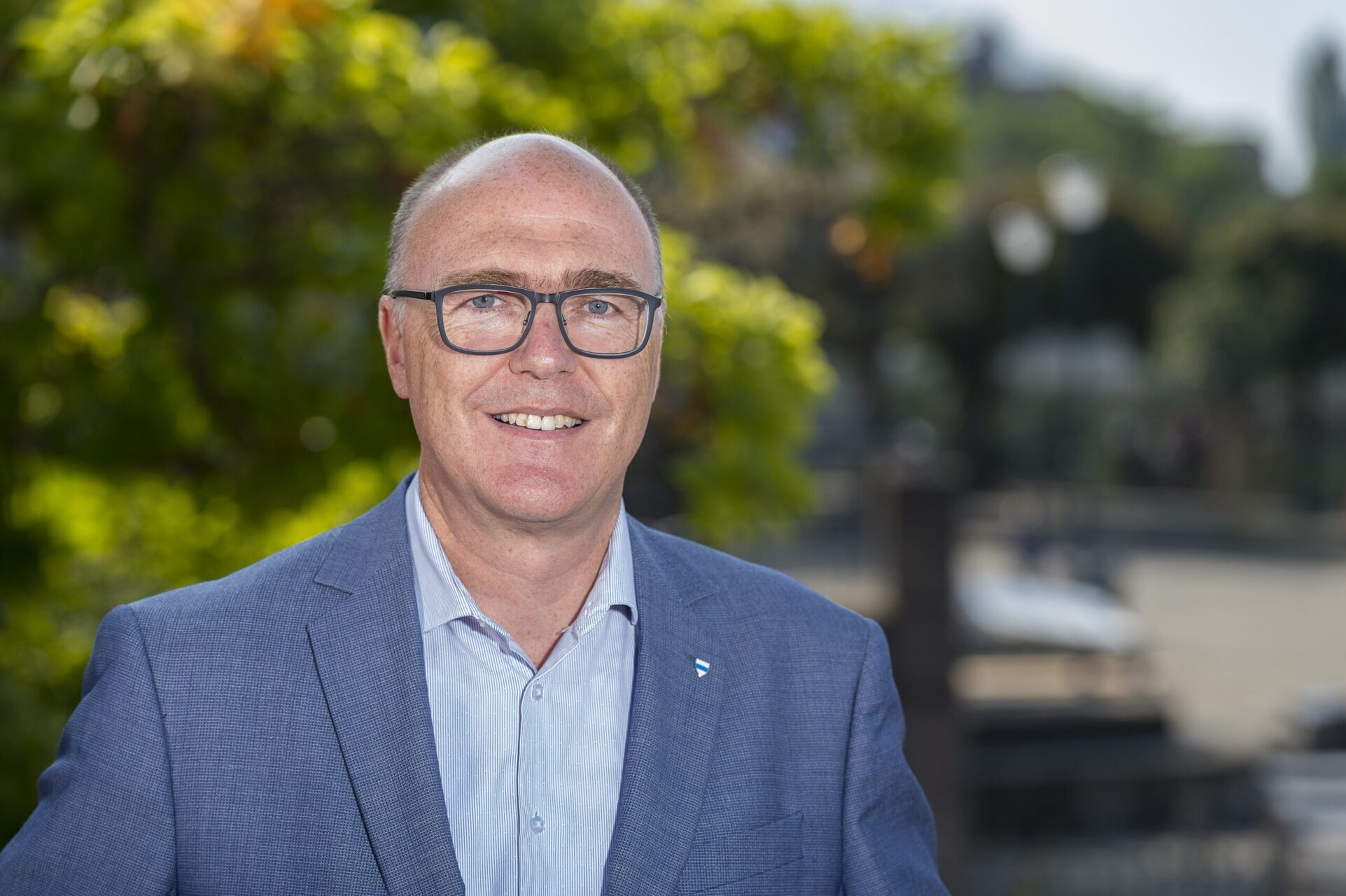
Federal Councillor Martin Pfister, in charge of Defense, recently called for a renewed effort to strengthen national cohesion. Photo: Wikimedia, under CC 4.0
National cohesion, political divisions, external threats: Switzerland needs a new «spiritual national defense,» argues Bernhard Altermatt, a historian and centrist member of the Grand Council of Fribourg, in this op-ed.
Recently, SVP members of parliament, true to their anti-European line, have threatened to secede with the minority cantons if the third package of bilateral agreements between Berne and Brussels is accepted by the people. Unrealistic as they may be, such statements show a lack of political civic-mindedness. Their main aim is to cultivate resentment, even if it means deepening divisions. From a centrist perspective, it's hardly surprising that similar secessionist bravado has also been uttered by pro-European activists in the past.
In fact, a few weeks ago, Zurich's urban left called for the canton to be split in two following a vote limiting the competence of large cities to generalize 30 km/h on their territory. It would be too simple to dismiss this kind of nonsense as whimsical cackling - after all, it's voiced by personalities belonging to the country's two biggest parties. By admitting to such rhetoric, the Red-Green camp and the Agrar party are calling into question the sovereign decisions of the people, even though they usually claim to be particularly good democrats.
The importance of national cohesion
Rhetoric that plays on ideas of secession calls into question the will to preserve national cohesion. Doubting membership of a common entity on the basis of political disagreements demonstrates a blatant lack of civic immaturity and patriotism. Marked by diversity and federalism, our country has an existential interest in safeguarding a sense of community, and hence in proscribing splittist fads. The public expects politicians to continually seek a balance between regions, bridge social divides and promote the common good.
Beyond the absence of a realistic alternative, the main motivation is to maintain peace and stability, both internally and externally. It's obvious that cities and countryside have no choice but to coexist within our country. The same applies to French and German speakers, Italian and Romansh speakers, older and younger generations, social partners, religious communities and so on.
Promoting cohesion is all the more important in a society where both diversity and individualism are on the increase. What's more, the external threats facing Europe and Switzerland have increased considerably in recent years. The population, for its part, does not yet seem to have assimilated either the new geopolitical situation or the dangers of an erosion of social bonds in this increasingly hostile context.
A new «spiritual national defense»
With this in mind, Federal Councillor Martin Pfister recently called for a renewed effort to strengthen national cohesion. A historian by training, the head of the Department of Defense referred in particular to the «national spiritual defense» (Geistige Landesverteidigung), without embracing the thinking and action of the first half of the 20th century.
On December 14, 1914, future Nobel literature laureate Carl Spitteler gave his famous «Our Swiss Point of View» speech in Zurich to the newly-founded New Helvetic Society. He called on Swiss people of different origins, cultures and opinions to strengthen the bonds that unite them. His vibrant appeal was addressed to the population as a whole, as well as to its elected representatives. The speech was a response to social tensions in domestic politics, and above all to the deep divisions separating the country's linguistic communities in relation to the international situation following the outbreak of war.
Spiritual national defense - in all its complexity and ambivalence - is a direct descendant of the warnings issued during the First World War. From the interwar period onwards, this movement advocated the consistent strengthening of Switzerland's internal cohesion and international position. The aim of this political and cultural program can be put into perspective with the present: security in Europe has never been so threatened in 80 years as since the occupation of Crimea in 2014 and the attack on Ukraine by Putin's neo-imperialist, revisionist Russia in 2022.
Unity and diversity, sovereignty and cooperation
When Francis Fukuyama predicted the imminent «end of history» following the collapse of the Communist bloc in 1989/91, he was as wrong as Samuel Huntington, who foresaw a generalized «clash of civilizations». Despite the non-realization of the main theses of these two influential American political scientists, the era in which we live requires a new, consistent effort in terms of strategic orientation and ideological anchoring. What does this mean for our country and our politics?
Firstly, Switzerland must do its utmost to promote and strengthen domestic cohesion – while nurturing good relations with its neighbors and the international community. Secondly, it is imperative that Switzerland massively strengthens its defense capabilities in the face of external threats. Here too, this is an objective that cannot be achieved without a renewal of ideals at home and collaboration with partners with whom we share values and interests.
A new «ideal national defense» requires real Herculean efforts. Switzerland needs intellectual and political forces that know how to seek compromise, that are accustomed to explaining complex links without dangling false, easy solutions, and that cultivate a spirit of cooperation at local, regional, national and international levels.
Bernhard Altermatt is a historian. A centrist member of the Grand Council of Fribourg, he is the editor of several books on Swiss foreign policy.
You have just read an open-access article from our print edition (Le Regard Libre N°124). Debates, analyses, cultural news: subscribe to support us and access all our content.

You'll also like



 French
  German
  English
Leave a comment