




Ukraine: war 2.0 on social networks
ukraine war
Unpublished article - Vincianne Hennrich
Our century is marked by the advent of the Internet and social networks. What impact will this have on a global conflict in the 21st century?th century? From influence operations to direct action and open source, an analysis of the importance of new information and communication technologies in the Ukrainian war.
Although war correspondents were already active in the past, they were often limited by numerous factors: filtering of content, transmission delays, manipulation of information. Today, the free dissemination of data is ensured by networks, in real time. In the Ukrainian conflict, major reporters currently on the spot in Kiev have been recounting «the war» daily for the past week via storys posted on the social network Instagram or posts on Twitter or Facebook. Sometimes, they can even be found reporting «live» in a video.
While this new reality enables specialized journalists to make important content available to the greatest number of people, in a very short space of time and, above all, freely, these resources are also available to all citizens. The latter can share their own testimonies and relate facts. What we pompously call the new information and communication technologies (NICTs), to refer to the Internet and all that it enables in this field, thus enable the free circulation of information so that everyone can potentially witness history - and without delay. However, this new situation has its limits.
Information, misinformation and disinformation
While anyone can publish information, anyone can also publish false information, and anyone can consult and interpret it in their own way. On the night of February 24-25, the twittosphere was abuzz with reports of air activity in the Ukrainian region. Three Il-76 transport aircraft leaving Lviv were observed via the Flight Radar website. Individuals with accounts specializing in open source intelligence (OSINT) on Twitter relayed this information. Numerous hypotheses were put forward by Internet users: was it a humanitarian aid rotation? A supply of military equipment? Ex-filtration by the Ukrainian government? This last hypothesis became a rumor. The networks can then amplify the phenomenon of «fake news».
News is just a click away. However, this news is sometimes unverified or poorly verified (in which case it's called misinformation). Worse still, they can be instrumentalized by a political party, a camp or a state (in this case, it's called misinformation). On the evening of February 25, Ukrainian President Volodymyr Zelensky filmed himself live in the streets of Kiev, where he repeated the operation the following day, February 26. What was the aim? Beyond the communication and support operation towards his fellow citizens, it was to attest his presence in the capital and thus silence rumors of his flight to Lviv.
Earlier in the day, the speaker of Russia's lower house (the State Duma) had stated that the Ukrainian head of state had abandoned Kiev for the west of the country, potentially preparing his ex-filtration. This false information had been published by Russian propaganda media such as Sputnik News and RT (Russia Today) and then shared on social networks, sometimes creating confusion. Vigilance is therefore called for when the diversity of information disseminated on the Net can be largely influenced by the different actors involved in a conflict.
The weapons of social networking
The Russian strike on the Ukrainian television antenna on Tuesday 1er March momentarily interrupted the broadcasting of several TV channels. Communications were restored later that evening.
This attempt to disrupt Ukrainian communications is representative of Vladimir Putin's vision of modern warfare: outdated, even obsolete. In the West, war is not played out in the 21st century.th century, on TV sets. War is told and reported mainly on social networks. Shutting down an antenna does not mean the end of state propaganda and information; citizens are creating their own media to keep abreast of events and communicate with each other, outside any state control.
The Ukrainian government itself favors announcements on social networks: Twitter, Facebook, Instagram.... President Zelensky, or other authorities such as Deputy Prime Minister and Minister of Digital Transformation Mykhailo Fedorov, use these tools daily, transforming them into veritable weapons. A way to unite, but above all to make themselves accessible to the Ukrainian people.
A defeat for Russia's cyberwar?
It's the law of maximum harassment: misleading the enemy, in particular through a stream of intoxicating information that will sow confusion and doubt. This was supposed to be - according to experts who have been analyzing the situation for years, long before the current war - Russia's flagship technique, particularly in the digital domain. But just when it seemed that leader Putin and his government were prepared to fight a cyberwar (a digital war), for now, this is not the case.
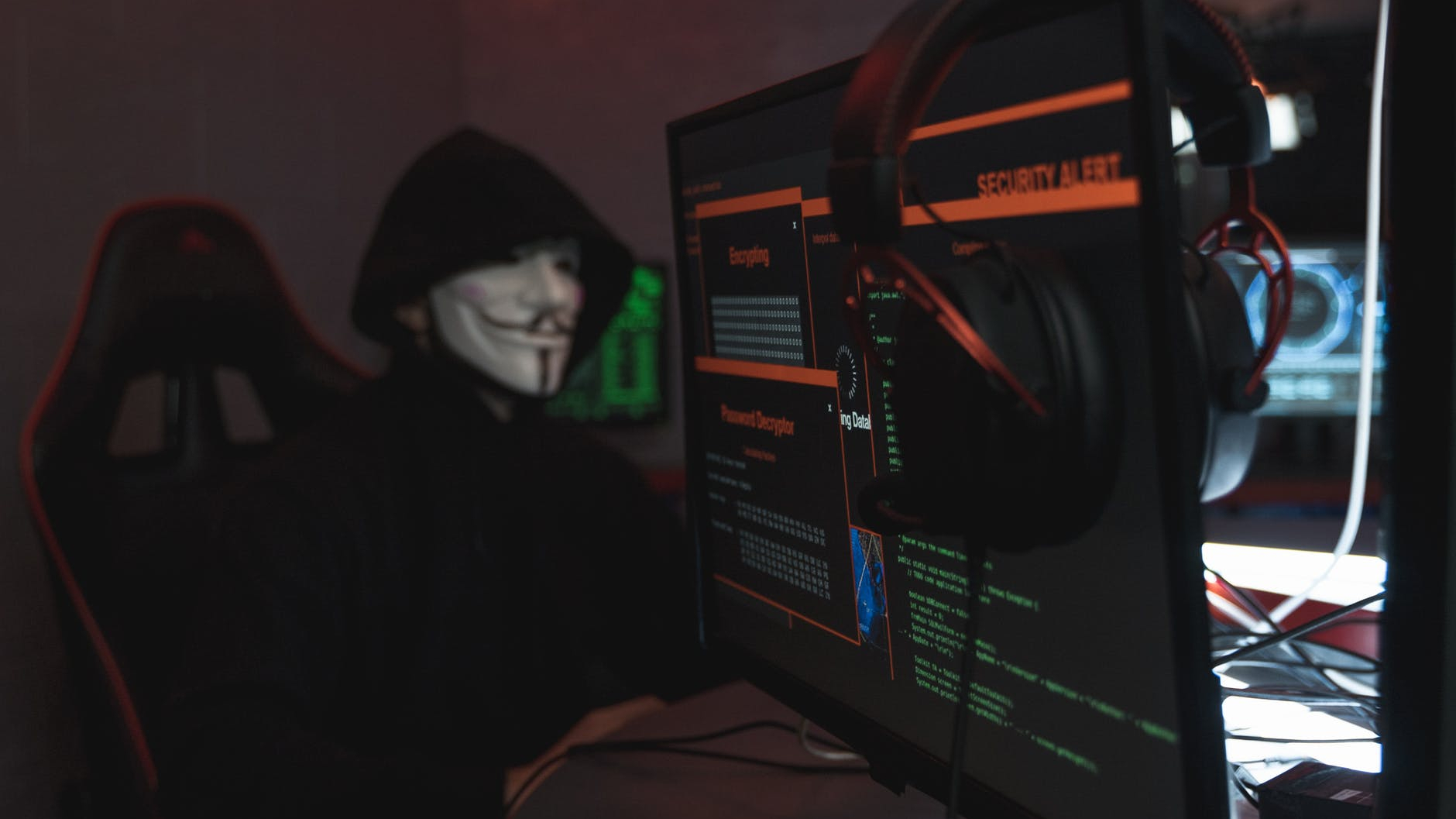
While it's undeniable that an intense propaganda war has been waged on the networks to date, Ukraine seems for the moment to be resisting the invaders' attacks both physically and virtually. Surprisingly, there is no Russian domination here. Although the Ukrainian government was not equipped with a cyber component, it was able to bounce back and set up a digital army component in just a few days, via an appeal on social networks. Ukraine can also count on the support of the hacktivist group Anonymous, which officially declared war on Russia the day after the invasion began.
Read also | War in Ukraine: and the sirens went off in Kiev
But if a battle seems to be played out «live» on the networks via various influence operations, the war is also played out on the other side of the screens when the opposing parties scrutinize each other.
From post to intelligence, it's just a click away
Back in 2015, the positions of Russian military personnel in the Crimea could be determined because the soldiers were sharing geotagged photographs. Today, Russia's «SecOps» (operations security) seems to have been put to the test once again, as a Ukrainian woman reported on February 26 that she had communicated with Russian servicemen via the geolocation-based dating app Tinder. If this anecdote makes us smile at first, it should inspire us to ask more questions about sharing. For example: could this prejudice ongoing operations? Anything published on the networks can be exploited. Any photo or video post on military operations will provide details of positions and equipment, for example. And all this data can be used by one of the parties to anticipate, or even counter, the opponent's future actions.
OSINT is a powerful tool, as evidenced by the profile of Eliot Higgins, founder of the website bellingcat. The finance employee was transformed into a true analyst of conflicts and military operations, entirely at a distance and solely thanks to information shared on the networks. Today, Eliot Higgins is known, among other things, for revealing evidence of the use of chemical weapons by the Syrian regime, and for demonstrating the involvement of the Russian army in the crash of Malaysia Airlines MH17 in Ukraine.
Ultimately, isn't instant communication of sometimes crucial information detrimental to state operations? Yes, but it's also useful - indispensable, in fact. The only thing that matters is how this information is sorted and then verified, so that it can be transformed into genuine intelligence. It's essential to take a step back from information relayed on networks, in the same way as you would take into account a newspaper's editorial line when reading an article. All the more so when pathos The poignant, moving narrative of war can sometimes alter our perception of reality.
Photo credit: © Pexels
You'll also like





 French
  German
  English
Leave a comment