

News Mondays - Léa Farine
Donald Trump's anti-Muslim decree, a golden opportunity to denounce the often total lack of depth in debates about Islam, the Islamic State and terrorism. The American president's reasoning: terrorists commit atrocious acts in the name of their religion, therefore that religion is evil, therefore Muslims are dangerous, therefore it is justified to keep them at a distance in order to protect the American population. It's easy, so easy that you can apply the same canvas to anything. The Crusades to the Holy Land, for example, from the XIth to XIIth century, warlike ventures carried out in the name of the Catholic religion, this time with a universal «leitmotiv»: convert or annihilate the heretic.
We should have realized by now that what creates conflict is never the particular form that a particular dogma or belief system may take. The human animal is capable of being cooperative and benevolent but, when external circumstances allow and under the influence of various factors, it can also be guided by atavistic reflexes to dominate and extend its power. And history teaches us that when an individual or group of individuals seeks to assert this power in a bellicose manner and with contempt for others, on the one hand, and has the means to do so, on the other, the consequences are deadly.
There is therefore no radicalism essential to Islam, and the values espoused by this religion and by those who practice it are in no way particularly dangerous. We need to get out of denial: we are dangerous by nature, all of us. And getting out of denial means abandoning an overly Manichean and essentialist analysis which, by simply pitting dogma against dogma, fuels the fire of conflict.
Of course, we currently have a problem with terrorism. It's obvious that we can't run away from conflict, and it's also obvious that states must do everything in their power to protect their citizens. But there is no simple answer. We'd like to think so. They would have us believe that banning Muslims, or banning minarets, or banning the wearing of the veil, or fighting Islam is effective, and we readily believe it, because the price of such solutions is low. They cost us nothing, not even an in-depth analysis. Yet war always has a price.
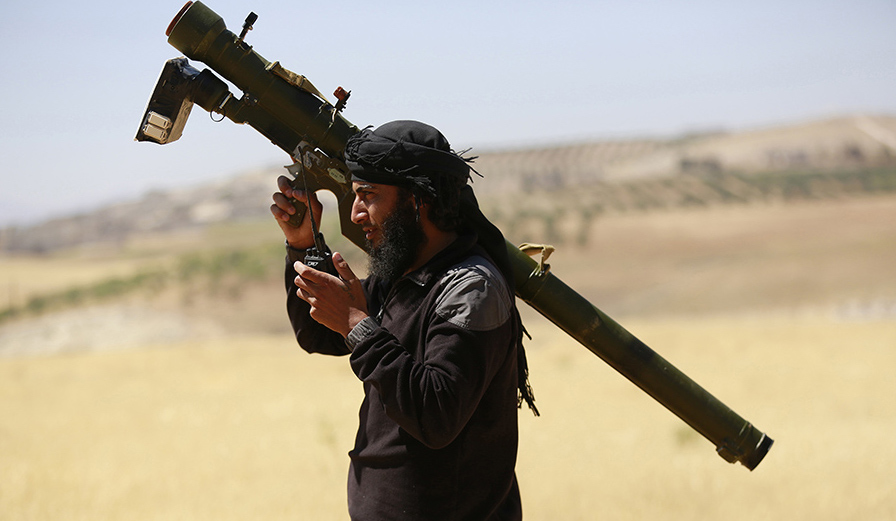
In this article, I'll leave aside the geopolitical factors, a complex bundle of influences, that have led to the emergence of radical cells such as Bin Laden's Al-Qaeda and the Islamic State. Firstly, because my knowledge of the subject is not deep enough, and secondly, because such an examination, in itself, is no more effective in the fight against terrorism than Trump's executive order. Instead, let's talk about the means: I said above that the extension of a form of power requires certain means - media, human, political and, above all, economic. How does the Islamic State finance its activities?
Firstly, with oil, either directly from wells located on its territory, or indirectly, with financial aid from the Gulf States. However, «no really effective embargo is applied to oil extracted in territories controlled by the Islamic State» and even less to oil from Gulf countries. Secondly, with the ransoms paid by various states to recover their hostages. And finally, with the sale on the international black market of archaeological treasures collected during looting and bought by wealthy foreign collectors. All this from the article «Etat islamique, ses cinq sources de financement» ("Islamic State, its five sources of funding") in the magazine Balance sheet and dated October 2, 2014 that tells us.
It therefore seems to me that an oil embargo, though politically and economically costly, could, for example, be a more effective solution in the fight against terrorism than an anti-immigration decree. The state of emergency declared in France during the recent attacks is also an effective solution, albeit at a price. And even if it seems unfair, it's a price we have to pay, just as we have made our enemies pay, in other circumstances, at other times. By focusing the debate on Islam, both Islamophobes and those who fight them are creating a comfortable black-and-white smokescreen to conceal reality.
For yes, we are at war, yes, we are quite powerless, for the moment, in the face of the rather unprecedented form of Islamic State terrorism compared to the conflicts we're used to. Does this mean we won't defeat it? I don't think so. I believe that, even if it comes at a cost, we will eventually overcome this conflict. But if we persist in denial, if we continue to maintain old Manichean patterns, based on the constant opposition of values elevated to the rank of dogma, then there will be others. There always will be. I don't believe in the moral progress of mankind. We are not intelligent enough, and too bellicose by nature, to avoid war, to avoid unrest. However, if we could at least stop believing in easy outcomes, we'd already be taking an important small step forward.
Write to the author: leafarine@gmail.com
 French
  German
  English