




Jean-Baptiste Noé: «Universalism is failing».»
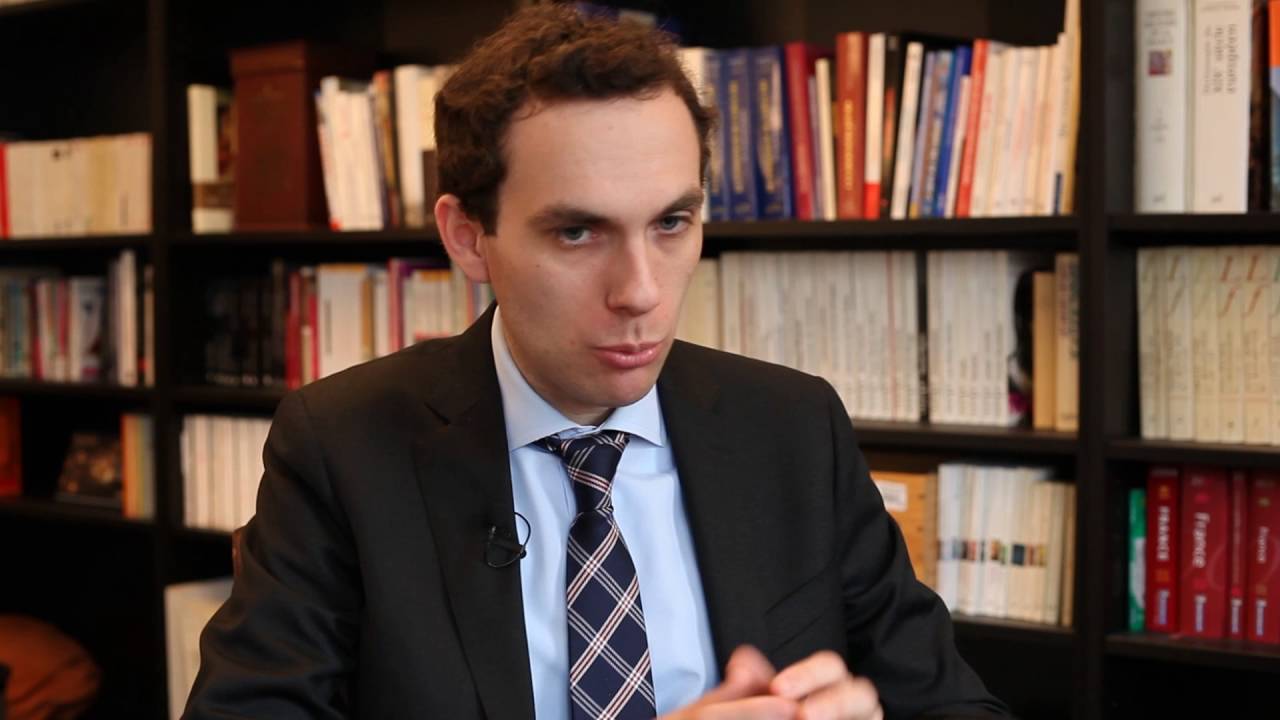
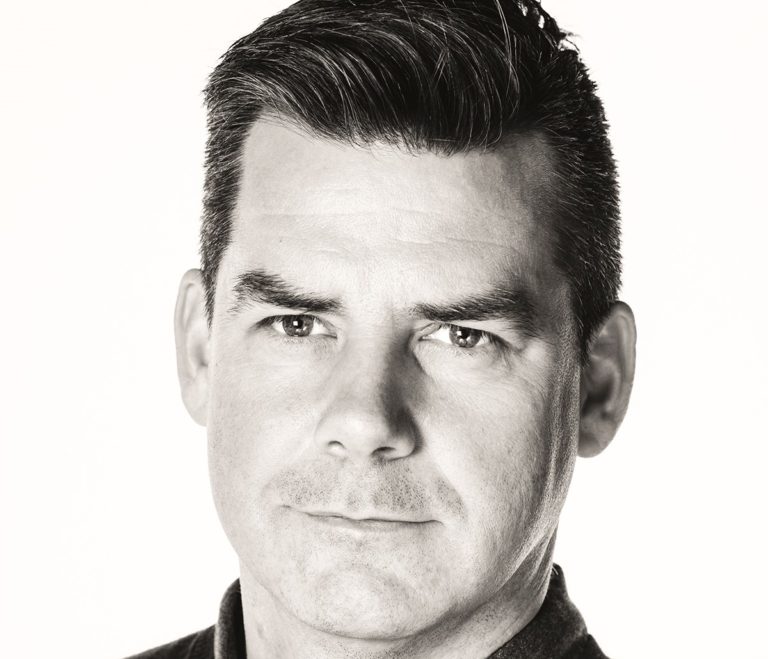
Jean-Baptiste Noé © DR
To mark the release of his book The decline of a world, Jean-Baptiste Noé talks to us about the end of the Western dream to shape the world in his own image. And he even dares to rejoice in it.
Jean-Baptiste Noé is one of those intellectuals whose compass is to take reality as it is, the better to denounce those who shun it. A doctor in economic history, professor of geopolitics and editor-in-chief of the French magazine Conflits, he is also a specialist in the geopolitics of the Vatican. In his new book - supplemented by the work of the Conflits team - he analyzes the crumbling of a world order that has long been lulled into a universalist illusion. The war in Ukraine, the widespread contestation of international institutions and the failures of Western interventions abroad reveal the obsolescence of this world order. The time has come for lucidity.
Le Regard LibreYour new book is entitled «The Decline of a World». Which world are you referring to?
Jean-Baptiste Noé: I'm talking about the Western world, and more specifically, its universalism. For a long time, from the 19th century until the last few decades, Europeans believed that they were going to export their culture, their values and their way of thinking throughout the world. However, we realize that many non-Western populations do not want to become Westernized, preferring to preserve their particularism, their history and their culture. As the rather negative title suggests, this universalism is in decline. However, I think this is to be welcomed, as it has led to interference and wars.
How did this form of universalism manifest itself?
It manifested itself in concrete terms through colonization, which aimed to transform African populations into European peoples. For example, in the 1980s and 1990s, European states made development aid to African states conditional on compliance with a European agenda: the establishment of democracy, acceptance of UN standards, etc. The war in Iraq launched in 2003 is also a symbol of this desire to export democracy.
The only difference is that the American decision to invade Iraq was met with a slap in the face.
Yes, that was the only moment of revolt in the Western camp. But the rebellion was in vain, as the war went ahead despite opposition from the French and the United Nations (UN) Security Council. Then there was the North Atlantic Treaty Organization (NATO) intervention in Libya in 2011, and the launch of Operation Barkhane in Mali in 2014, which has just ended in bitter failure. Terrorism is still with us, and the region is more unstable than ever. We realize that military intervention doesn't work, and that imposing our model on others is doomed to failure.
When did this «universalist world» emerge?
I would trace its modern emergence back to the middle of the 19th century, with the colonization of Africa and Asia. The creation of international institutions, such as the UN and the International Monetary Fund (IMF), is in line with this, as they are modelled on Western philosophy and law. The idea may be generous, but the desired world order is nonetheless Western. This may have worked when the West had the military, political and economic means to impose this order. It no longer has them, especially since the end of colonization.
What are the signs of this decline?
Today, this failure of universalism is reflected in the questioning of the UN, whose structure is based on the victors of 1945. Given that our world order depends on an 80-year-old event, it's hardly surprising that it's being called into question. The African Union claims a permanent seat on the Security Council; Beijing rejects international law as purely Western; Jordan's ambassador to UNESCO considers the Koran more important than the Declaration of the Rights of Man and of the Citizen. There is no shortage of examples. This decline can also be seen in the rejection of the European presence: Mali has driven us out of Africa, French troops are frowned upon in Burkina Faso and Côte d'Ivoire...
Why was there so much talk about Fukuyama's «end of history» theory, which described the advent of liberal democracy and the end of world conflict?
That was the dream until the early 2000s. The End of History and the Last Man is one of those books with striking titles, which serve as benchmarks that people talk about without necessarily having read them. There was a period during which we believed in this thesis, which lasted a little over ten years, when nothing much happened. It made us believe we were in a new world, whereas it was just a parenthesis.
Liberal democracy has therefore been guilty of’hubris...
Yes, of naivety and’hubris. Guilty of’hubris because we've tried to export it without realizing that it always needs a cultural and spiritual breeding ground. Typically, it cannot flourish in cultures marked by strong inequalities between men and women, or by major ethnic cleavages. This denial of the importance of culture in the creation of democracy, and this refusal to see Europe's specificity in this respect, betray this mixture of excess and naivety. It is precisely this naïveté that leads us to fall into the’hubris and the will to power. Thucydides already explained: idealists are the ones who make wars. Realists, behind their more bellicose exterior, create fewer wars than they do.
In short, the West has made democracy a global standard, almost a moral imperative. What place does morality have in geopolitics?
It's a real subject. When China intervenes in Africa, it does so not in the name of morality, but in the name of its own interests. The West does it in the name of morality, and doesn't dare reveal its desire for power. We don't even dare say that we want to control our energy intake, even though this would not be immoral. They want us to believe in a kind of general altruism, a global philanthropy. We intervene in Iraq, but not in Yemen; we support Ukraine, but not Venezuela. The choice of countries to help is based primarily on political logic, not altruism.
Does the revival of «realism» in world geopolitics signal the decline of multilateralism?
Multilateralism can only exist with a common philosophical frame of reference. In 1945, it worked with 60 states in the world, all stemming from the same religious and civilizational matrix. Today, there are 300 states in the world; some prefer the Koran, others the Declaration of Human Rights. Multilateralism is therefore impossible. How can we establish a common law if we don't have the same intellectual references? Before being a set of texts, law is a philosophy and an anthropology. It's a vision of man and his place in the world. Different visions require different rights.
But is this common intellectual frame of reference necessary in the context of multilateralism linked to ecological issues? The climate emergency is very concrete.
The COP is a sham: it's held every two years and every time it's promised that everything will change, when in fact nothing changes. What's more, the big countries don't sign up to it. Ecological« multilateralism is useful for two reasons. Firstly, it enables African countries to request financial aid to compensate for Western pollution. Secondly, it pleases the Europeans, who feel they have a say in world order by organizing their great masses, which provide a living for international civil servants and administrations.
You also suggest that international peacemaking relies more on the economy than on international institutions dedicated to world peace.
The economy has a pacifying function. This goes back to an 18th-century debate. Wars show us that our system doesn't work perfectly, but even so, there is a link between the intensity of economic relations and the absence of war. The economic relations between China, the United States and Europe are such that all these players would have a great deal to lose from a head-on war. The countries where wars are tough are those that are not very well integrated into the global economic space: Sudan, Yemen and Syria spring to mind. From an economic point of view, these wars don't «bother» anyone. A war in Taiwan, on the other hand, would bother everyone. So for the time being, it hasn't broken out, even if China is keen to invade.
China scares the Western world...
Yes, and rightly so. It is a competitor for the Western world. It is changing things in the region. It's no longer even a «rising power»; it's now an «established» power, and carries enormous weight. This fear is also civilizational, insofar as Westerners find it difficult to understand and circumscribe China. China has reinjected Marxist ideology, notably at the last Party Congress. We're not comfortable with its intellectual frame of reference, which is very different from our own.
Rather than China, Jacques Attali asserts that it is the African continent that will be the real challenge for France in the coming decades, due to its demographic and therefore economic potential. You don't seem to share his view.
People have been talking about «Africa's potential» for two centuries. As far back as 1880, Jules Ferry, spearhead of the French colonial ideal, thought that colonization would help develop French industry. This did not happen. Today, France trades more with Belgium than with all African countries. The regions of the future seem to me to be Central Asia, Latin America and the United States, which remains the world's leading power. This focus on Africa is part of the colonialist overtone in France, which advocates intervention. Either out of self-interest, or out of ignorance of the real state of the world.
Leaving Africa would be a major blow to the French-speaking world and thus to the soft power French.
I'm very critical and reserved about the Francophonie. In my opinion, it has two functions: to maintain a colonial illusion and to support an administration that depends on it. Francophonie is geopolitically useful when it is aimed at French-speaking elites, but not at a mass of poorly educated and impoverished people. What would be useful in terms of Francophonie would be to develop genuine French lycées abroad in key countries, equipped with the best teachers and demanding programs, in order to train the elite of these countries. What's more, French is in sharp decline in Africa compared with local dialects.
Why should France pivot from Africa to the «Indo-Pacific» zone?
Because it is there, with its territory, its army and its population. It owns territories from the Mozambique Channel to Polynesia. This area is of prime importance, as most of the world's trade passes through the Suez Canal and the Strait of Malacca. What's more, it is home to almost half the world's population, with only China and India remaining. The West is also present, thanks to Australia and New Zealand. The region's players are significant, and its population is young, hard-working, well-educated and eager to be powerful. In this respect, the example of Vietnam speaks for itself: in the 1980s, no one was betting on this war-torn country, but it managed to get back on its feet and is now booming.
You paint a mixed, even pessimistic picture of French power. Does France still play a major role in world geopolitics?
France's global presence depends above all on its expatriates, entrepreneurs and intellectuals. A professor who travels abroad as part of his job is a true French ambassador, and contributes to France's global influence. These are the people who have the primary role, whereas diplomats and members of central administrations no longer understand the world in which they live. The latter cruelly demonstrate our country's loss of influence on the international stage.
Private players would therefore be powerful assets.
Indeed, and this is true on two levels. On a national level, a private school works better and costs less than a public school. And yet, the schooling issue is paramount, because illiteracy is a real problem. A country cannot be powerful if its citizens are not well educated. On a global scale, a French expatriate setting up a business, or an artist or writer, carries more weight than the Quai d'Orsay.
You see the French administration as an obstacle to French influence.
Exactly. France is plummeting in all international rankings (educational, industrial, etc.). French power is hampered by its bureaucracy, which defends its own turf and sets its own standards. In reality, French power comes from large companies like Michelin or Total, and innovative SMEs, which create wealth and demonstrate our know-how. There is a growing divide between the actual source of French power and those who hold it back. Only time will tell whether Emmanuel Macron's reform of diplomacy will be beneficial.
Another bridle of French power is its German neighbor, you say. You don't mince your words on this subject.
France was outflanked by Germany, which defended its interests. It scuttled the French nuclear industry and did not play ball when it came to the arms industry. Today, Germany controls the most important positions in the European Union (EU). All this has been to France's detriment, and we're realizing it too late. Closing our nuclear park to install German wind turbines and import Russian gas has undermined our independence.
What lessons should the EU learn from the war in Ukraine?
The first lesson is that the war was triggered in part because the EU failed to enforce the Minsk agreements. This shows that when a problem is not dealt with effectively, it becomes infected and leads to a much more serious war. The second lesson is that when war breaks out, it's nations that remain in the driving seat and negotiate peace agreements, not international systems.
The tendency has long been to naively consider war impossible. The current context (Ukraine, Taiwan) has reversed this trend, and is now spreading the fear that the world is about to explode. How can we strike the right balance between naivety and psychosis?
Psychosis is often the fruit of naivety. Just as we were naïve enough to believe that war had disappeared for good, the return of war now sends us into a psychotic state. The right stance is to see that war is unfortunately a reality, and that armies are therefore needed not to attack, but to protect. In other words, it's about looking at the world as it is.
Write to the author: matthieu.levivier@leregardlibre.com
You've just read an open-access interview. Debates, analysis, cultural news: subscribe to support us and get access to all our content!
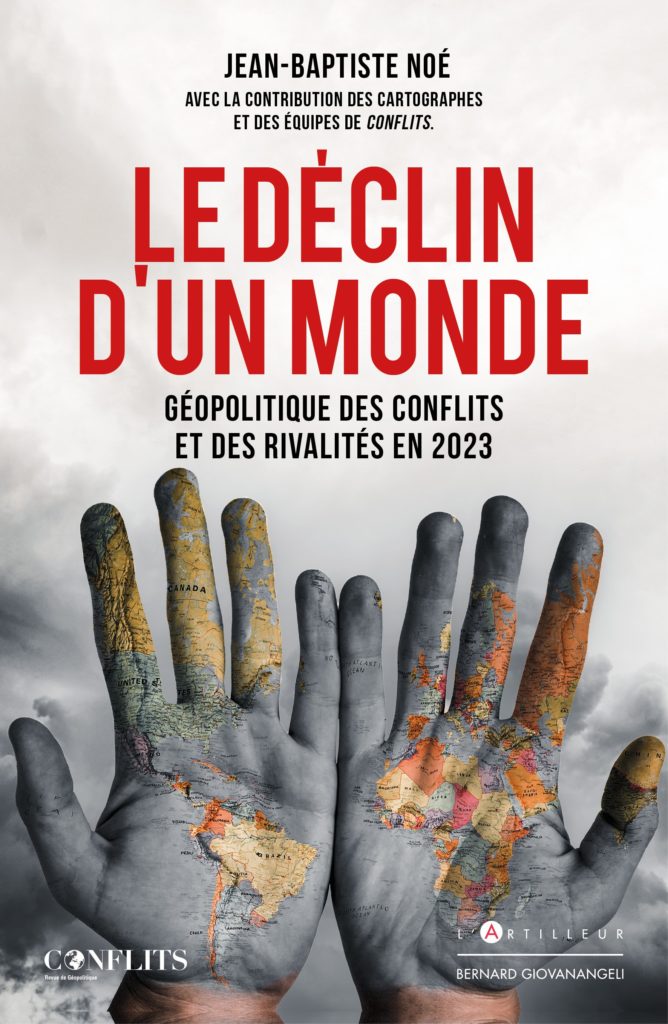
Jean-Baptiste Noé
The decline of a world: geopolitics of confrontations and rivalries in 2023
L'Artilleur
2022
288 pages
You'll also like


 French
  German
  English
Leave a comment