




Mexican elections: Trump in second place, drugs in front
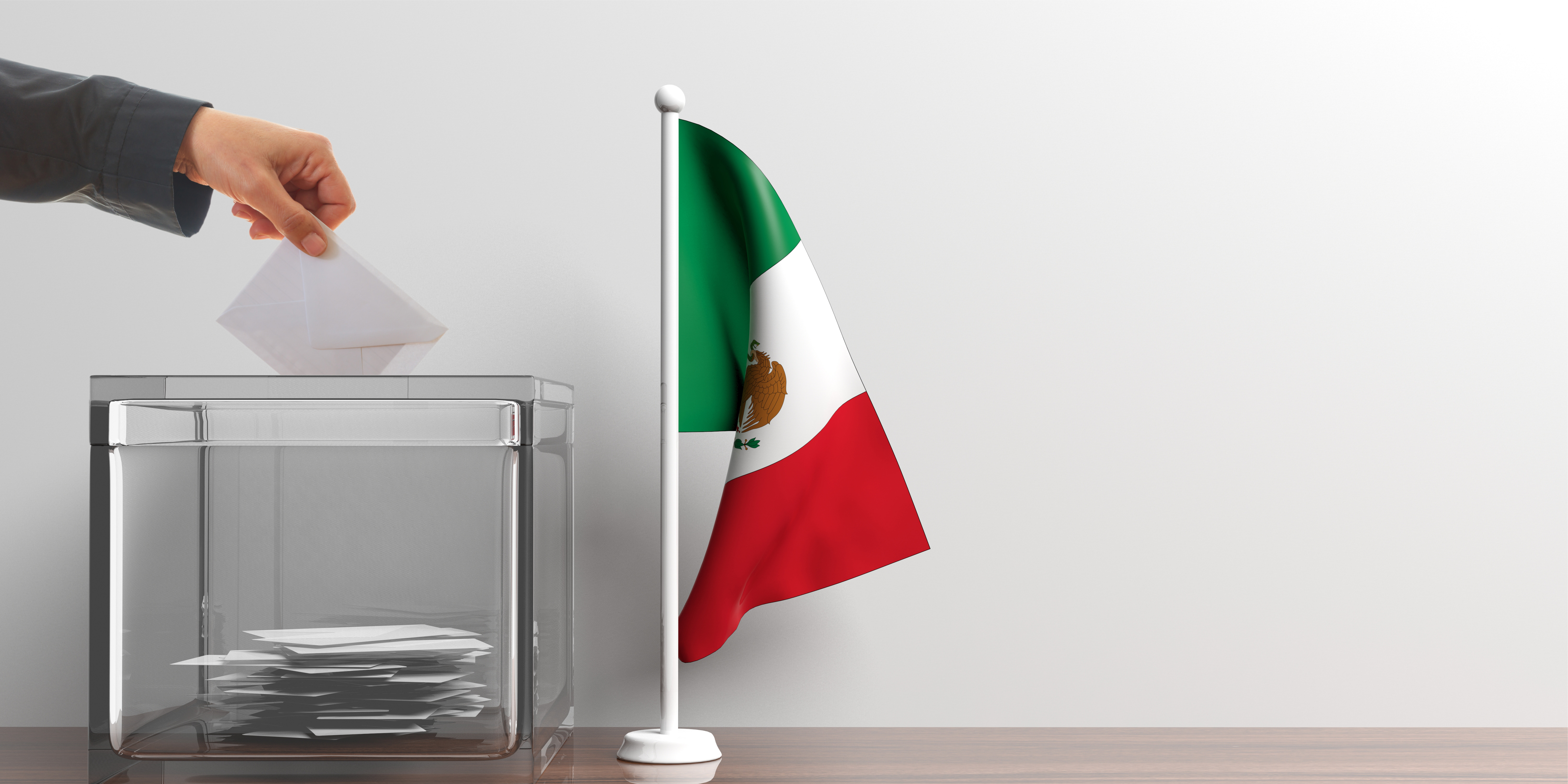
Glass ballot box and a small Mexico flag. 3d illustration
News Mondays - Clément Guntern
The 1er July 2018 saw the Mexican general elections. As much the parliament as the governors, mayors or president had to be appointed by the Mexican people. For the first time in its history, a man from the left will sit in Mexico City in the person of Andres Manuel Lopez Obrador. This popular push for a man outside the traditional Mexican political system, even if he has had a long political career before, should not be compared with the election of Donald Trump on the other side of the border.
Yet one of Obrador's most pressing challenges will come from across the border. His turbulent colleague to the north has been promising since the start of his election campaign to denounce the NAFTA free trade agreement with Mexico and Canada, believing it to be unfavorable to the United States. If President Trump follows through on his threats, the consequences of a withdrawal would eventually hit the US in return, as Mexico's economic situation would deteriorate sharply and the southern states would see not a Central American but a Mexican influx. The lever of migration therefore remains in Mexican hands to try and convince Trump of the status quo, a very difficult thing for a president who doesn't believe in, or isn't capable of, reflection.
However, President Obrador's main challenge remains the domestic situation and the terrible drug war that is shaking the whole country, taking the lives of over 83,000 people - the second deadliest conflict in the world today, after Syria. Drug trafficking has existed for a very long time in Mexico, located between the producer countries of the south and the major consumer countries of the north. Although trafficking has been going on for a long time, it's only since the 2000s that the situation has degenerated. Unfortunately, this date coincides with the arrival of real democracy in Mexico.
Prior to 2000, the PRI (Party of the Institutionalized Revolution) had held power since the Mexican Revolution between the wars, and had developed a clientelist and cooperative system, although elections were held regularly. The PRI created a federal state. On paper only, because the PRI party-system dominated all spheres of politics, and troublesome governors were removed from office. The Mexican state showed its power during the 20th century.th century by fighting the excesses of drug trafficking with a central police force. Excesses only because violence was partly avoided by a pact between the state and the drug barons: for a certain sum of money and a guarantee to remain peaceful in its actions, the PRI government let its barons prosper.
This status quo was overturned by the arrival of democracy in the 2000s. A real federal state was born, and not just one on paper, and each state developed its own police force, with varying degrees of training. In addition, democracy prevented the survival of the pact with the drug barons, and the all-out fight against traffickers was launched. But as the central state had no police of its own, local law-enforcement agencies intervened with their own resources and were often the target of gang corruption. The two situations of democracy (end of the pact) and the federal state have created an untenable situation for the Mexican people.
For many observers, Mr. Obardor could be the man for the job. The first president of southern Mexico in a very long time, he has promised a policy of redistribution to offer future prospects to drug-ridden regions. The fight for a true democracy, still structured by PRI reflexes, must also be waged, all to ensure a safe and prosperous Mexico.
Write to the author : clement.guntern@leregardlibre.com
You'll also like

 French
  German
  English
Leave a comment