




For children to be fulfilled, everyone has to pull together
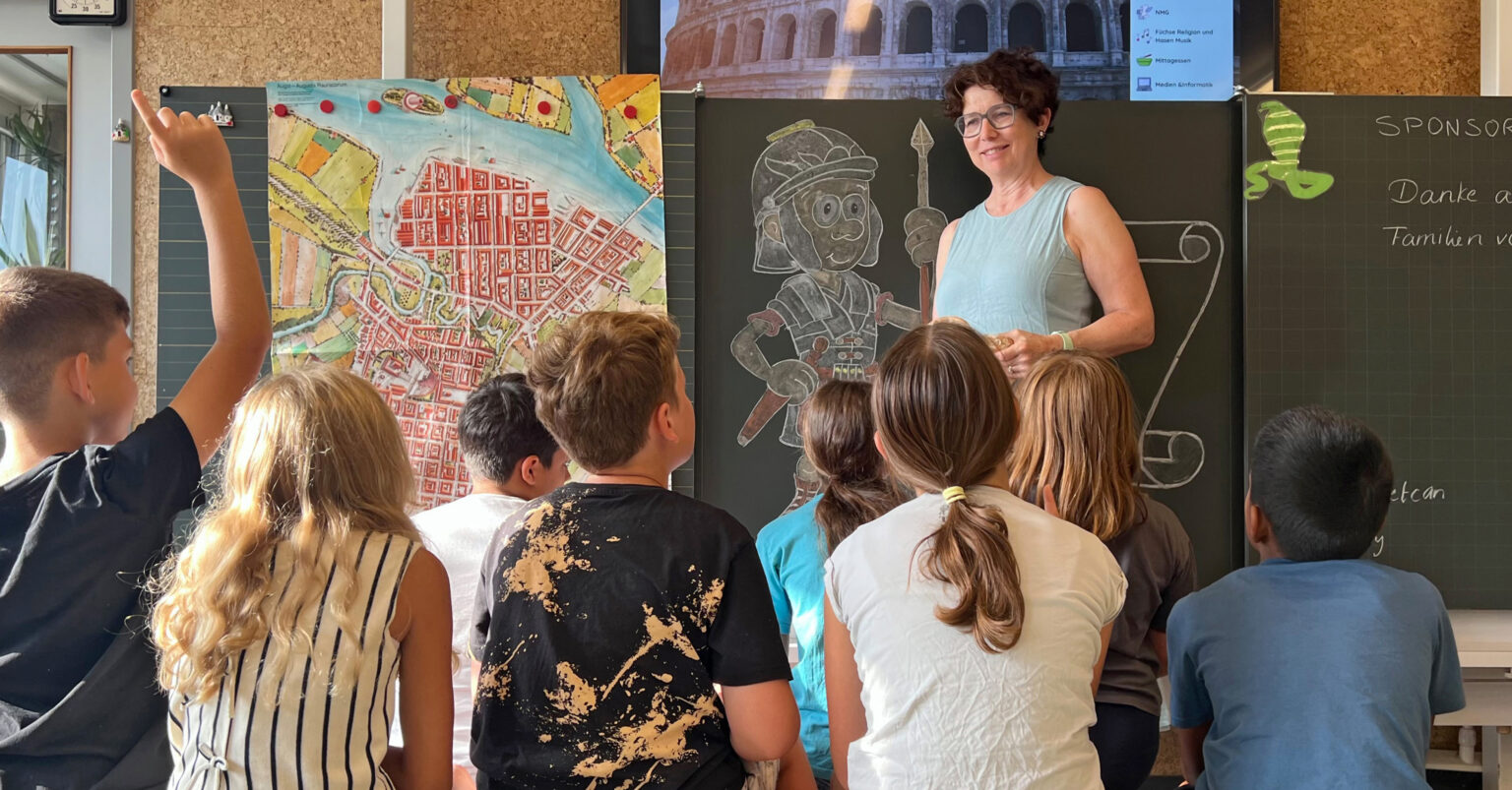
Nathalie Meyer devant une classe d'école primaire à Aesch (BL)
When children from a migrant background make a nuisance of themselves at school, many believe that the responsibility lies with the school. However, problems often originate within the family.
L’original article is published in German in Schweizer Monat.
I've been teaching at an elementary school in Basel-Landschaft for 35 years. In addition to regular classes, the canton also offers small classes. After two years in kindergarten and six years in elementary school, children move on, on the recommendation of their teacher, to the general, extended or pre-gymnasial level of secondary school. Parents can also request a transition exam for their child. At secondary school, there are also in-class support courses and small classes for students with special social or intellectual needs.
Almost 30% of pupils in Basel-Landschaft's compulsory schools do not have Swiss nationality. At secondary level II, the figure is still around 25%.
Many people have strong opinions on the issue of migration and school. I often hear it said that «the school will take care of it» when children from a migrant background stand out. In elementary school, however, we also meet children from non-immigrant backgrounds who have difficulty understanding texts or who are socially conspicuous. Pupils only spend a few hours a day at school - their socio-economic environment has a greater influence.
Teachers take on educational tasks
In elementary school, children of all levels learn together, unlike in secondary school. We primary school teachers are masters in the art of individualization. We teach in a class with different levels, so that all students can be encouraged and stimulated in the best possible way. To achieve this, we take on educational tasks and work closely with parents. The proverbial «village» (Dorf) needed to raise a child is therefore largely made up of elementary school, and this system works well.
At around 13, many teenagers are ready to explore new avenues. The transition to high school can help them challenge their habits. In high school level courses, many children of the same level are grouped together in the same class, where they can measure themselves against each other and progress. This creates a new motivation: «Now I can show what I'm capable of.» My colleagues in the secondary school encourage this motivation and effectively place the very good students in a higher level.
Moving instead of looking at a screen
If all the parties involved - children, school, parents, carers, sports clubs and music schools - work together to find solutions, children from immigrant backgrounds and others will be able to make the most of their potential.
However, we primary school teachers often find that in some families, mothers carry too much responsibility on their shoulders. They work outside the home, take care of the household and the family - and have to motivate their children to read, often with the TV on. It can take two generations for a democratic conception of the family, with a fair division of tasks and appropriate childcare, to be established.
Day-care places are expensive. Support services such as psychomotricity and psychological counseling are organizationally difficult to access, or simply incomprehensible to many poor working parents, especially those from other cultures.
Sometimes, differences in lifestyle can also be a source of stress for children. Doing homework in a calm, organized way is not the norm in all cultures. We expect children to go to bed early in order to be awake and receptive in class. A difficult task when families are still active late at night.
The school should therefore not only be a place of learning, but also a center for enriching leisure activities, with offers of physical and play activities. Many communities have virtually no playgrounds left in their neighborhoods, and many children spend their time in front of screens rather than outside. All-day crèches on school premises - from 6 a.m. to 6 p.m., even during vacations, and free of charge for low-income families - could be a lifeline for some children.
Read also | The school, a political issue through time
The Swiss education system is permeable: secondary school and vocational apprenticeships offer a wide range of opportunities for further study, including the «maturité professionnelle» or "passerelle". Studies show that children have unequal starting conditions. But my experience with former pupils confirms that after the 6th grade, all is not lost. However, for many, scholarships are a difficult obstacle to overcome, and can put the brakes on young people's desire to learn.
Language is often a barrier for children with a migrant background. Only 62% of compulsory school pupils in German-speaking Switzerland speak German as their main language. Language barriers complicate learning in all subjects. Mathematics has long since been more than just arithmetic: difficult exercises are often a major challenge for non-German-speaking children. Added to this is the fact that primary school children are not yet mature enough to recognize independently whether they have understood a text correctly, or which key words might help them to understand it.
Language proficiency is a key factor in academic success. That's why we place so much emphasis on early language learning, even before kindergarten. As teachers, we're well placed to assess whether a child simply needs time to catch up linguistically, or has reached his or her limits.
Read also | Modernity's self-destruct button
In the course of my career, I have also recommended children whose results were currently too low to enter higher secondary education, because their intellectual abilities and supportive environment warranted it. Some of them even managed to go on to high school without difficulty. Conversely, I recommend that children who are neglected or live in an unstimulating environment spend more time at a suitable level with intensive support, so that they don't get left behind. In a dual, permeable education system, these paths also lead to successful academic and professional careers.
The school, a «village within a village»
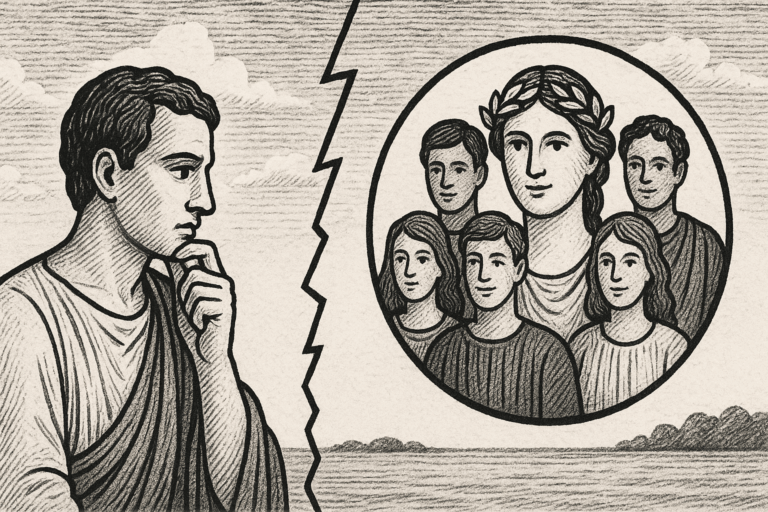
My class is currently working on the theme of «Ancient Rome». We talk about how the Romans conquered half of Europe, and compare this to our colorful daily lives in the playground. The children then realize that today we live in a diverse, mixed-race society, where everyone can live with their strengths and weaknesses, and coexist peacefully with others. In Switzerland, children of all cultures, whatever their parents' level of education, have the opportunity to succeed professionally.
Personal motivation and the opportunities offered by the dual, permeable education system, with its lifelong learning modules, are within everyone's reach. As a society, we have a responsibility to constantly rethink the school and to offer additional, accessible support to help children and young people realize their full potential. In this way, the school can truly become a «village within a village».
You've just read an unpublished open-access article. Debates, analyses, cultural news: subscribe to support us and get access to all our content!

You'll also like


 French
  German
  English
Leave a comment