




«America's Suicide, what's next?

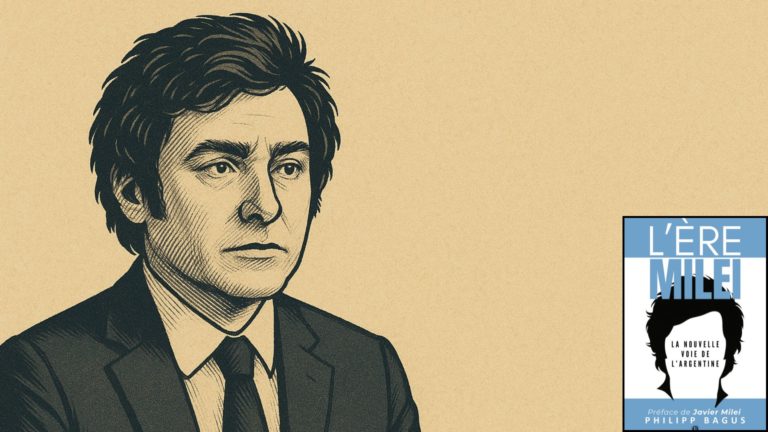
Former Federal Councillor Pascal Couchepin. Drawing by Nathanaël Schmid
In the light of François Heisbourg's hard-hitting essay, former Federal Councillor Pascal Couchepin asks himself about l’future of the United States and a world deprived of its tutelary power.
The essay by geostrategy expert François Heisbourg was published in mid-June this year. I read it in September. When I opened it, I wondered if it hadn't already lost some of its topicality, so many events or incidents have been happening at a rapid pace since the return to power of the unpredictable Donald Trump. Not so. This excellent study is more necessary than ever to help us form a better judgement of the policies pursued by the United States.
In his introduction, Heisbourg reflects on the notion of empire, and the birth and demise of these great state entities. Most empires disappeared as a result of exhausting wars. The Great War was fatal to four empires: the German, Austro-Hungarian, Russian and Ottoman. The French and English colonial empires began a decline that was to end after the Second World War. On the other hand, this was a favourable time for the United States, which was initially reluctant to assume its role. President Wilson was the driving force behind the League of Nations, but the American Congress did not follow him and refused to join the Geneva-based institution. Openness and retreat are constants in American history. In the nineteenth century, the United Statesth The 20th century saw periods of territorial expansion as a result of wars of conquest (California and Texas) or purchases (Louisiana and Alaska), but also times of withdrawal to the continent (the Monroe Doctrine) or to oneself. America seemed driven by the conviction that it had a special destiny. In 1845, after the conquest of Texas, the American journalist O'Sullivan spoke of a manifest destiny, of manifest destiny. Since the beginning of the XXth Heisbourg calls it the «flamboyant empire». The United States enjoyed a period of demographic growth due to the birth rate and immigration. The economic crisis of the 1930s threatened the solidity of the Empire, but Roosevelt reacted vigorously and skilfully with the New Deal .
US intervention during the Second World War was decisive. The post-war world was shaped by America: the creation of the United Nations, the Bretton Woods institutions for finance, trade liberalization under the aegis of the World Trade Organization (WTO), the creation of the North Atlantic Treaty Organization (NATO), but also the wars in Korea, Vietnam, Afghanistan and other interventions in Latin America and elsewhere. During this period, American culture, in the broadest sense, took hold. But some cracks were also felt after the Iraq war in particular. America refused to join the International Criminal Court. Its refusal to appoint an American judge to the WTO Court is paralyzing this institution. Trump's arrival in power is a qualitatively different stage from previous incidents. The desire to refuse the responsibilities inherent in the American superpower has become a permanent program, coupled with the ambition to impose new rules that often amount to pillage or contempt for other nations. Heisbourg sees this policy as the suicide of the American Empire. His arguments are sound.
But is there life after suicide? What place does Russia have in this new world order, with the USA making eyes at it? What about China and Taiwan? Has the alliance with Europe exhausted its security charms?
Heisbourg does not give definitive answers to these questions, especially as with Trump everything is dangerously open-ended. His book is, however, a useful read for those who believe that, in a world as dangerous as ours, all avenues must be explored on the basis of history and its lessons.
Former Federal Councillor Pascal Couchepin each month shares a book that has made an impression on him.
You have just read an article from our print edition (Le Regard Libre N°120).
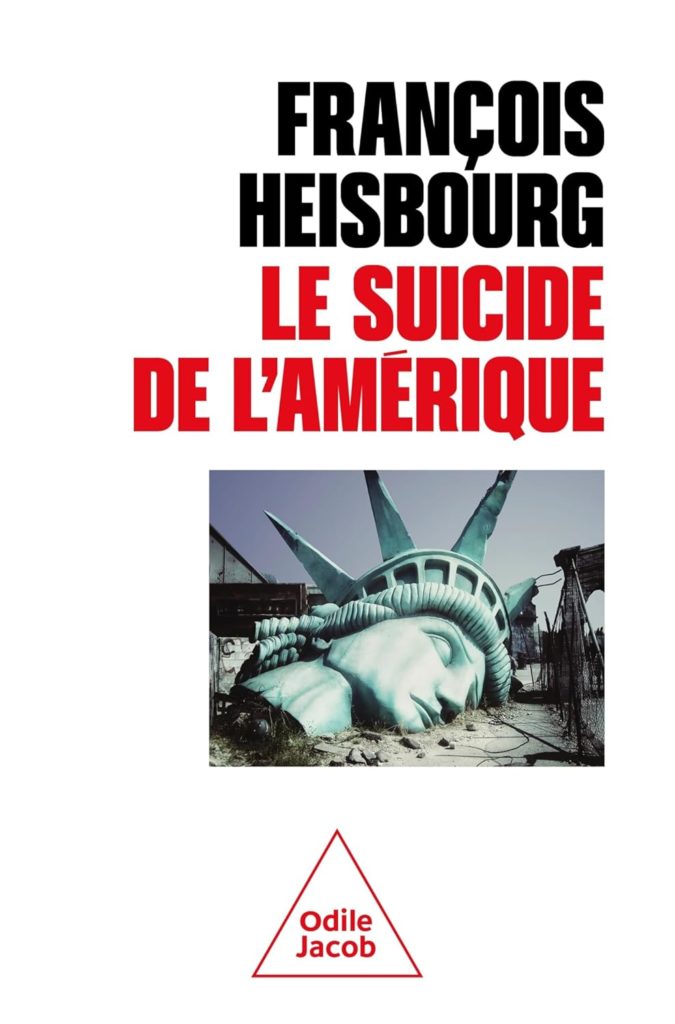
François Heisbourg
The Suicide of America
Editions Odile Jacob
June 2025
176 pages
You'll also like


 French
  German
  English
Leave a comment