




Georges Martin: «Swiss neutrality is sick, but not dead»
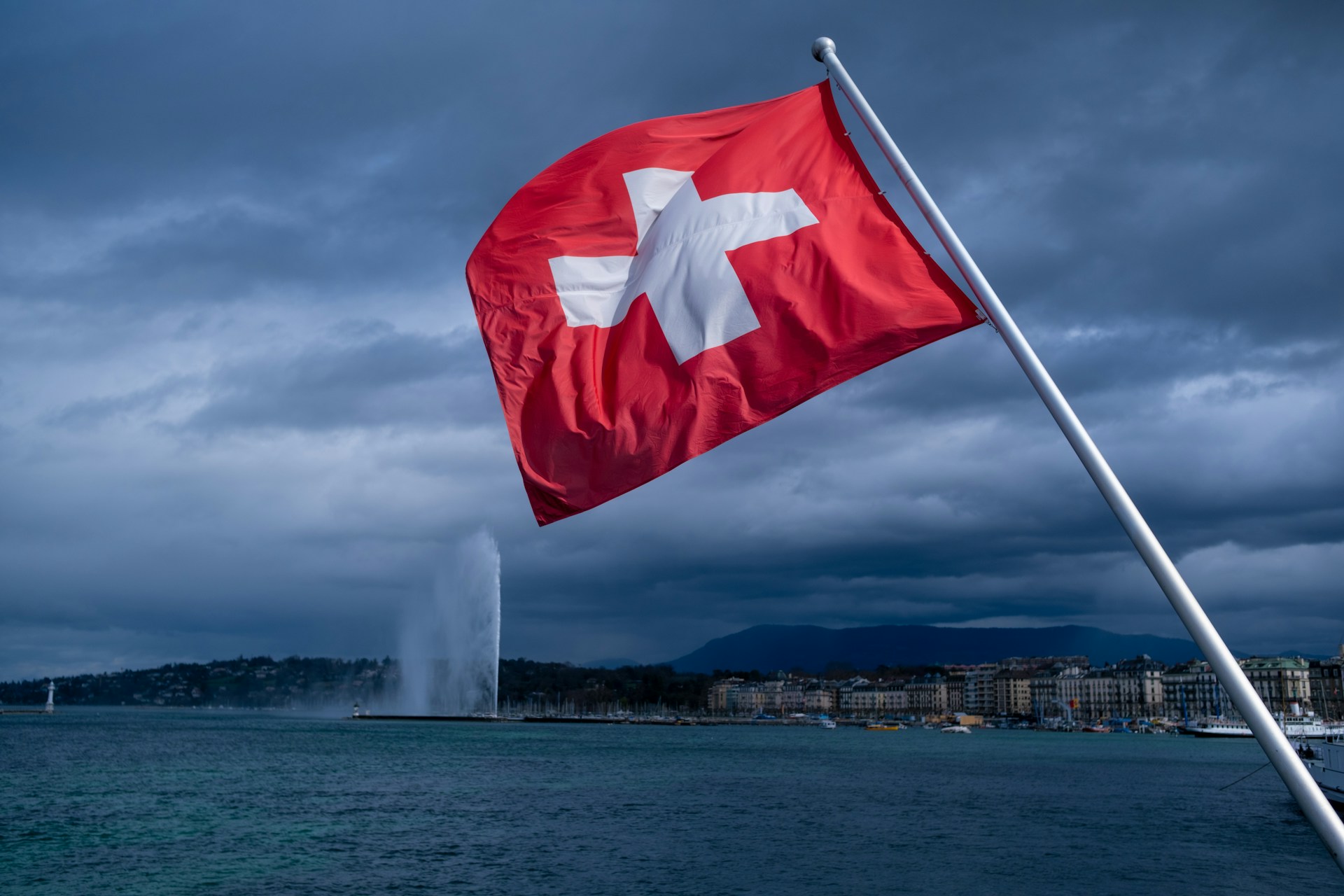
«Neutrality has three floors: the right to neutrality, the policy of neutrality and the perception of that neutrality.» Photo: Ari Dinar (via Unsplash)
The former ambassador delivers a harsh indictment of Swiss and EU foreign policy, criticizing their alignment with NATO and calling for the Confederation's diplomatic credibility to be restored.
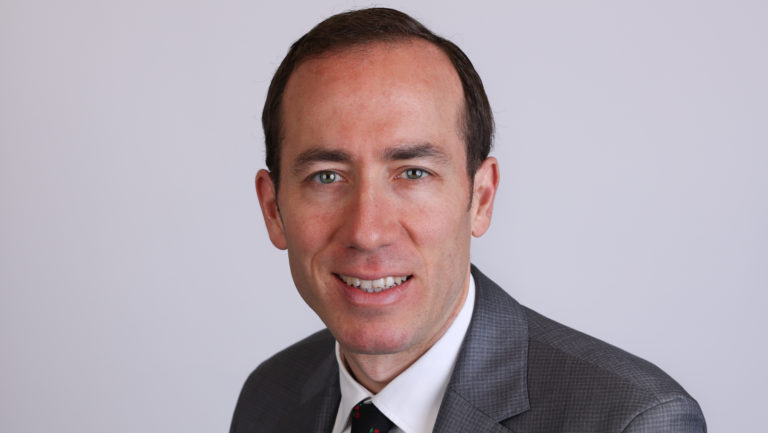
A former ambassador and diplomat, Georges Martin devoted over four decades to Switzerland's foreign service, serving in capitals as diverse as Pretoria, Tel Aviv, Ottawa, Paris, Jakarta and Nairobi. As Deputy State Secretary of the Federal Department of Foreign Affairs, he was one of the central players in Swiss diplomacy until his retirement in 2017. In 2024, he published Une vie au service de mon pays – Plaidoyer pour une Suisse neutre, active et respectée («A life in the service of my country – A plea for a neutral, active and respected Switzerland»), a book of memoirs in which he recounts his career, his key encounters and his vision of Swiss diplomacy as faithful to its active neutrality on the international stage.
Highly critical of the Federal Council's current policies, in this interview he discusses the major changes in the geopolitical landscape and the Confederation's current challenges on the international stage.
Le Regard Libre: The new US security strategy was unveiled at the end of 2025, and targets Europeans in particular. Why do you think the European Union's (EU) stance on the war in Ukraine is now being criticized by the USA? And, more generally, why is the Old Continent in decline on the international stage?
Georges Martin: The new American strategy obviously has strong Trumpian overtones. It follows on from Vice President J. D. Vance's speech in Munich in February 2025, when he told Europeans, in essence: I'm worried about your countries, not so much because of Russia or China, but because democratic freedoms are no longer assured. Instead of rejecting all this out of hand, Europe would do well to ask itself some questions. It put itself out of the game a long time ago. In 1992, I was even in favor of Swiss membership of the EU, when it was still a peace machine. But there has been a substantial shift between democratic states and this institution, which is not really democratic, but bureaucratic and administrative. Indeed, I believe we are now witnessing a form of «dictatorship» by unelected senior civil servants.
The European Parliament, one of the two legislative chambers, is elected by the citizens of the various member states, and the executive body cannot decide on any laws, only propose them...
I'm also always told that Ursula Von der Leyen's presidency is democratic, since she was appointed by the Heads of State. But she has no democratic legitimacy, since she was not elected by the people! And it now decides on three-quarters of the issues affecting the security and foreign policy of EU countries. As a result, this institution is not only drifting towards democracy, it is also drifting towards war, because Ms von der Leyen is looking for something to re-federate Europe, and she believes she has found it in the war in Ukraine.
The new U.S. strategy marks the return of the Monroe Doctrine, with a «Donroe» adaptation that advocates control over nearby America. There is also a separation from Europe, as if the United States were cutting the thread of the European lifeboat that had long been attached to it. I think Europe deserves this and that it could be salutary for it. It probably wouldn't be in this state of vassalization if the West had dissolved the North Atlantic Treaty Organization (NATO) at the end of the Cold War, along with the Warsaw Pact.
Read also | Robert Nef: «Armed neutrality is a peace offering».»
It is imperative to understand that Europe has not acted for its own security, and more importantly, that it has done nothing for peace. We have failed to understand that as long as we leave the same structures in place as during the Cold War, they will recreate the Cold War. The same recipes produce the same effects. The EU had the opportunity to build peace by building European security, integrating Russia, which was keen to join the Union. However, American geostrategists wanted to put an end to Russia, despite the end of the Soviet Union. European leaders chose to rely entirely on the United States, while today's leaders seem to have skipped history lessons. As Zbigniew Brzeziński explained in his book The Grand Chessboard (1997) that Europe is a vassal of the United States.
You say we're dealing with a bellicose Europe, but isn't it a matter of upholding international law and applying the sanctions provided for in the event of its violation?
No. If Europe were to apply international law, it would apply it everywhere, including Gaza and the Middle East. Brussels makes a mockery of international law. As we saw recently with the case of Jacques Baud (editor's note: Swiss citizen and former member of the Confederation's Intelligence Service placed under EU sanction on December 15, 2025, read the editorial)The EU doesn't even apply its own domestic law, so why should it apply international law?
What's more, the global South no longer believes in Europe. Countries such as China, Brazil and South Africa observe its double standards with dismay! Despite this loss of credibility, the EU maintains a dangerous, anxiety-provoking discourse, fuelling fear and panic. Wars have never started without bellicose rhetoric. I have a question for all those politicians – Ursula von der Leyen, Emmanuel Macron, Friedrich Merz – who come to us to explain that Vladimir Putin must lose and that Russia will end up attacking us: how do they intend to win against Russia, which is the world's first or second nuclear power?
Very soon after the start of the war in February 2022, after a moment of stupefaction, the EU became de facto cobelligerent. Didn't former French minister Bruno Le Maire declare that the role of sanctions was to bring the Russian economy to its knees? If you destroy a belligerent's economy, you necessarily influence its war effort. We can criticize Donald Trump, but we must give him credit for having changed his software after a Joe Biden who was the puppet of the military-industrial complex, interested only in selling arms.
On the subject of sanctions, how do you explain the Federal Council's about-turn at the start of the war in February 2022, when, in the space of a weekend, it decided to backtrack and finally follow the sanctions against Russia? Was Switzerland under pressure?
I don't know, but it's likely, and if there was pressure, the government should have communicated it. As my friend Jean-Daniel Ruch says (editor's note: another former Swiss ambassador highly critical of Swiss foreign policy), The Federal Council should take the public for intelligent, vaccinated beings. Yet they have said nothing about the reasons for their change of heart, while falsely assuring us that this decision does not violate neutrality.
In March 2022, Joe Biden was delighted that even historically neutral countries like Switzerland were taking part in the sanctions. Why do you think Switzerland is no longer neutral?
Neutrality has three levels: the law of neutrality, the policy of neutrality and the perception of neutrality. None of these is currently intact. The right to neutrality has been violated, notably by adopting all the EU's sanctions packages as they stand. The policy of neutrality is constantly being violated. The Bürgenstock is the ultimate symbol of this: a peace conference was held there, sponsored by none other than NATO countries, and, at the request of Zelensky and his Western friends, Russia was not invited.
As for the perception of neutrality, as the statement you quoted shows, the USA no longer considers us neutral, and neither does Russia. Explain to me to what extent Switzerland is still neutral if two of the world's greatest powers do not regard you as such. Let's not even talk about the Europeans. We're nothing but vassals to them. Some are too quick to conclude that the recent diplomatic meetings in Geneva on Iran and Ukraine are proof that Switzerland is once again considered a neutral country. Nothing could be further from the truth, as it is well known that it is always much easier to destroy than to (re)build. And much has been destroyed in terms of neutrality over the last five years! But neutrality is not dead: it's dormant, it's sick, but it can be revived.
At a time when non-governmental organizations are leaving Geneva, when the United Nations is relocating some of its offices to Italy, and when Switzerland is no longer a place for negotiation between adversaries, how can we restore this credibility?
This is a central point. This credibility has been built up over many years. And we can see that it can be destroyed in a very short space of time. To rebuild it, you need strong decisions. At present, however, Ignazio Cassis, our Minister of Foreign Affairs, is nowhere to be heard. Yet now is the time for him to be present. His furtive appearance in Geneva recently at the Intercontinental Hotel is hardly symbolic of Switzerland's comeback on the international stage. Indeed, it's hard to imagine that the man who is, in many respects, its gravedigger could be the builder of a new Swiss diplomacy.
Only a strong act such as Switzerland's «yes» to the SVP's neutrality initiative could help restore the country's credibility. This initiative comes from a political camp on the far right of the political spectrum. But it has the advantage of existing. Nothing is ever perfect, and if we manage to enshrine this neutrality in the binding principles of the Constitution, I hope it will enable the government to regain its backbone. Above all, I remain in favor of active neutrality, i.e. neutrality at the service of the world, at the service of countries at war.
In your book, you criticize Switzerland's stance on the war in Ukraine, but also on the Israeli-Palestinian conflict. Why do you think Switzerland made a mistake on this issue?
She didn't try to appease the situation. She's out of the game now. No one is going to ask it for anything. The Palestinians have realized that Switzerland is no longer useful. That wasn't the case when we were in contact with all the players, right up to Hamas, because it's not forbidden to contact organizations, even terrorist ones, and messages have to get through. Today, Ignazio Cassis is completely committed to the Israeli narrative and has little understanding for the drama unfolding in Gaza. Unfortunately, the country has taken itself out of the game by ideological choice.
Also, you say you regret that international relations are currently shaped more by politicians than by diplomats. What are the distinctions between them, and why does this worry you?
It all depends on the quality of the politicians. I'm convinced that history is made by certain heads of state. There's no need to mention de Gaulle, Churchill, Kennedy, or even in Switzerland, Delamuraz or Felber. But since 1990, politicians have failed to rise to the occasion. Bill Clinton failed to grasp the opportunity he had to create a new world during his term of office, preferring to follow NATO and continue to ignore, not to say humiliate, Russia, probably out of personal ignorance and under the influence of military-industrial complex strategists.
If George Bush Sr. had been re-elected, he who knew Europe very well, things might have been very different today. In particular, he had gone to Kiev to the Rada on the day Ukraine voted for independence, urging deputies not to vote for outright independence, but for collaboration with Russia. Because he understood the role Ukraine had to play as a bridge between post-Soviet Russia and Europe, if it was to avoid becoming what it is today: a frontline between two camps!
As far as diplomats are concerned, their job is not to decide. They produce analyses, present solutions, alternatives and options. But the essential point is that if political leaders don't follow them, their work is useless. Today's leaders are not up to the job.
You criticize the media-political complex for taking up the bellicose narrative. What interest would the press have in this story?
I don't understand their interest. It's interesting to compare the current situation with the second American war in Iraq. The European media laughed at the American press for its unthinking repetition of everything the White House said, and for not questioning the veracity of the speeches and information. Since 2022, the European media have been doing exactly the same, while the American and Ukrainian press have been more critical. Our media lack a critical spirit and betray a certain casualness in the face of the reality of war. The major Swiss newspapers have chosen to support the war, since they constantly speak of an unprovoked war, whereas we know that this war was, if not provoked by the West, at least made probable. The same applies to our public broadcasting service.
Many newspapers have interviewed you about your book...
Yes, but the official discourse is disproportionately dominant. We have heard so many military specialists such as Colonel Alexandre Vautravers tell us in the media why the Ukraine is going to win and Russia is going to collapse, always through the prism of the army of good versus the army of evil. Russia is systematically presented, implicitly or explicitly, as the devil.
The new package of agreements between Berne and Brussels will be an important topic over the coming months. From a geopolitical point of view, is it in Switzerland's interest to draw closer to the EU?
No, I don't think so. From an economic point of view, I don't know if we need new agreements, but a number of people in the know think we could do without them for the time being. If we did need them, Switzerland should have negotiated better. However, the text we are dealing with is more of an Integration I agreement than a Bilateral III agreement: if we adopt it, Switzerland will take on whole swathes of European law in new areas and accept that these agreements will automatically be updated, while still being able to put forward our point of view. But if we were to refuse an opinion from the European Court, we'd be putting ourselves in a tricky situation. In any case, the EU has never been as unattractive as it is today. Geopolitically, it's a disaster. I'll be voting no to these treaties.
On the military front, Switzerland is drawing closer to NATO, whether by purchasing equipment from the Atlantic Alliance or by taking part in more and more military exercises with the USA. Is this a good sign for Swiss security?
No, not at all. If you get closer to NATO, you become a target. And by getting closer without joining, as is currently the case, I think we become even more of a target, because no one would come to our aid if we had a problem. Switzerland's security lies in its neutrality, which needs to be revitalized. By joining NATO, Switzerland would become the Luxembourg of the Alps, as I'm wont to say.
So how do you explain this rapprochement?
For several reasons. I think that, trivially speaking, the military and civilians in charge of Swiss security are fascinated by NATO. They come back from Brussels with stars in their eyes when they take part in sessions sitting next to an American general who «did Iraq». They are excited by the prospect of participating in meetings and staff exercises, such as in Finland against an enemy that is none other than Russia. An anxiety-inducing climate distilled by the media-political elite is driving Switzerland towards NATO, as well as the EU. We are at a crossroads.
The resources of the Swiss Federal Intelligence Service are far inferior to those of the major Western powers. And yet, with hybrid threats, intelligence sharing is becoming central, isn't it?
Switzerland is a tiny dot in the middle of NATO. No matter what anyone says, we'll never see Russian tanks on the Rhine, or that would mean Europe had already been wiped off the map. Today, Swiss intelligence is probably well regarded by other Western services, because it does exactly what they want. On the other hand, Switzerland has no contacts with the Russians, whereas in the Cold War and post-Cold War era it did. Today, when you read the security reports of the Swiss Federal Intelligence Service, they are copy-pasted from those of NATO. I'm convinced that Switzerland should play the sovereignty card. Not only would we be better informed, but NATO would take us more seriously.
Isn't there a contradiction between, on the one hand, the idea that Switzerland is warmongering because it is aligned with NATO, and the fact that Trump's United States criticizes Europe for its warmongering in particular?
Switzerland is not aligned with Donald Trump's United States. I wish we were a little more aligned on the war in Ukraine, where we remain, a little too much for my taste, faithful to the European line and that of the former Biden administration. Donald Trump also admits that the war was provoked, and in essence says things comparable to Jacques Baud. The EU should consider putting the American president under sanctions. Like Europe, Switzerland is full of contradictions and doesn't know where it stands anymore.
The Federal Department of Defense saw a wave of departures in 2025, not only from Minister Viola Amherd, but also from the Head of the Armed Forces, Thomas Süssli, the Head of the Intelligence Service, Christian Dussey, the Head of the Air Force, the Head of the F-35 project... How do you interpret this situation?
I think there are serious malfunctions in this department. Unfortunately, we're discovering them in slow motion because it's a party colleague of the centrist Viola Amherd, Martin Pfister, who has taken over from her and who is certainly keeping the cupboards tightly closed with the corpses inside. What worries me most is that around Martin Pfister, most of the people who advised Viola Amherd have stayed in place. Perhaps the people who left also had personal reasons?
It should be noted, however, that there are no longer any high-ranking officers in the army who are in favor of Swiss neutrality. They have all been dismissed. Those in charge today are people who want to send us into NATO. This drift stems from NATO's Partnership for Peace mechanism. (editor's note: Switzerland joined in 1996, enabling it to take part in security exercises and missions without being a full member of the organization).. Within this framework, Switzerland currently has some twenty cooperative ventures with NATO, including joint weapons procurement and joint exercises. Switzerland should have left this Partnership for Peace in 2022, since it is now more like a Partnership for War.
Degree in political science, Max Frei is Web Editor at Regard Libre, for which he also writes occasionally.
You have just read an interview published in our paper edition (Le Regard Libre N°124).
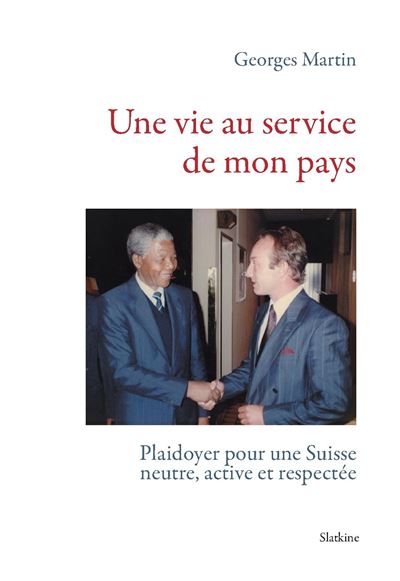
Georges Martin
Une vie au service de mon pays – Plaidoyer pour une Suisse neutre, active et respectée («A life in the service of my country – A plea for a neutral, active and respected Switzerland»)
Editions Slatkine
September 2024
400 pages
You'll also like


 French
  German
  English
Leave a comment