




«Barbara» or the purity of cinema
Cinema Wednesdays - Jonas Follonier
It's been a long time since biographical films, however successful they may have been, followed one another in a similar fashion. Cloclo and Dalida testify to this. All of a sudden, a UFO of the genre arrives on the scene, an eminently innovative work that overturns the codes of the biopic. Barbara. On the pretext of rediscovering the famous figure of French song, Mathieu Amalric's new film is above all a rediscovery of cinema.
A film within a film
Mathieu Amalric is a director unlike any other. You can already see it in his face, which is full of perpetual astonishment. The French filmmaker constantly opens his eyes wide; perhaps this is the sign of a cinema that admires everything to do with people, with life, with cinema in short, and therefore admires itself. Mathieu Amalric couldn't make a conventional biopic. Nor could he make a biographical film at all.
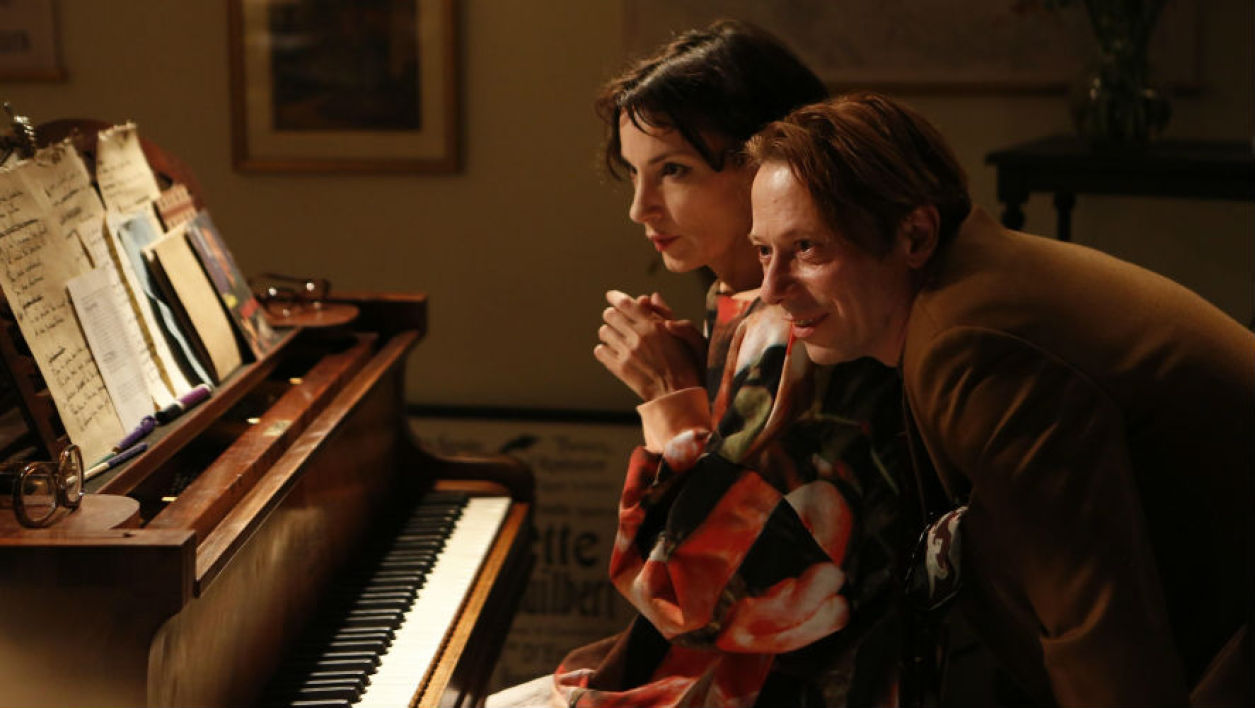
Barbara, released last week in French-speaking Switzerland, deviates from its title: it's not the singer who the film focuses on, but an actress, Brigitte (Jeanne Balibar), who is to play Barbara in a film. The director of this film within the film? Yves Sand, a Barbara fetishist, played by a certain... Mathieu Amalric. A film on at least two levels, playing on ambiguities to such an extent that the mise en abîme and illusion seem to be about themselves. Grandiose.
The art of suggestion
There's no question, however, that the film teaches us nothing about Barbara. Or that it's just a pretext for the Amalric-Balibar pair to become a couple again, thanks to the cinema. Barbara, by refusing to tell the story of the singer's life as one might on a power-point, says more than any biography could. Indeed, it is through the small fragments of his daily life that we are able to penetrate the artist's intimate universe. It is through this series of tableaux, not scenes, that an existence, not a theater, is told.
Combining shadows and unspoken words, the film Barbara echoes the singer Barbara more finely than anyone could have imagined. Thanks to Mathieu Amalric, we rediscover the importance of suggestion. «It's beautiful, someone creating a melody, searching for the words. These are the moments I wanted to show».», explained the director. Barbara spends her days at the piano. In music, for music.
It's easy to see that it was through song alone that Balibar and Amalric (BaliBARBARAmalric) tried to capture their idea of Barbara, to represent her, to evoke her. In fact, it's not the best-known songs that the film highlights. What's more, the voice we hear is sometimes that of the fake Barbara, sometimes that of the real one, and the faces that carry it also vary between the two women. Actress and artist respond to each other and merge, exuding total emotion.
Jeanne Barbara
Indeed, the greatest credit goes to the woman who, in the end, emerges as the real star of the film, the new Barbara. Jeanne Balibar, more Jeanne Balibar than ever. As Yann Moix said on the first episode of the new season of’On n'est pas couché, on France 2, «Barbara has an air of Jeanne Balibar about her.» The performance is so perfect and so natural, one wonders if Mathieu Amalric hasn't chosen to dedicate his eighth opus to the mother of his first two children. Witness the Incestuous love, a moment in the film that's impossible to forget.
As the reviewer also asserted, the lack of resemblance (this is debatable, of course) between Barbara and Jeanne Balibar cannot be considered a flaw in the film. Far from it. By virtue of the two women's obvious dissimilarity, the viewer will, as if by magic, only see their similarities in the course of the film, and end up not even knowing the difference.
That's the magic of cinema. Mathieu Amalric has succeeded, without minutia, in showing us its purity. And that only happens a few times every half-century.
Write to the author: jonas.follonier@leregardlibre.com

Vous aimerez aussi

 French
  German
  English
Laisser un commentaire