



Des chiffres et des lettres: meeting with Olivier Rey
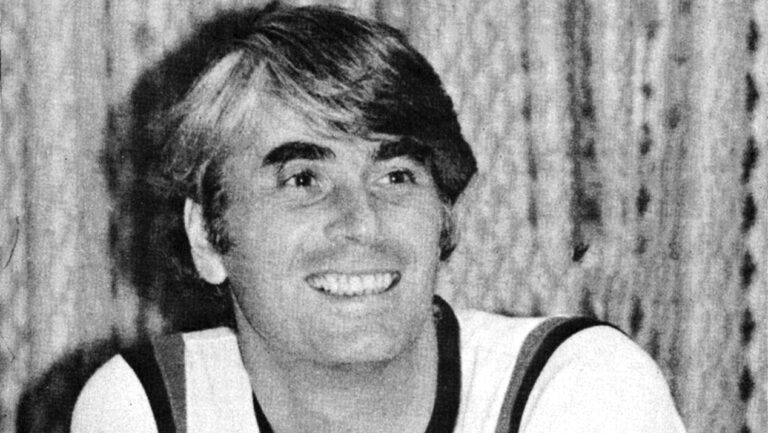
Olivier Rey is a mathematician and philosopher. A graduate of the Polytechnique, where he later taught, he was a researcher in the mathematics section of the CNRS. Also a man of letters, he has carved out a place for himself in the world of the humanities. He still holds a position at the CNRS, but in the philosophy section. He is also professor of philosophy at the University of Paris-I-Panthéon-Sorbonne. Olivier Rey is also the author of numerous books, including the novel Le Bleu du sang or the A question of size, awarded the Prix Bristol des Lumières. In 2015, the Prince Louis de Polignac Foundation awarded him the Grand Prix for his body of work. What a big man!
Le Regard LibreWhat contribution has the French language made to the evolution of science?
Olivier Rey: The scientific language in Europe began as Latin. In the mid-seventeenth centuryth In the 19th century, Pascal, in a correspondence with Fermat on mathematical questions, still felt the need to switch languages when getting to the heart of his reasoning: «Je vous dirai en latin, car le français n'y vaut rien». The transition to vernacular languages was gradual. The important thing is that scientists think and practice their science in a language that is as rich as possible, and that they master as well as possible. It's true that science seeks to derive notions that are free from the ambiguities of common languages. But the ambiguity of words in everyday vocabulary, and the richness of their connotations, play a considerable heuristic role, and are also what preserve a link between constituted science on the one hand, and the world of everyday experience on the other. The considerable scientific work that has been accomplished in French over the last three centuries is proof of the language's resources for scientific thought. As for its specific contribution, it's hard to say. What I do believe is that the diversity of languages is not an obstacle to the evolution of science, but on the contrary a factor of fertility.
Today, poets are generally no longer mathematicians, and physicists no longer venture into metaphysics. What do you think of the exception you represent?
Contemporary societies push the division of labor to an extreme point, and require specialists to occupy positions within this divided structure. As far as possible, these specialists must not think, as this would be a waste of time, and run the risk of raising questions harmful to the functioning of the overall system. As a result, every effort is made to make the compartments watertight, particularly in education. So, for example, people who take science courses are expected to remain literarily ignorant, and those who take literary courses are expected to know nothing about science. In human terms, this is obviously a step backwards. I've always found it hard to accept this kind of division, and I still have to live with it. In fact, I used to belong to the «Mathematics» section of the CNRSM; today I'm in the «Philosophy» section. It has been possible to change boxes, but it is still necessary to belong, at least formally, to one of them in order to be socially recognized.
Is scientific language more precise and rigorous than literary language?
Scientific language is more precise and rigorous than literary language, in that it is essentially denotative and univocal. Literary language leaves far more room for connotation and equivocation. However, this difference is primarily due to the fact that science and literature are not concerned with the same range of phenomena. Certain realities of human experience, which literature strives to capture, cannot be apprehended scientifically. But the fact that literature can't and shouldn't aim for the univocity of science doesn't mean that expression is arbitrary - far from it. It's not for nothing that Flaubert sometimes spent days and days writing and rewriting a paragraph, in search of the right formulation, the right word. Here's the thing: in literature, precision and rigor are less important than accuracy. The Pascalian distinction between esprit de géométrie and esprit de finesse.
Is literature overshadowed by science?
Lacan said that the discourse of science had irrespirable consequences for what we call humanity. And he added: «Psychoanalysis is the artificial lung through which we try to assume what jouissance must be found in speaking if history is to continue.» It seems to me that the same thing can be said, replacing «psychoanalysis» with «literature». From this point of view, the discourse of science not only opposes literary discourse: it also calls upon it as a counterweight, a compensation. It's not for nothing that modern science and the novel were born at roughly the same time, in the early 17th century.th (Galileo and Cervantes were contemporaries). In a way, the scientific boom has been one of the factors behind the extraordinary literary efflorescence of the last few centuries. However, there is a codicil: literature has been cultivated, even praised, while at the same time being seen as nothing but literature. In other words, while it was given a place, it found itself marginalized in the treatment of «serious» matters.
From the point of view of methods, are those of the experimental sciences invading those of the human sciences, as we sometimes hear?
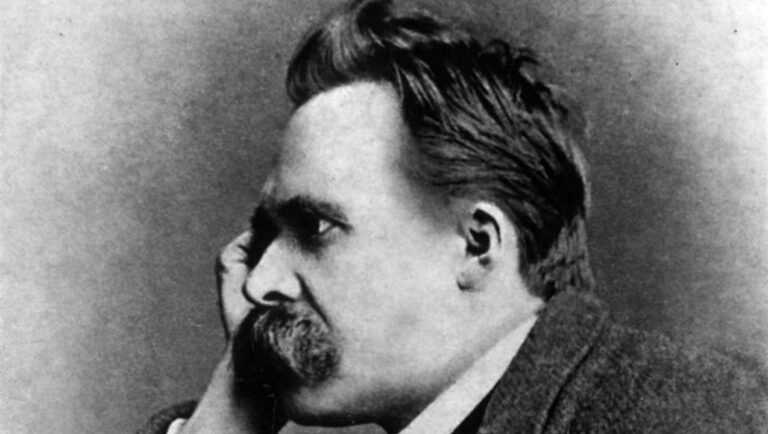
Nietzsche observed that his time, the nineteenth centuryth century was not marked by the victory of science, but by the victory of the scientific method over science. In other words, the method had ceased to be an intermediary between subject and object, and had become the decisive element. In modern science, the method no longer has to adapt to the object; it determines what, of the object, is worthy of consideration. The method in question, having been largely developed in the study of the inanimate, encounters great difficulties in apprehending the living as such. Modern biology, as it is practiced today, reveals countless mechanisms within living beings. But as for the beings themselves, it says practically nothing: as François Jacob confessed, «we no longer question life in laboratories today. [Biology is now interested in the algorithms of the living world». The human sciences are also affected by the fact that the realities they study are swallowed up in the method that is supposed to account for them. This is particularly true of economics, but no field is immune.
Can we speak of a «poetry of mathematics»?
André Weil, one of the 20th century's great mathematiciansth In the 19th century, he once compared mathematics to sculpting in a particularly hard stone. His sister Simone didn't appreciate the comparison. In Taking root, she notes that «if you have a vocation to be a sculptor, it's better to be a sculptor than a mathematician». Similarly, it seems to me, if you have a vocation as a poet, it's better to be a poet than a mathematician. A lot of people have a very false idea of mathematics: they think it's all about doing very long, very complicated, very dry calculations. They find it hard to appreciate the meditative, imaginative and inventive aspects of mathematical activity. An expression like «mathematical poetry» attempts to evoke this essential part. But it does so in a way that strikes me as clumsy, inadequate and lacking in accuracy, to use an earlier word. The mathematical experience is very particular, and it seems to me impossible to give an idea of it without going through the experience itself.
What's the link between your favourite writer and your favourite theorem, which we'd love to know?
There are many writers whose work I admire, and I'd be hard pressed to pick a favorite (it would depend too much on the mood of the moment, the context). The same perplexity applies to theorems. I don't dissociate a mathematical result from the demonstrative path that leads to it. And the demonstrations I most admire are those that call, in turn, on the two great areas of mathematical intuition, the continuous and the discrete. A simple example: the theorems concerning the distribution of prime numbers. You have to go through continuous functions to establish results concerning discrete entities. In literature, the works I most admire are those that are meaningful on several scales simultaneously: by what is said, by the way it is said, by a general form. An emblematic example, for me, is Moby Dick by Melville. If I were to risk a formal analogy with what I said about theorems, I'd say that in both cases, there's a bringing together of different realms of experience which, instead of ignoring each other, or simply juxtaposing, together form what, without this contest, could never have emerged. This gives us the feeling that we're not living in chaos, but in a cosmos.
You've just read an interview that appeared in our special «Langue française» issue (now out of print).
You'll also like


 French
  German
  English
Leave a comment