




Fabrice Houzé: «I reproach the ecologists for their lack of reflection».»

Le Regard Libre N° spécial «Ecologie: Pour un revirement intégral» - Nicolas Jutzet
Le livre de Fabrice Houzé est une réponse à la sempiternelle formule appréciée par les politiques: «ce bien n’a pas de prix». Pas de prix, peut-être; mais un coût, assurément. Dans la suite d’exemples listés tout au long de l’ouvrage, apparaissent de nombreux sujets que nous prenons pour acquis, pour justes, des mesures de «bon sens» qui, une fois passées au scanner, nous paraissent soudainement bien moins évidentes. Derrière cet amas d’idées reçues se cache pourtant une facture lourde, payée par les citoyens, la planète, ou encore nos futurs enfants. Le livre, sélectionné parmi quatre autres pour le prix Turgot du meilleur livre d’économie, aborde différentes thématiques. Dans le cadre de notre édition spéciale, nous avons interrogé son auteur sur son chapitre réservé à l’écologie.
Nicolas Jutzet: The modern-day Malthus often asserts a seemingly infallible argument, namely that «infinite growth in a finite world is in essence an intellectual aberration.»
Fabrice Houzé: It's a nice formula, but it's not based on any physical limits, at least for the time horizon of this century. For example, nuclear fission will make energy virtually infinite on our scale: the equivalent of a battery and forty liters of water will be enough to cover the energy needs of a European for a lifetime!
Green growth« is economic nonsense and amounts to »replacing construction shovels with shovels and sweat«?
Photovoltaics make sense where the sun shines, in the southern hemisphere, in California. Wind power makes sense where the wind blows, as in Denmark. It makes no sense to install them everywhere, ignoring efficiency, because they're not free, not even ecologically: it takes twice as much concrete and ten times as much steel to build the thousands of wind turbines equivalent to a nuclear power plant. As for the jobs created artificially, in inefficient activities, whether by the state or the private sector, they are not sustainable. If you do away with diggers and washing machines, yes, digging and washing clothes will require a lot more jobs. But the price of these services will rise enormously, and as household budgets remain constant, they will stop buying other goods and services. And these sectors will eliminate jobs...
Under the pretext of wanting nuclear power, political ecology swallows a lot of chicken feed: the use of coal, the purchase of foreign nuclear power during the night, and so on. Will the German example be enough to unmask these inconsistencies?
For those willing to look at the figures, yes, the failure is obvious. No jobs created, the most expensive electricity in the world, CO2 photovoltaics and wind power account for just 2% of total German energy production! This figure sums up the waste of hundreds of billions of euros invested.
You also relativize the fear of nuclear power, which is less dangerous than other forms of energy. How do you explain its demonization?
Nuclear energy is poorly understood. The public associates it with nuclear bombs, which have nothing in common, apart from the underlying theory of particle physics. A nuclear power plant that has an accident cannot explode like a nuclear bomb. These fundamentals should be emphasized in junior high school. We've forgotten that James Lovelock, considered the historical father of ecological thinking, was a member of AEPN, the Association des Ecologistes Pour le Nucléaire!
Another commonplace debunked in your book is «local». According to you, «consuming local produce to minimize transport is not necessarily more virtuous.» Can you give us an example?
L’agneau: l’agneau néo-zélandais est élevé en plein air et transporté sur 20’000 km par bateau depuis la Nouvelle Zélande. Pourtant, il ne pollue pas plus que notre agneau local. En effet, on se focalise sur la distance alors que le transport maritime consomme très peu de carburant. En revanche, les produits agricoles périssables, qui sont transportés rapidement par avion, ne sont effectivement pas du tout vertueux.
«Unfortunately, or fortunately, saving energy frees up energy for another form of consumption.» Or when the law turns against its author?
That's the problem with the omnipresence of carbon in human activities. In general, households that save on heating end up going to the beaches of Martinique (again by plane), which is no better. Not many leisure activities are carbon-neutral: massages, live shows, works of art and, more generally, labor-intensive luxury items.
«Global warming is by no means our most urgent problem - it's probably just the most fashionable. Yet almost the entire political class seems to be caught up in the issue. Why is this so?
Because global warming is a blockbuster movie with gigantic hurricanes, secular droughts, and maybe even the end of the world. But for the moment, the planet and its wildlife are definitely suffering more from fishing, agriculture and pollution. So much so that, at the current rate of extinction, there won't be many species left to witness the end of the world...
«Dramatically reducing our meat consumption should be a priority for preserving the planet.» Would taxing meat rather than fossil fuels be an effective incentive to reduce our consumption and the impact of our lifestyle on the planet?
Livestock farming accounts for 20% of global greenhouse gas emissions! However, we don't talk about it much, if at all. And above all, livestock farming is one of the main sources of pollutants: fertilizers, pesticides, hormones and antibiotics. Of course, we've got to eat, so why vilify livestock farming more than the rest of agriculture? Because producing 1 kg of beef requires 10 kg of cereals. Yet we could satisfy our physiological needs by eating cereals directly. So eating beef means wasting 90% of crops. That's why, among other things, I'm a convinced vegetarian.
In your book, you criticize the green movement for being ideological and giving in too easily to prohibition. Is there a way of tackling the problem without taking paternalistic measures? Humans react to incentives, so it's a question of introducing the right ones, isn't it?
Exactly, hence the meat tax, which isn't a ban, by the way. Finally, I criticize political ecologist movements for their lack of reflection, which results in a string of not very constructive injunctions: «Buy local!», «Sort your waste!», «Give up your car!». What's more, their attitude is all too often counter-productive, like their support for agrofuels (still agriculture) or their relentless opposition to nuclear power.
What do you think of Richard Thaler and his «libertarian paternalism»?
I know from him the principle of incentives, which I support. In politics, why shouldn't we use the means of persuasion and influence? marketing that major brands use on a massive scale?
You're skeptical about politicians« willingness to take the long view, and you're not convinced by the old adage that »to govern is to plan ahead". Why is that?
Above all, governing has become a profession for the politician, whose aim, as with any professional, is to further his career. His main job? Getting re-elected. A fundamental reform of our institutions would be to ban the accumulation of mandates over time. Political staff would then be completely renewed at every election, and being a politician would be just another episode in life, like military service. Perhaps politics would then return to its original meaning: being at the service of the city.
Write to the author: [email protected]
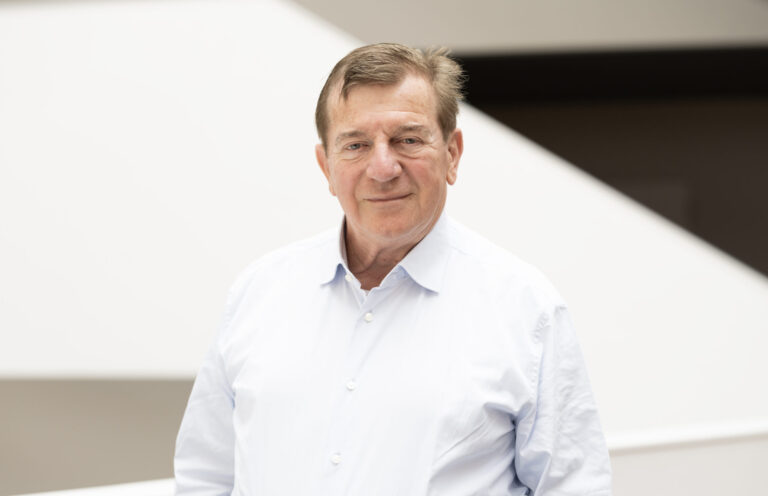
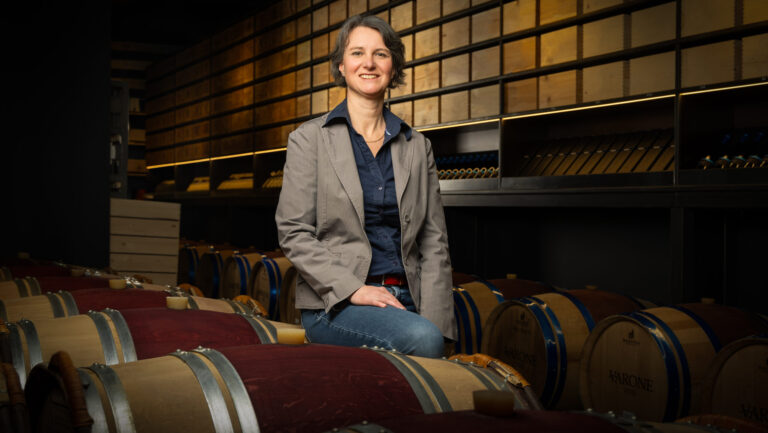
Photo credit: © Fabrice Houzé

You'll also like
 French
  German
  English
1 comment
[...] Fabrice Houzé: «I reproach the ecologists for their lack of reflection» [...]
Leave a comment