




«Arcadia: when libertinism and religion become one
Tuesday books - Loris S. Musumeci
«Without Arcady, we would have died sooner or later, because the anguish exceeded our capacity to experience it. He offered us a miraculous alternative to illness, madness and suicide. He sheltered us. He told us: ‘Do not be afraid.’
Farah lives with her parents and grandmother in the libertarian community of Arcadie, Liberty House. With all the serious and comic characteristics of a cult, Arcadia is led by its founder Arcady, a prophet of love with a wide sexual appetite. Farah spent a rather happy childhood here. She enjoyed the pristine green countryside surrounding the isolated estate. But then came adolescence, with all its questions. And the urge to rebel.
Emmanuelle Bayamack-Tam and her times
Emmanuelle Bayamack-Tam poses a number of questions directly to the reader, in a subtle, intelligent novel that probes the times we live in. While we are plunged into a present that looks like the past, the author poses on her pages a number of major themes that tickle our current times. The outcasts who live at Liberty House do without cell phones, the Internet and a whole host of other technological objects deemed dangerous.
What’s more, the house where they live is none other than a former convent. Needless to say, this adds neither modernity nor luxury to the place. Furthermore, the religious nature of the house allows the author to introduce spiritual references into the story that are drawn directly from Catholicism, such as: «And there was evening, and there was morning: the first day»—a direct reference to Genesis—«»Do not be afraid«»—a statement by Christ that became Pope John Paul II’s iconic phrase—and “Perpetual Adoration”—a central practice in Catholic prayer. All three expressions serve as chapter titles, which highlights them further—without, however, overdoing it.
Arcadie, a work of fiction
Among the major themes that make us think today are, as announced, man's relationship with technology, but also ecology, veganism, the search for one's sexual identity, the place of religion in society and, of course, immigration. Emmanuelle Bayamack-Tam doesn't just evoke these themes; she explores them in depth, but always through fiction, through the experience of Farah and the other members of the community.
And I insist on it! Arcadie is not a philosophical or political essay hidden inside a novel. Arcadie is fiction in its own right, and that's good. In this sense, cinema should set an example to literature, which sometimes forgets to tell a story under the guise of social or committed fiction. The seventh art has remained freer in this respect. It creates worlds, characters and atmosphere. Arcadie does too.
Gravity and comedy
But fiction does not mean neutrality, negligence or detachment from reality. From Farah's mouth comes a revolt that leaves no reader indifferent:
«Seized with horror, I take the three staggering steps that separate me from my host family, my brothers and sisters in religion, this religion that I mistook for good news, an outpouring of love, a message of peace and tolerance. Until now, I hadn't understood that love and tolerance were only for bipolars and white electrosensitives: I thought our hearts were big enough to love everyone. But we don't. Migrants can cross the Sinai and be tortured, put into slavery, drown in the Mediterranean, freeze to death in a reactor, be mowed down by a train, caught up in the turbulent waters of the Roya: the members of Liberty House won't lift a finger to help them.
They reserve their solicitude for rabbits, cows, chickens and minks. Meat is murder, but seventy Syrians can pile into a refrigerated truck and die, and I don't know which crime and which carcass will scandalize them the most. Or rather, no, I do, I know all too well their emotional mechanics, their easy tenderness concerning our animal friends, and their pragmatic cruelty when it comes to our migrant brothers. They don't eat meat any more and they're afraid of the jungle, but they tolerate its rule right into their sensitive little hearts.»
Seriousness in the subjects, yet plenty of comedy. Yes, Arcadie really makes you laugh, even though, as we’re told, there’s nothing to laugh about. The key to the humor lies in the conviction the writer conveys through his writing. True, Arcady has sex with just about everyone in his community—men and women, old and young—but the narrative holds its ground by praising his behavior. If Arcady sleeps with everyone, it is simply and plainly because he is overflowing with a love that he must share with those around him. Every aspect of community life is imbued with a tragedy steeped in the absurd.
«Vous avez bien ken»
Stylistically, the novel is a pleasure to read. You don't cringe from one page to the next. Fluidity. The story follows its course, and the reader follows the story. The risk, however, would have been for the dialogue to contrast too sharply with the rest of the narrative. On the contrary, this gap is beneficial, as it airs the pages and the story, keeping the reader hooked on the book. The proof is in the excerpt:
«Leaving the pastures behind us, we take the path that borders the estate, between collapsed low walls, chapels flowered by unknown hands, silver trunks, land and combes carpeted with wild grasses. It's not long before we come upon my green hole, tender and inviting, and still decked out in its frayed canopy, a faded pink after a summer of love. Daniel pinches my cheek with gusto:
- He's got you star-struck, doesn't he, Arcady?
- Speak to me in French if you want me to understand.
-You've got Ken, haven't you, in your little hideout?
-Why do you ask if you know?
-I fucked here too, by the way.»
Arcadie is excellent fiction that asks the real questions of the day. Well-written, enjoyable, funny and thoughtful, this novel is not to be read everywhere, nor placed in all hands. Far from being annoyed by the erotic descriptions of communal fantasies and romps, I was a little more embarrassed in the café or on the train when I feared I might be caught in the middle of a passionate reading of a rather lively love exchange.
So, if you read Arcadie in a public place, try to get a bookmark large enough to hide the lines that will lead you to be considered a pervert. It's amazing how uptight and prudish people can be, even though they preach freedom around every corner. They could probably do with a trip to Liberty House!
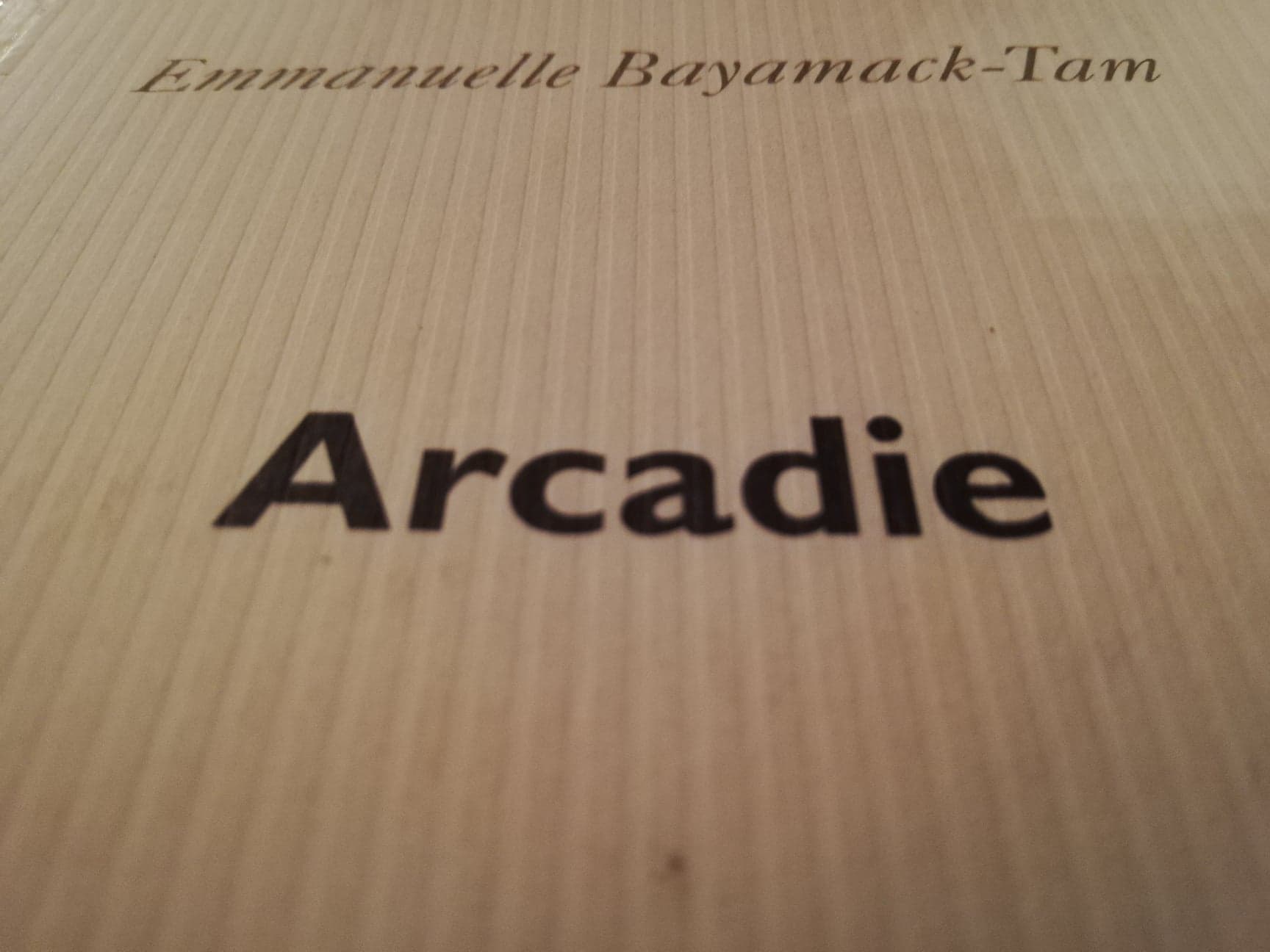
Emmanuelle Bayamack-Tam
Arcadie
Editions P.O.L
2018
435 pages
Write to the author: [email protected]
Photo credit: © Loris S. Musumeci for Le Regard Libre
You'll also like






 French
  German
  English
Leave a comment