



These four little women will make you cry
Cinema Wednesdays - Jonas Follonier
What's the point of yet another adaptation of Louisa May Alcott's famous novel? You'd be wrong, just as I was wrong, drenched by the downpour of emotions this film sent my way. Doctor March's four daughters, currently on your screens, is sure to bring a tear to your eye. At the very least, it's an opportunity to immerse yourself in an atmosphere of humanity devoid of any ideology. A pure delight of childhood nostalgia, individual struggles, pain and gentleness.
It wasn't easy. Primo, It's a film I saw in a hurry, as a last resort, the screening I'd been aiming for having been cancelled due to technical problems. Deuzio, trailer, more of a yawn factory than a Vincent Delerm song, a session of brainstorming, a contemporary art exhibition, a page from a Pink Library novel, a PBD news item, a good-natured comedy show, an hour spent in the library or a meal without wine. You get the idea.
But, but, but, ladies and gentlemen, such was not my disappointment for the better, as my Vaudois friends would say. From the very first images, I revised my prejudices, just like my colleague Nobert Creutz at Good for the head which apparently enjoyed the film as much as I did - he was the other film critic in the French-speaking world to appreciate it! The opening scene, in which Jo March presents her novels to an over-criticized publisher (played by American playwright and actor Tracy Letts), who gives her a chance. The joy of pleasing others with her work opens up. And so begins the film, which will be just as successful. meta at the end than at the beginning. But let's recap...
Wonderful atmosphere
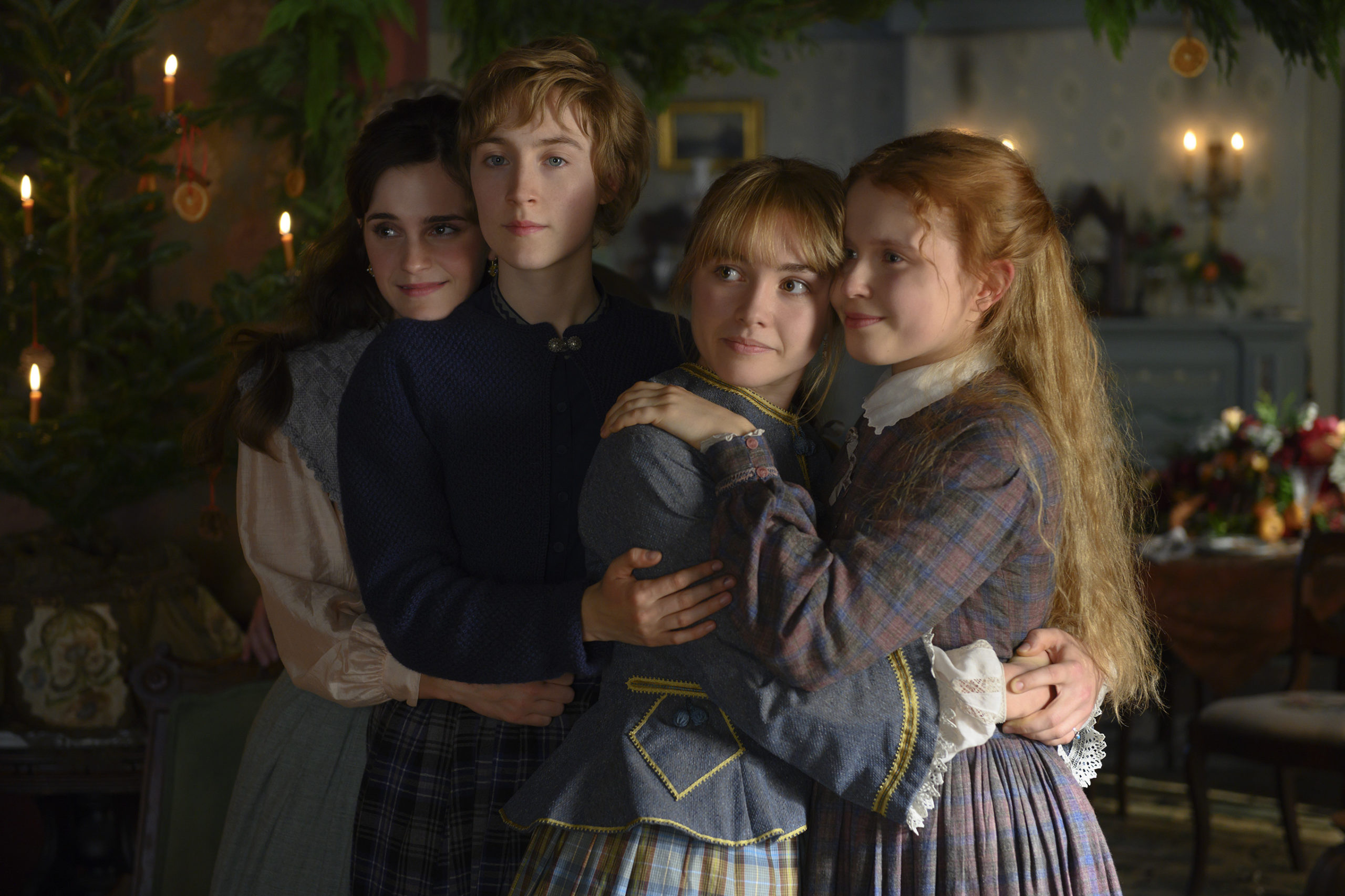
Jo (Saoirse Roman), the aspiring writer, is the sister of three other March girls: Meg (Emma Watson), who dreams of being an actress (another mise en abyme), Beth (Eliza Scanlen), a talented pianist, and Amy (Florence Pugh), who intends to be a painter. Only the former and the latter achieve their artistic goals, which was quite a feat for the time. The call of marriage and something even more serious, death, will get the better of the other two girls. The story of this middle-class family in Civil War-era Massachusetts moves back and forth between two timelines.
And it doesn't take long to get used to this system based on flashbacks and passages in the present tense, although we're not always sure which moment in the story we're witnessing. This is the great formal innovation of this fourth adaptation of the novel Little Women by Louisa May Alcott. Yes, «little women», not girls as the French version of the title suggests. It's all there: the film holds within it the passage to adulthood, with the nostalgia for childhood, for the cocoon, that is intrinsic to it.
The strength of director Greta Gerwig, who had signed a very good Lady bird, is precisely to retranscribe this theme in an atmosphere that suits it. More than just a play on the passage of time for the characters (as quickly as it passes for the viewer), this artistic choice creates a general atmosphere in the realm of the marvelous. The freshness of the snows of yesteryear illuminates us, as does the altruistic light emanating from the mother of the four girls - a mother who serves us no morals, only motherhood - which, unlike morals, is incriminable.
Feminist and simply emancipatory
But beyond the film's cinematographic style, which is not exempt from a few criticisms either (the slow motion at the beginning could have been avoided, and we'd have appreciated it even more, as would some of the violins, which are too eternal) and the story, which we won't go into in order not to divulge anything, it's more than essential to salute the content. And in particular a dimension that I've surprisingly not seen mentioned anywhere in the cultural press. I'm talking about the thirst for emancipation that emanates from the young characters in this story, and not just the women!
Yes, the film is feminist, in the sense that it puts women in the spotlight and places at the heart of its message the profound aspiration of women to be the equal of men. A theme that's still relevant today: here too, I agree. But did you notice Laurie next door, with his staggering charm and eyes so melancholically Italian they're almost Lebanese? Omnipresent, torn asunder by impossible love and ephemeral love, he too bumps up against a society far too codified to suit his personality.
But let's not wait for codes. Let's not wait for society to fit us. Let's try to make ourselves correspond to what we want to be. And that's why we'll be allowed to consider, in the face of prevailing codes of thought, that this film is much more than feminist. A truly emancipatory film!
Write to the author: jonas.follonier@leregardlibre.com
Photo credit: © Sony Pictures Switzerland

You'll also like

 French
  German
  English
Leave a comment