




A Glimpse into the Private Lives of Corinna Bille and Maurice Chappaz (An Interview with Pierre-François Mettan)

Le Regard Libre N° 22 - Loris S. Musumeci
Happy days (1/6)
With this literary interview, we open a six-part series examining the correspondence between the two Valais writers Corinna Bille and Maurice Chappaz, published this year by Zoé under the title : Jours fastes, Correspondence 1942 - 1979. Pierre-François Mettan, professor of French and English at Collège de l'Abbaye de Saint-Maurice, spent four years working on this uniquely rich epistolary work. A passionate lover of literature, he knows both authors as well as his own parents. So we had no choice but to meet him.
Loris S. Musumeci: What prompted you to delve into the correspondence between Corinna Bille and Maurice Chappaz?
Pierre-François Mettan: It all started when I was a student at the Collège de l'Abbaye de Saint-Maurice. My teacher had invited Maurice Chappaz. His encounter with me was extremely memorable. This cheerful, voluble man took an interest in us. At the time, Maurice Chappaz was at odds with various institutions, in particular the Nouvelliste ; which is why we took a liking to him. Do you remember the «Vive Chappaz!» painted on a cliff face in Saint-Maurice? Some students from my class (class of 1976) stole paint cans from the police on April 1st, to inscribe this heartfelt cry visible from the town. All the Swiss newspapers wrote about it! That's how I came to know, read and love Maurice Chappaz. Later, Corinna Bille also fascinated me. People ask me which of the two I prefer. I must confess that I appreciate both equally. They're very different. Maurice is a poet. Everything he says has weight in reality, in his own life. Corinna, on the other hand, is always fictional; she tells stories and is interested in lives other than her own. It is, in fact, interesting to compare their manuscripts to understand their differences in genre and style. The first has a small handwriting, his texts are full of corrections and additions. The second writes in a single stroke; her handwriting glides and flows, she moves forward spontaneously.
Do you notice this in their epistolary style?
Absolutely. We found several drafts of Maurice's letters to Corinna. This shows his less impulsive but more polished handwriting. What's more, since he couldn't draw too well, he enjoyed pasting butterfly decals. Corinna, who comes from a family of artists, draws very well. She made some wonderful collages and sent them to Maurice. It's touching to see the trouble he took to try and write back to her with beautiful ornaments; he never failed to find some picture in an old book, attach it to his letter and place romantic «I love you» around it. It's amusing to note that he, who had studied Latin and Greek at college, made more language mistakes than she, who had a simple business diploma.
In practical terms, how did you go about gathering, deciphering and presenting this incredible multitude of letters? The book in question contains over a thousand pages of correspondence.tion: an impressive piece of work.
It was a team effort. Under the direction of Jérôme Meizoz, university assistants began the research work. Subsequently, I was taken on as part of the project and devoted myself to it for four years, alongside my work as a teacher: I had to decipher and type about half the letters, and of course check them all. I liked what I did; typing, in particular, gave me a more natural grasp of the content of the writing. Precisely, the steps involved in producing the collection were deciphering, chronological assembly and annotation.
You just mentioned the annotations, which are omnipresent in the book. How important are they?
The annotations are a job in themselves; the aim was to make the text more readable and to provide access to what seems inaccessible. You can imagine how much this appeals to me as a teacher. There's a whole pedagogy behind it. As a principle of annotation, I simply stopped at anything I didn't understand or didn't know. Library research certainly played an essential role, but so did the witnesses I met. I used cemeteries to discover dates of birth and death. I was in fact very free in the way I worked. I also enjoyed the serene walks in places described in the correspondence of Corinna and Maurice, two great walkers. From all these experiences, I've learned that in research you often find what you weren't looking for.
You know the intimacy of the two writers well by now, thanks to all this research. But do you think it's right to make it public in this way?
Excellent question! Before the book came out, many people asked me if my work in publishing this correspondence was legitimate. Yes, it clearly is. Maurice wanted this publication, he supported it in the first part of the work and refused any sorting that would have meant removing what he didn't like. It's true that some of his letters don't show him at his best. I'm thinking in particular of his infidelities and money worries. As for the intimacy itself, I wonder if it's all that present. Let the reader be the judge. The fact remains, however, that Maurice Chappaz's desire to discover these two authors from the inside. This immersion in correspondence is extremely fruitful.
All the more so since, in the preface, you present this correspondence as singularly complete. It is, in fact, at once friendly, amorous, conjugal, travelling and literary.
Absolutely. Frankly, I think there are few correspondences as rich as this one. In this respect, I'm a little disappointed that, despite the efforts of Madame Coutau of Editions Zoé to distribute the book in France, no French newspaper has taken an interest in it to the point of devoting an article to it.
It's a shame, really. I did see the book prominently displayed in a bookshop in the heart of Paris, in Saint-Germain-des-Prés, last May.
Is it really true? What a nice surprise! Even if nothing appeared in the press, at least our work was seen and no doubt read too. In any case, I'm sure that François Mitterrand's correspondence with Anne Pingeot, which has just been published, will be more widely read! It must be fascinating.
So what is it about the epistolary genre that makes it so appealing? What is the mystery that makes it so bewitching to read?
Corinna Bille and Maurice Chappaz's letters are captivating to read because their lives are. Corinna, already very young, suffered the pain of a marital separation. After living in Paris, she returned to the Valais and wrote compulsively to console herself, in particular her first masterpiece Theoda, written during the war. Maurice was not all success either: he was paralysed by the blank page and took ten years to write his Testament du Haut-Rhône. What's more, they're both avid readers and have a lot to say to each other. They can't even imagine going several days without writing to each other. I wonder if this kind of day-to-day correspondence will ever exist again. That's why such a collection of letters remains a real treasure trove. I can imagine a historian interested in feminism consulting Corinna's letters. She was a feminist, but never proclaimed it. She wanted her independence, a «room of her own», as Virginia Woolf put it, an author Corinna loved dearly.
Why did you choose Happy days as a title? I'm sure that's part of who we're dealing with here.
We came up with this title through a simple discussion. I was expressing my amazement at the expression «jours fastes». In ancient Rome, «jours fastes» were days when commerce was permitted. For the communication code between Corinna and Maurice, «jours fastes» are those times of the month when pleasure can be exchanged without the risk of procreation. We decided to keep this expression as our title, because it evokes complicity and generosity. Their existence is a veritable «cornucopia»: through their children, through the books they've written, through their friendship, through the lives they've given. This calls into question the prejudices that circulate in Valais about Maurice Chappaz: we don't know just how generous he was.
Now that we've entered their private lives, how would you describe the love they experienced, sometimes pleasantly, sometimes more difficultly?
It was a love-passion that evolved into a lifelong attachment. In addition to simple respect, they admired each other; for their person and for their work. Maurice was seduced by this woman who wrote so easily and instantly. Corinna, on the other hand, was fascinated by the poet's sophisticated handwriting. They helped each other with their writing. It may sound a little sexist, but Corinna typed the texts and Maurice acted as literary agent for publishers: after her death in 1979, he published some twenty of his wife's unpublished works. He devoted himself to promoting the work of the woman he loved. In addition to love-passion and attachment, we can speak of love-friendship. They were true friends.
«I can only love the being I leave free and who leaves me free. You can do what you like, I love you, I take you with me and you are part of my solitude», reads a letter from Corinna. What place does freedom have in their love?
Reading and an openness to the arts gave them this need for freedom. They had to enter into a kind of contract: Maurice could come and go without always being very close to the family; she, by necessity, looked after the children. Maurice, inhabited by an ambulatory madness, was always on the move. In this, he is reminiscent of Jean-Jacques Rousseau. Corinna accepted that her husband was absent, that he too had adventures. She always asked for enough time to write. Maurice did everything he could to give her time off and rest. He also put freedom first. Maurice Chappaz was very religious: for him, a Christian can only be free.
Wasn't the relationship too out of step with other traditional couples?
There was definitely a gap. It was easier for Corinna than for Maurice. She came from an artistic background. Her father, a great wandering painter, also had a lot of freedom. Maurice's family, on the other hand, was less appreciative of this type of relationship. On the question of marriage, in particular, it was difficult to accept that a Chappaz was not married when a child was about to be born. What's more, Maurice, pater familias, He was making very little money at home. His family wanted him to get a real job. In fact, he could even have entered Nouvelliste, But he preferred to keep his creative freedom, to devote himself to his art, writing, hence his sometimes tense relationship with his uncle, State Councillor Maurice Troillet.
What can this correspondence, with all its wealth of riches, contribute to literature in French-speaking Switzerland?
It sheds light on the family of French-speaking writers. They knew each other well, and read each other's works. Maurice often mentions Gustave Roud, Georges Haldas, Philippe Jaccottet, Nicolas Bouvier and many others. There's a brotherhood between these writers. It's all the more interesting when you see that it's not just their geographical proximity that unites them, but their profession. Maurice once quipped that he felt «more Roman than Romand». The fact remains, however, that they were very supportive of each other as «Romands»; ; Happy days is testimony to this. These writers enjoyed a veritable network, much like the humanists of the Renaissance. Corinna was more of a recluse, but she also had her contacts: above all, she knew foreign artists through her travels. I'm thinking of her friendship with the French-speaking Romanian Benjamin Fondane: she was dismayed to learn that he had been deported to Auschwitz. There are these life stories and the great History. In this respect, the anecdotes recounted in the couple's correspondence are a great contribution to French-language literature. A French or Belgian reader would undoubtedly identify with Corinna and Maurice's life story. I'd really like to emphasize the universal aspect of these two people. You can read, for example, the translations of Bucoliques of Virgil by Chappaz.
In this case, as a summary of the richness of Happy days, I'd like to offer our readers three good reasons to read it.
It's a story of life. Perhaps I should say it's a story of lives, in the plural. Two fascinating lives, because against all odds, they always gave themselves meaning. Everything Corinna and Maurice did made sense: writing, having children, traveling, loving. They lived through and in fervor. A second reason would be the documentary aspect of the book. It contains interesting insights into the history of the Valais, French-speaking Switzerland, travel and literature. Finally, it's a gateway to the works of Bille and Chappaz. And I'd like to give you a fourth reason: an interest in nature. This is what brought them together in a perspective that is not anthropocentric. In fact, they are constantly amazed by the world around them: landscapes, birds, butterflies, animals...
Thank you for sharing, Mr. Mettan!
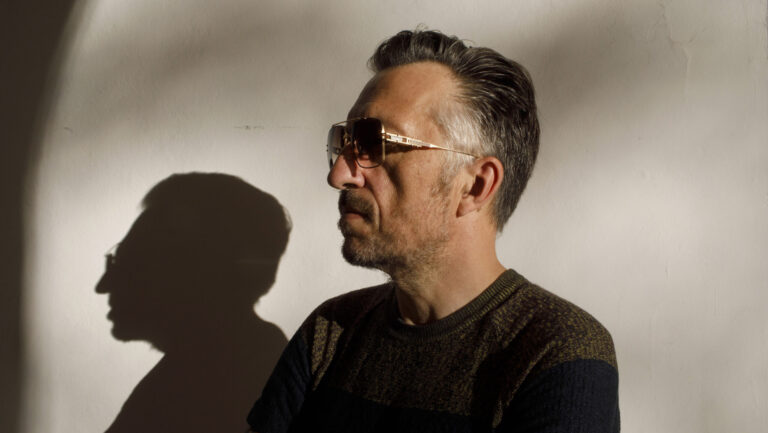
Interview by Loris S. Musumeci
Crédit photo © Radio Télévision Suisse
You'll also like



 French
  German
  English
1 comment
[...] Read also: «In the intimacy of Corrina Bille and Maurice Chappaz» [...].
Leave a comment