



«Villa royale»: the sparklingly talented first novel by a woman from Lausanne
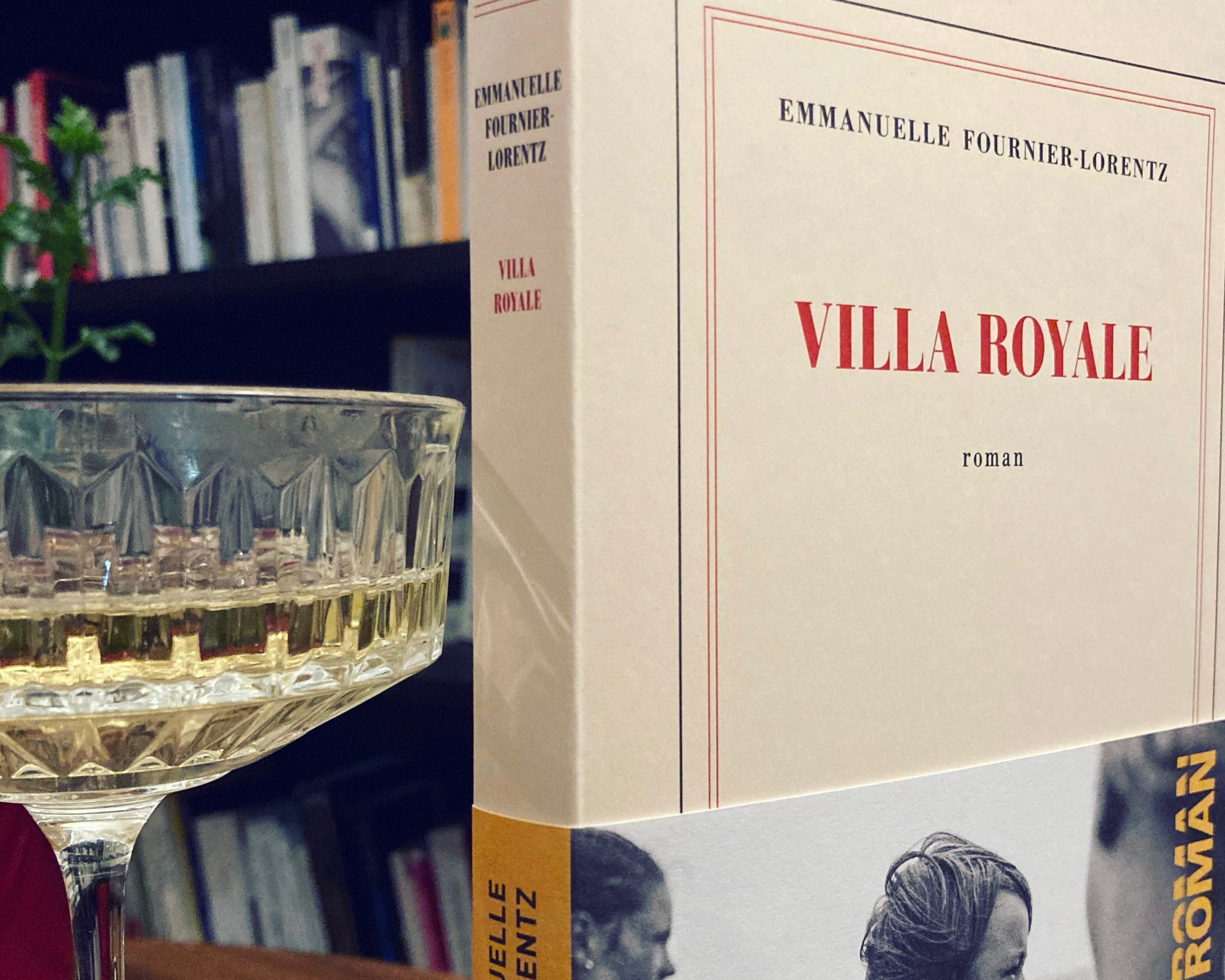
«Villa royale» by Emmanuelle Fournier-Lorentz © Quentin Perissinotto pour Le Regard Libre
Unpublished article - Quentin Perissinotto
Royal Villa marks the literary debut of a young author from Lausanne. And it does so in a very beautiful way! While the title may suggest a series of lavish cocktail receptions, glittering chandeliers and red-carpet roll-outs, it's nothing of the sort. Emmanuelle Fournier-Lorentz takes us along in the wake of a sibling who capsizes from city to city, seeking to escape the memory of their father's death at all costs. Whether under the Tropic of Capricorn or in the cold of the 15thth arrondissement de Paris, the sun may be shining from a different angle, but it's still casting the same shadows.
The publication of a first novel is always something special for an author. Even more so if it's published by Gallimard! Especially since, usually, to catch a glimpse of a woman from Lausanne in the «Blanche», you have to look closer to the Chauderon district. What's most striking about Royal Villa, is the voice. A voice that imposes itself without overdoing it, that slips surreptitiously over the words and carries the story or, better still, cradles it. Almost timidly, it seems like nothing, occupying everything. And behind the rare silences, the escape. One fine evening, in the midst of a sibling squabble, mother abruptly announces to Charles, Victor and Palma their next destination: Reunion Island. All this only two or three months after the father's death. Life has to be cut short. Palma, the narrator, says: «I was happy to smell an intoxicating, perverse odor, far more violent than my sadness: the smell of escape.»
Right from the start, this geographical flight turns into an existential one, for although they carry this family drama in their suitcases, the children don't understand their mother's determination to steal them away from everyday life. From fugitives they have become nomads: nomads of places, nomads of their own lives. After La Réunion, Paris, a brief stopover in Marseille, then Esacamdur and Montpellier; one shabby apartment follows another, as do the roads, cities go by and dreams are torn apart. As we follow the escape, we come to the crossroads of questions: what does life boil down to? How can we project ourselves into the future when everything explodes in the blink of an eye? Mother never asks their opinion, never informs them, just decides in haste what's best for everyone. In this story, maternal love is a confiscation of ideals.
«Une famille courant après on ne savait quoi, une famille en fuite. Et n’est-ce pas le propre de l’existence: refaire, par des moyens déviés et qu’on ne maîtrise pas, ce que l’on a vécu durant son enfance? Le refaire pour toujours, à vie, incapable d’y échapper, condamné encore et encore. Incontestablement, il y avait chez nous un gène, une espèce de folie; peut-être était-elle dans ma famille depuis des générations. Elle permettait ce qui à mes yeux valait de l’or: la possibilité d’une vie que peu de monde a écrite, et qui s’efface sous vos pas si vous essayez de la regarder à travers le prisme d’une société bien établie. Locataires heureux d’une tour d’ivoire, propriétaires d’un jardin de sable, qu’importe.»
Children, the sailors of nostalgia
Nevertheless, no matter how far the novel's protagonists escape without a trace, they can't shake off the ghost of their father's memory. They seem to be running out of breath, losing everything so that nothing clings to them. But drowning the past in turmoil never works. «Ask me who I was, and I'll tell you who I'm running from, as rapper Médine would say. The mother's obsession with burying the past under ever-thicker carpets inevitably leads to the children's initially docile revolt. With this, the novel takes an interesting turn, depicting the transition from childhood to adulthood. Charles, Victor and Palma have very different characters, and their rebellion naturally takes opposite forms. Palma, the narrator, is the youngest and calmest. So, to combat the oppressive and often incomprehensible reality, she tells stories. In this way, what has always been silent disappears.
«D’un coup d’œil, j’ai vérifié que Victor non plus n’était pas triste de s’en aller. Malgré le bruit des livres qui s’écrasaient au fond des sacs et le fait que nous faisions tout pour ne pas croiser le regard furieux de ma mère, il arborait un air lumineux et éberlué, celui des gens que l’on rencontre par hasard en pleine nuit, ivres et échevelés, des gens que l’on n’a pas vus depuis dix ans et contre lesquels on se cogne dans les rues d’une ville étrangère.»
One thing is surprising, however: the mother who orchestrates the whole story is never named; this muted presence is a response to the father's strident absence. Two horizons that intersect off-screen. Two evanescent lines underpinning the narrative. If this family were a photograph, it would be a silver film perforated with welts from which a light would pierce. But the light would be pallid around the edges, as madness shrouds the maternal character, who says that «it's better to be mad sometimes: long stretches of absence where reality never erupts. Thus, the young family will have the heavy moral debt of constantly choosing between stalking or fleeing the undulating Fury. With great delicacy and modesty, the author constructs a story of ellipses, luminous halos and mysteries yet to be unraveled.
Emmanuelle Fournier-Lorentz's treatment of serious, moving and sometimes dramatic subjects does not burden the novel with pathos. On the contrary, the children's insouciance and sarcasm - Palma being the first - give rise to some very funny and comical moments, such as the encounter with a wild boar at a freeway service station. Royal Villa is carried by a solar, touching style of writing, at once melancholy and nostalgic, but always cheerful, which leaves no room for doldrums. It's a novel that expresses the great questions of life, human tragedy and the loss of innocence in a falsely casual way. A vaporous, mysterious novel, a little like a bottle of champagne carried all day in the trunk of a car: once opened, you don't know whether it's going to shower you with sweetness or blow up in your face.
«Il y avait eu quelque chose de définitif dans ce drame qui nous avait marqués au fer rouge, et comme les chats, en état d’alerte constante, nous craignions toute proximité avec la réalité, avec les petits quotidiens où chaque geste est connu et millimétré. Parce que c’est dans cet engourdissement, dans cette brèche particulière de la vie que se glissent sans que l’on s’en aperçoive des voiles qui se déchirent, des drames dont on garde à jamais l’empreinte et qui nous laissent à vif. C’est là que les morts meurent pour toujours.»
Write to the author: [email protected]
Photo credit: © Quentin Perissinotto for Le Regard Libre
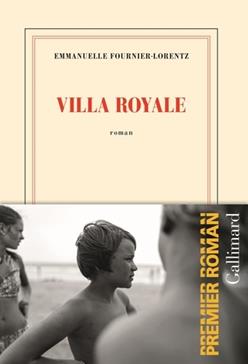
Emmanuelle Fournier-Lorentz
Royal Villa
Editions Gallimard
2022
262 pages

You'll also like




 French
  German
  English
Leave a comment