




In the carnage of «Like Carthage»

Tuesday books - Quentin Perissinotto
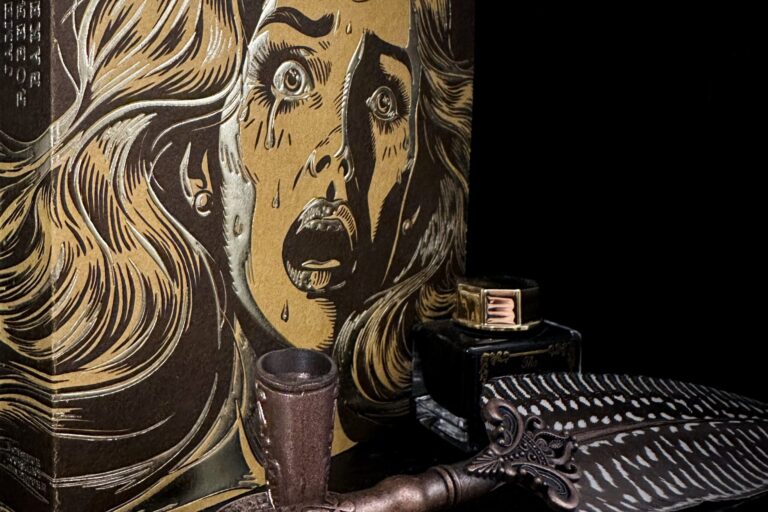
An address from the author to the publisher as a back cover, a cover made from a Photoshop montage; I wasn't sure what to expect with this book. We're promised a novel, but everything seems so burlesque that we imagine everything. With Like Carthage, Jean-Yves Dubath invites us to Paris, to an apartment transformed into a Pandora's box of sculptural bodies. It's a one-way ticket to the kind of debauchery that has become a well-oiled system.
In this novel, we search, we swim, or rather, we try to stay afloat, we search without necessarily finding - in short, we try. The subject is astonishing, and the form even more so. In the apartment of a Parisian art critic, the reader sees dozens of men and women arrive, stripped naked and piled on top of each other to fill every nook and cranny. I wasn't sure whether I was attending the Lego Masters finals or an Erasmus party, it's all a blur.
And everything will stay that way. Because nothing is sexually explicit. In fact, nothing is explicit at all: you have to dig deep into the text and find your own way through the flood of information. That's where the novel's malice lies: giving the reader the material and leaving him/her the keys to construct whatever he/she wants from it, with a vague, incomplete instruction manual in hand. An Ikea-style self-assembly story.
Body on body, digression on digression
Car Like Carthage doesn't follow a plot, but the narrator's thoughts and digressions, which touch on many different subjects, including one that occupies a central place in the novel: the relationship with the athletic body and society's view of it. All the men who show up at these little parties are professional rugby players, wrestlers, firemen or gymnasts. But there's no explosion of testosterone: all these bodies are seen and observed like Greek or Roman statues in a museum. Another subject could be the emptiness of relationships. I also saw the piling up of bodies as a metaphor for language, to the point of saturation. For all this play on abundance is obviously reminiscent of Rabelais!
It's a baroque novel in which the writing is neither confusing nor hermetic, but flows gracefully, with a delicate classical touch; it's a talkative novel, but not wordy, that ends up questioning the place of silence. There's so much more I could tell you, but that wouldn't erase the fact that what I see in this novel could only be my own interpretation: each reader will have his or her own entry into the book and his or her own reading, so dense and mysterious is it.
Write to the author: [email protected]
Photo credit: © Quentin Perissinotto for Le Regard Libre

Jean-Yves Dubath
Like Carthage
BSN Press
2021
336 pages

You'll also like




 French
  German
  English
Leave a comment