




Marianne Grosjean's article: «March 8, two injustices, zero solutions».»
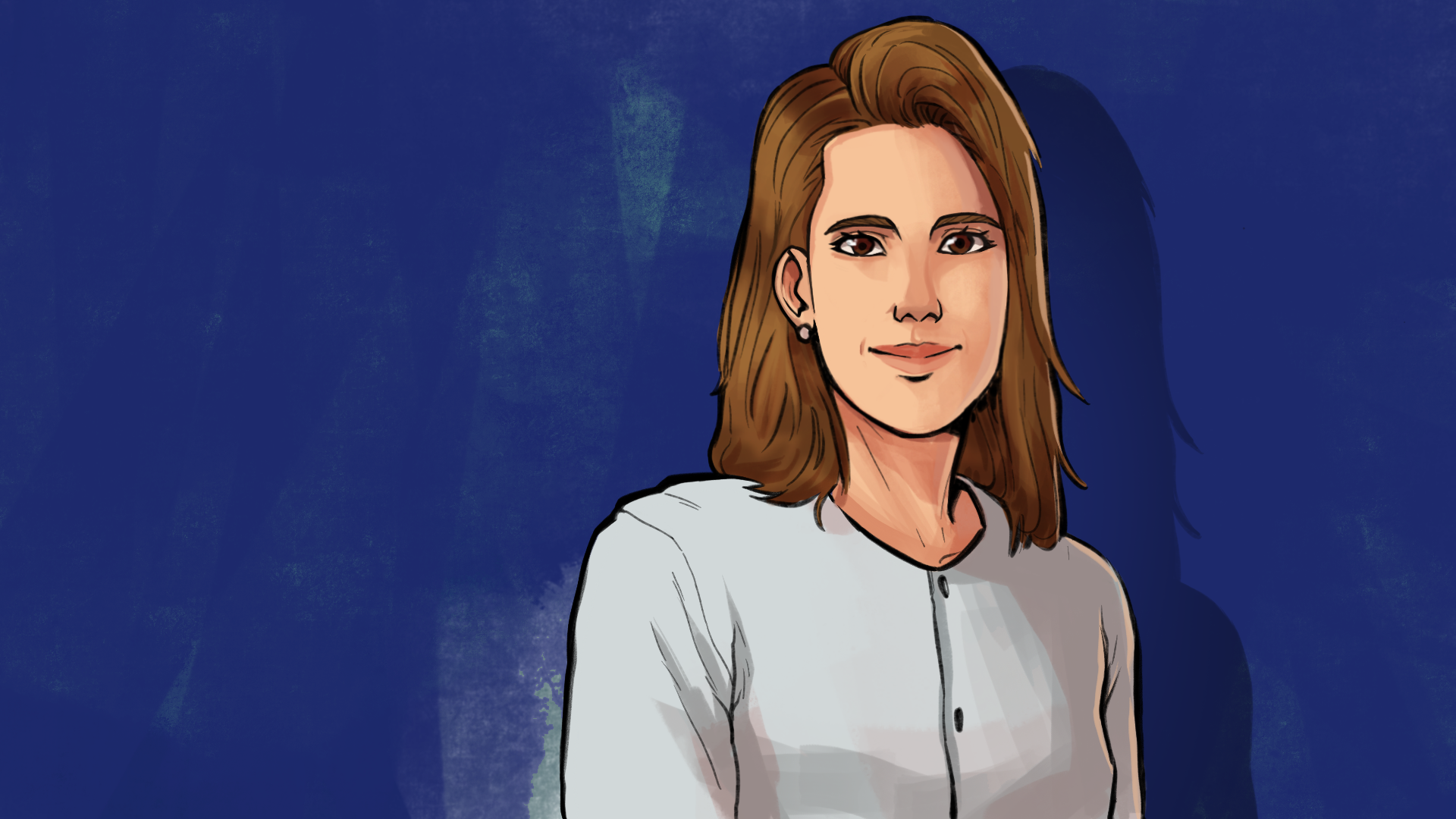
Journalist Marianne Grosjean, columnist for Regard Libre. Drawing by Nathanael Schmid
In this brand-new column, journalist Marianne Grosjean sends a monthly message to our readers.
Ready for March 8th? I have to admit that marching with purple banners in inclusive language isn't really my cup of tea. Not that I'm indifferent to violence against women, but in recent years it seems to have been overshadowed by demands that are too far removed from the cause of women - anti-capitalism, transgenderism, decolonialism, environmentalism - for me to identify with them.
On this Women's Rights Day, I'd like to draw your attention to two situations that are emblematic of the pivotal moment in gender equality par excellence, namely motherhood. This moment of great vulnerability between pregnancy and children's first years deserves greater attention from the political world.
In the first case, my neighbor, a hospital nurse, is crying because she has to go back to work after her second maternity leave. Her husband is a factory worker, and the couple couldn't live on her salary alone. So she resumes her twelve-hour shifts, pumping her milk five times during this period. As a breastfeeding mother, she could switch to eight-hour days, provided she could find childcare for the extra working day involved in this new organization of her time. The other day, after starting work at 7am, she forgot her cooler with her five bottles of breast milk at the station at 10pm. She retraced her steps, to no avail. The milk was gone. She collapsed in tears at home at midnight. Her baby woke her up every two hours to suckle, as he did every night. A new 12-hour working day awaited her the next day.
What would our nurse like? Parental leave for at least a year, until her child can eat solid food during the day and she no longer needs to pump milk at work. But above all, she wants to be able to earn a salary during this period. For example, her salary minus the amount of childcare costs saved. And also, that she be paid her social security contributions for the 2nd month.th to protect themselves from a miserable pension when they retire. What man, in fact, pays his partner, who reduces her working hours to look after the children, compensation for her 3th Who in politics would propose such a payment? Who in politics would propose such a remuneration?
In the second case, a mother of two, a receptionist, told me about coming home after a complicated caesarean section resulting in three weeks in hospital. «When I got home, I nearly fainted. Dirty dishes were piled up in the sink, there was dirty laundry and grime everywhere, the garbage cans stank... and with my scar, I couldn't make any effort.» Yet Monsieur, an electrician, had taken paternity leave.
Far from being a medical necessity like maternity leave, paternity leave is a major advance for couples who share the burden of childbirth, and a measure for equality based on a tacit contract of trust: Mr. is expected to help run the household while Mrs. recovers from childbirth. But in reality, no one will come and check. The modern bobo dad comes to mind, roto-pad on his shoulder and busy in the kitchen. But not the lazy cannabis and video game addict. So what can you do? Send home help instead of paternity leave at the wife's request? Ask midwives to act as snitches?
Send us your best ideas for changing the world. We'll send you a rose as a thank you. Or a bottle of breast milk.
The journalist Marianne Grosjean addresses a message to our readers in his column.
You have just read a column published in our print edition (Le Regard Libre N°114).

You'll also like






 French
  German
  English
Leave a comment