




Anti-racism that «infantilizes blacks»
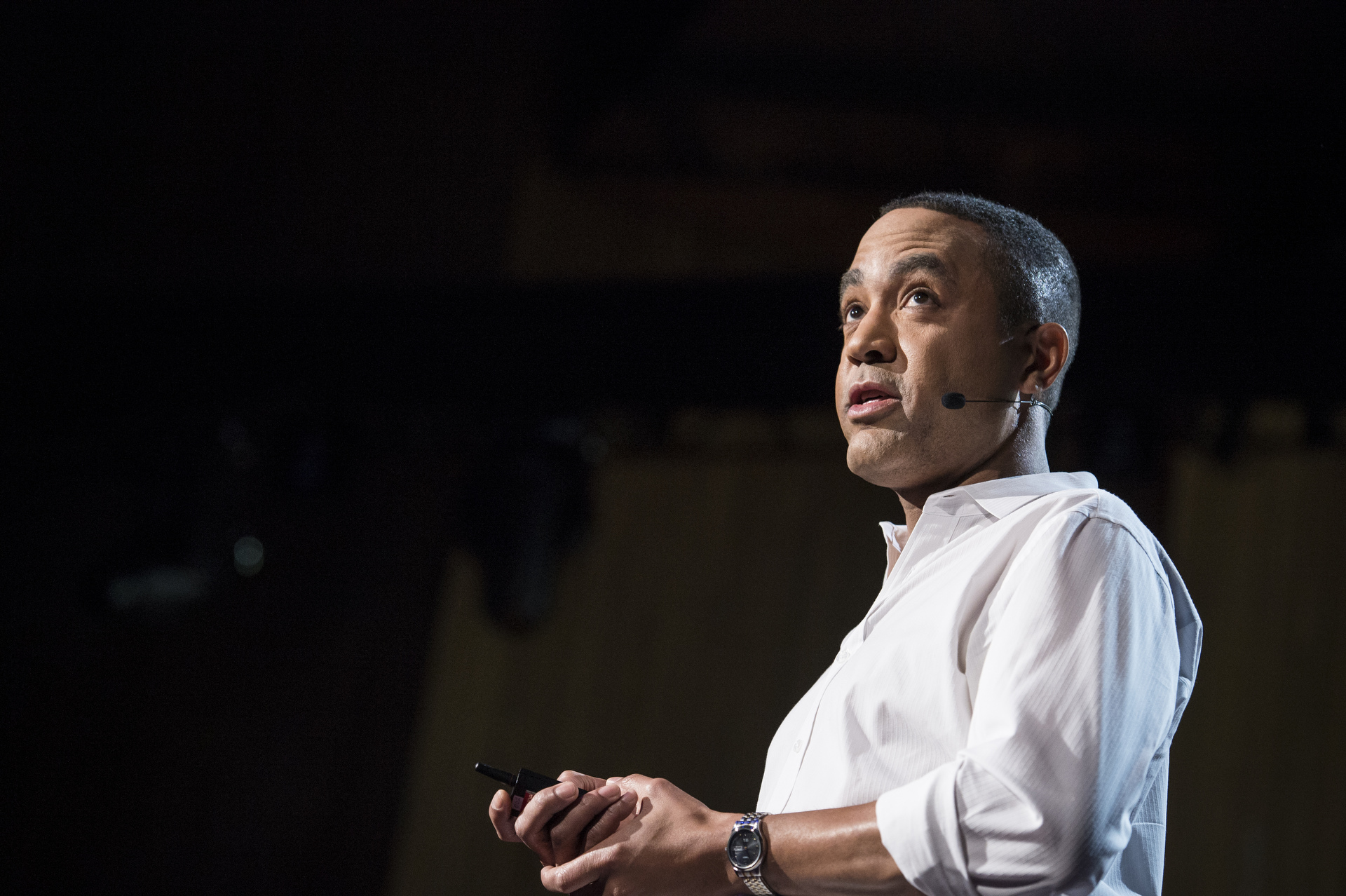
American linguist and essayist John McWhorter, author of «Woke racism». Photo: Wikimedia, under CC BY-NC 3.0
African-American linguist John McWhorter sees contemporary anti-racism as a betrayal of Martin Luther King's universalist ideal, and as an ideology that designates whites as oppressors and reduces blacks to incapable beings.
Martin Luther King's «I have a dream» speech seems a long way off: »I dream that one day on the red hills of Georgia the sons of former slaves and the sons of former slave owners will be able to sit down together at the table of brotherhood (...). I dream that one day my four children will live in a country where they will not be judged by the color of their skin, but by the value of their character." It is against this universalist ideal that John McWhorter analyzes contemporary anti-racism. In his view, the latter has disavowed King's legacy and replaced it with a new racial ideology, betraying the emancipatory spirit that once animated the struggle for equality.
Against this backdrop, McWhorter publishes in 2021 Woke Racism, a brilliant, well-documented and resolutely incriminating essay. In his preamble, the African-American linguist declares: «I wrote this book from the gut, driven by the fact that white people who believe themselves to be our saviors are making black people the stupidest, weakest and most self-indulgent human beings in the history of our species, and teaching black people to revel in that status.» His critique is aimed particularly at American sociologist Robin DiAngelo, author of White Fragility (2018), which he sees as the epitome of the excesses of contemporary anti-racism. McWhorter spares neither the content nor the form of his book, calling it «an intellectual disaster, fit only for the shelf».
According to McWhorter, this ideology, by focusing on largely phantasmal oppressions, ends up producing very real ones. Here are six theses that sum up his critique.
1. Third-wave anti-racism since 2010[1] in the United States. Lacking empirical foundation and nuance, it promotes the idea of systemic racism.[2], supposed to be invisible and rooted everywhere. This Manichean vision, which borrows from conspiracy theory, divides the world into two opposing camps: the oppressors, who are necessarily white, and the oppressed, who are essentially black. This Manichean vision, which borrows from conspiracy theory, divides the world into two opposing camps: the oppressors, necessarily white, and the oppressed, essentially black – while other minorities, such as Jews or Asians, are often relegated to the rank of accomplices of white power.
2. This radical anti-racism functions as a new puritanical and exclusive religion. It reproduces the codes: untouchable figures such as Robin DiAngelo, Ibram X. Kendi and Ta-Nehisi Coates are set up as prophets. Kendi and Ta-Nehisi Coates. Their writings serve as sacred texts, and any criticism of them is blasphemy. Within this framework, any doubt becomes suspect, and asking certain questions, however legitimate, leads to excommunication. Thus, to question the exclusive focus on police violence against Blacks – while intra-community violence, though more frequent and devastating, remains taboo – is to sign one's social death warrant. Similarly, to assert that Black people are not fragile or dependent on outside help becomes suspect, even in the mouth of a Black person. Many people prefer to keep quiet or double-talk, for fear of being socially lynched. This climate poisons all public debate, making respectful and rigorous exchange impossible.
3. This Puritan ideology reintroduces the notion of original sin, now inscribed in biology: being white becomes a hereditary flaw, an indelible guilt that no one can redeem: «Anti-racists brandish the notion of original sin as an attribute of the white man, from which he must eternally repent, with no hope of redemption,» writes McWhorter. For his part, DiAngelo goes so far as to assert that «white people must remember 24/7 that they are oppressors (...) Only white people are racist». Martin Luther King's dream seems definitively buried: the individual is no longer judged by his actions, but condemned in advance for what he is.
4. This ideology contains a series of contradictions. For example, quotas are imposed to encourage blacks to attend university, while anyone who suggests that they have benefited is deemed racist. Similarly, whites are told to keep quiet, then blamed for their silence: «damned if you do, damned if you don't». The aim is not to find concrete solutions for African-American communities, but to enforce a punitive moral order, in the manner of an inquisitorial tribunal.
5. This form of sect obeys an apocalyptic vision of the world: we are close to the end of time. No progress in civil rights is recognized, no improvement in socio-economic conditions welcomed. The only horizon that remains is that of a utopia that is constantly being postponed. Seen from this angle, contemporary racism is all the more pernicious for being invisible, acting unbeknownst to those who perpetuate – or suffer – it.
6. This antiracist façade is more virtuous than effective. The subtitle of his book is eloquent: according to him, this anti-racism «betrays black Americans». McWhorter sees in it the resurgence of an ancient racism: «This sectarian ideology is a form of racism that infantilizes black people, encouraging its adherents to view black people as less capable and to demand special treatment from institutions.» In schools, requirements are lowered for black pupils, in the name of their supposed fragility. Negative assessments are banned, grades are forced upwards - because any discrepancy in results is attributed to discrimination - and greater tolerance is shown towards their indiscipline. This paternalism, which McWhorter describes as «condescension disguised as respect», anchors the idea that blacks would forever be incapable of succeeding on their own, and should therefore be spared.
In the face of this irrational anti-racism, McWhorter proposes concrete solutions to refocus the debate on the real issues facing black communities. In particular, the author highlights the high proportion of single-parent families, the absence of father figures - often incarcerated - and school drop-out rates in disadvantaged neighborhoods. He suggests three courses of action:
1. End the «war on drugs». McWhorter considers the American policy of massive repression to be a resounding failure: it has ravaged black neighborhoods, fueled crime, landed thousands of young people in prison and broken up entire families. He advocates a more moderate approach - inspired, for example, by the Swiss four-pillar model, which would combine prevention, treatment, harm reduction and repression. Such a strategy would strengthen social ties and reduce crime in the long term.
2. Reform the teaching of reading. As a linguist, McWhorter advocates a return to phonetic language teaching, a method he considers far more effective in the fight against illiteracy. Applied from an early age, it would improve the reading and writing skills of African-American children - essential assets for success at school and in life.
3. Enhance the value of vocational training. McWhorter deplores the fact that social success is measured solely in terms of academic achievement. Many young people from modest backgrounds would benefit more from a technical or craft training, valued and well-paid, than from a costly academic course, which sometimes leads them into over-indebtedness or unemployment. Promoting apprenticeships would offer them dignity and prospects for the future.
Finally, McWhorter calls on all intellectuals to courageously oppose this form of anti-racism, which he deems to be misguided, laced with good feelings but with profoundly deleterious effects. Many African-American intellectuals share his criticism: Glen Loury, Thomas Chatterton Williams, Thomas Sowell and Shelby Steele. Together, they suggest that Martin Luther King's dream has not been definitively forgotten.
Yan Greppin is a philosophy teacher at the Lycée Denis-de-Rougemont in Neuchâtel.
You have just read an open-access article. Debates, analyses, cultural news: subscribe to support us and get access to all our content!
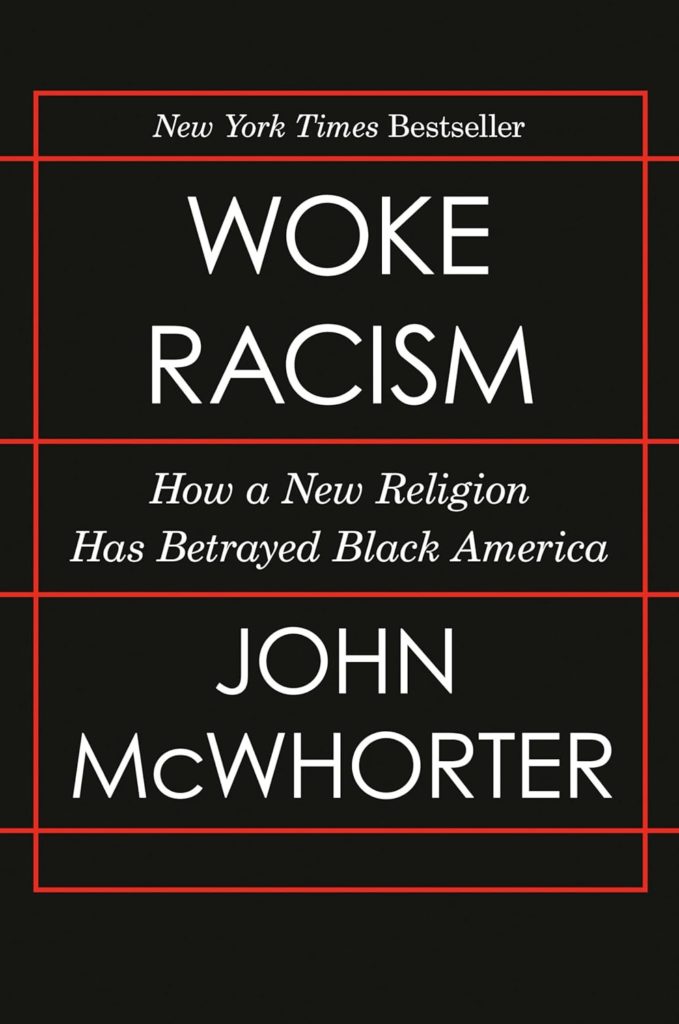
John McWhorter
Woke Racism: How a New Religion Has Betrayed Black America
Portfolio
October 2021
224 pages
[1]McWhorter distinguishes three waves of anti-racism. The first wave focuses on the political and institutional struggle against slavery and segregation, from the abolitionist movement of 1790 to the adoption of civil rights in the 1960s. The second wave (1960-2000) fights racist ideologies and mentalities, with the aim of transforming collective consciousness towards genuine equality of rights. The third wave, which McWhorter calls woke racism, returns to racial categories, but inverts them: the white man is guilty by definition, the black man always victimized and infantilized.
[2]In other words, it is rooted in the structures, practices and culture of institutions (police, justice, prisons, civil society), and operates independently of the ideology of each individual agent. It is the result of a flawed organizational culture and procedures, and affects all citizens, from Tony Timpa to George Floyd.

You'll also like






 French
  German
  English
Leave a comment