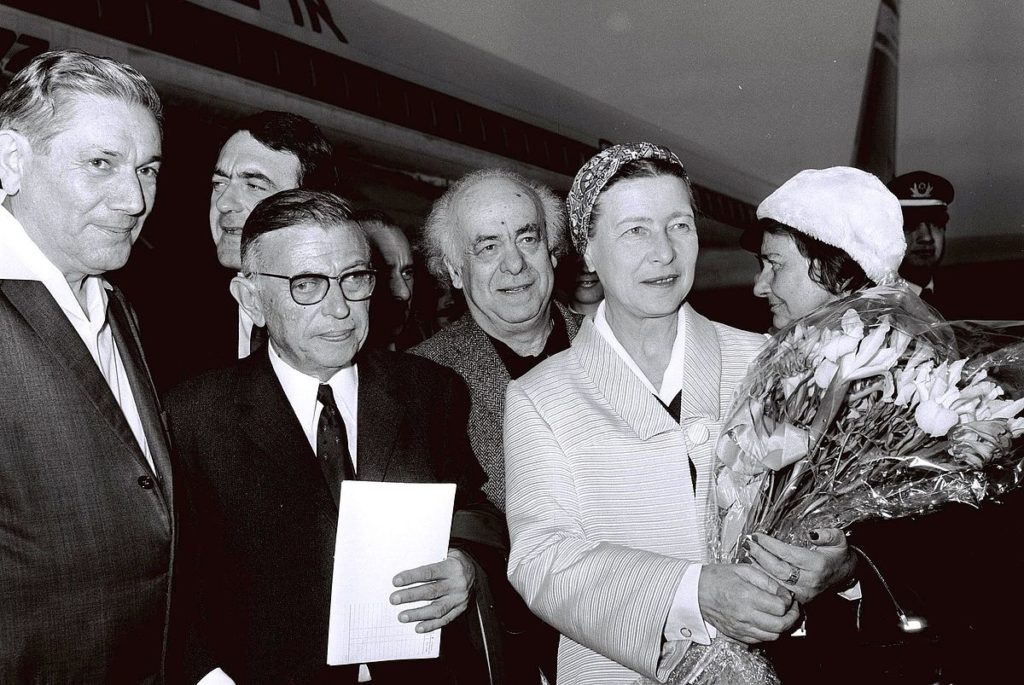
«We're not born women, we become them»: Simone de Beauvoir's famous phrase is often quoted today to justify the idea that we can decide our own sex. But Beauvoir was not thinking of putting biological reality into perspective.
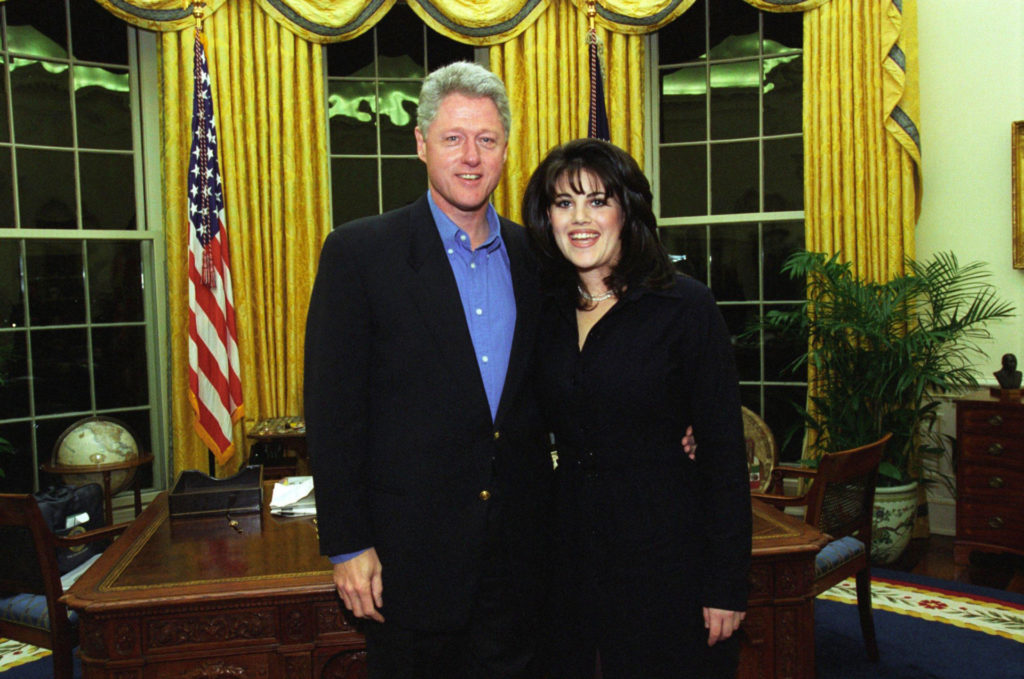
According to Kant, a lie undermines the foundations of the state, while a deceptive truth is acceptable. Two centuries later, with President Clinton, the same logic still seems to be at work in the Lewinsky affair.
Society seems to be divided between those who follow their feelings to account for their identity, particularly their sexual identity, and those who believe in biology. Some jurists point out the abuses to which the law can lead when it is based on feeling.
74,000 years ago, mankind was on the brink of extinction. The cause was the explosion of a volcano. Genetic studies confirm that the human population numbered only a few thousand individuals at that time. Today, the threat of mass extinction remains.
DOSSIER «LE SEXE SANS COMPLEXE» | The prohibition of prostitution in certain European countries seems inconsistent, since pornography is legal there. Wouldn't a sound policy be to act upstream, to avoid encouraging on the Internet what we proscribe on the street, or to accept, like the old-timers, that it's better to regulate it, because it's a phenomenon that is, after all, inevitable?
What if Europe lay in the antagonism born of the Renaissance between the Christian and scientific worldviews? This opposition has always been present in different forms at different times. Today, it has taken on a new dimension: some argue that a materialistic reading of the world is now impossible, given current physical theories.
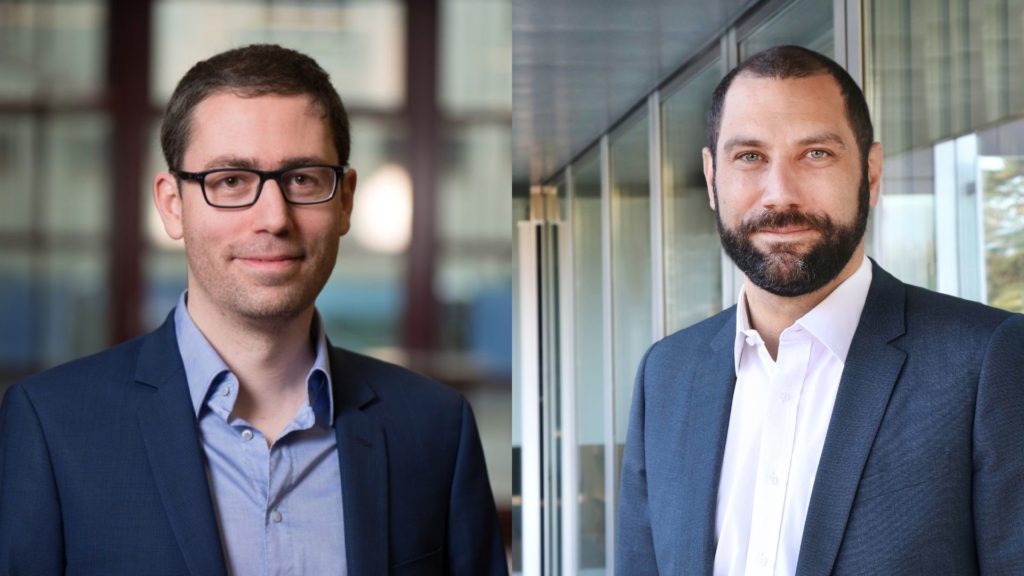
DOSSIER «LE GRAND RETOUR DU NUCLEAIRE», Jean-David Ponci | Mastering fusion would make it possible to reproduce the thermonuclear reactions of stars that are not at the end of their lives, where four hydrogen atoms fuse to form one helium atom. This is the physical process that generates the greatest amount of energy. Controlling it to produce electricity would be like putting the sun in a box. But is it really feasible on Earth? If so, when? And would such plants really be less dangerous in the event of an accident than fission power plants? Alessandro Casati, PhD in physics, spent four years working on various nuclear fusion projects: the major international ITER project in France and the Tokamak at EPFL in Switzerland. The specialist now works in finance, but has continued to follow advances in the field out of passion. This is a great advantage, as it enables him to respond impartially and give us his expertise on the future of research.
DOSSIER «LA SUISSE, DEFINITION», Jean-David Ponci | Eduard Nadtochiy teaches Russian history, culture, literature and philosophy at the Slavic Languages Department of the University of Lausanne. His father is Ukrainian. However, he grew up in Moscow. He then spent two years as a teaching assistant at the University of Kharkov, Ukraine's second-largest city. Unlike Russians and the majority of Ukrainians, he is a member of the Ukrainian Church, which is attached to Rome. He is therefore particularly well qualified to undertake the complex exercise of comparing Switzerland and Ukraine.
For a long time, humans judged animals according to their own way of thinking, generally to assert their supremacy over them. It wasn't until the twentieth century that animal behavior was systematically studied and a balanced judgment could be formulated. Today, science provides us with a more nuanced vision. And most of our major certainties - that laughter is a human trait, that animals have neither culture nor morals, that the tool makes the man, etc. - are now outdated. - are now outdated. Here we present some of the most surprising discoveries, such as animals« ability to use symbols, or their sense of empathy and cooperation. Scientific facts that bring them closer to us and help us to understand ourselves better.









 French
  German
  English