In 2014, France was the scene of a scientific controversy involving two renowned researchers: Catherine Vidal and Franck Ramus. At the heart of the debate: the differences between male and female brains. A decade later, what remains?
There are measurable differences in intelligence. But how they translate into practice depends on other factors.
When we present our beliefs as knowledge, we quickly find ourselves denying the facts. By abandoning refutability in favor of an interpretive approach, we border on the absurd, as in the case of Planned Parenthood's emphasis on pregnant men.
CHRONIQUE, Pascal Couchepin | Raphaël Gaillard is head of the psychiatry department of a major Parisian hospital and the University of Paris. He was recently a guest on France 5«s literary program »La Grande Librairie«. And what's more, he has roots in the Valais, in Saxon to be precise. The theme he tackles, after many others, but in a fresh way, is the relationship between madness and creativity. Hence the title of his book, taken from a phrase by Diderot: »Great artists have an axe to grind in their heads".
DOSSIER «LE GRAND RETOUR DU NUCLEAIRE», Jean-David Ponci | Mastering fusion would make it possible to reproduce the thermonuclear reactions of stars that are not at the end of their lives, where four hydrogen atoms fuse to form one helium atom. This is the physical process that generates the greatest amount of energy. Controlling it to produce electricity would be like putting the sun in a box. But is it really feasible on Earth? If so, when? And would such plants really be less dangerous in the event of an accident than fission power plants? Alessandro Casati, PhD in physics, spent four years working on various nuclear fusion projects: the major international ITER project in France and the Tokamak at EPFL in Switzerland. The specialist now works in finance, but has continued to follow advances in the field out of passion. This is a great advantage, as it enables him to respond impartially and give us his expertise on the future of research.
Why does a giraffe have a long neck? Have you ever asked yourself this question? Jean-Baptiste de Lamarck is the...
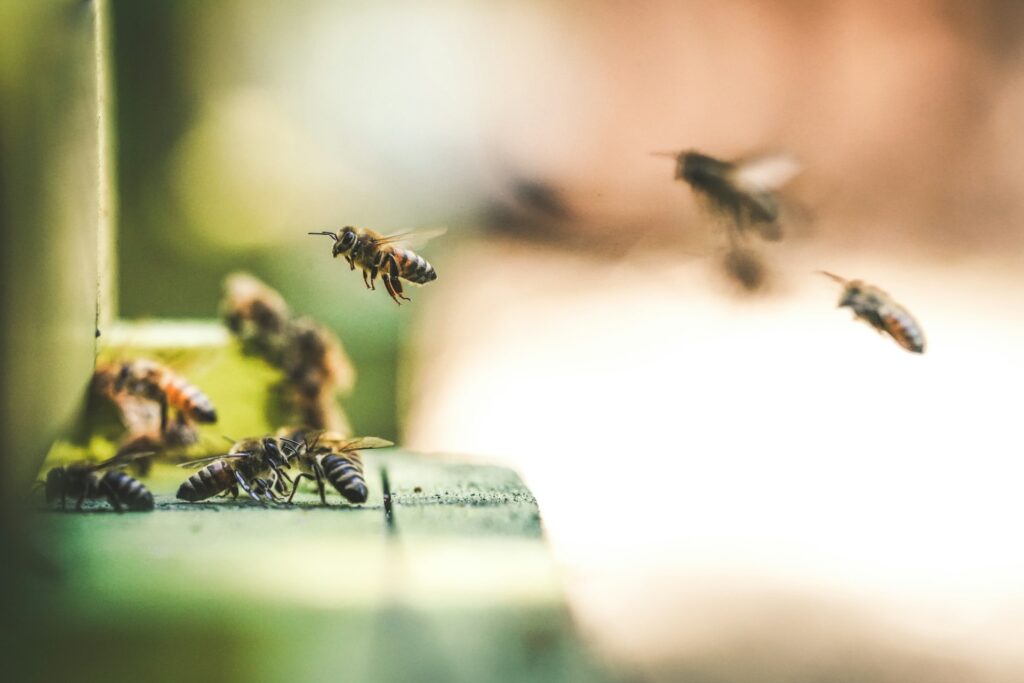
As we all know, bees are kamikazes. They die after stinging. However, we don't necessarily see the evolutionary paradox behind this behavior. Indeed, the particular case of stinging bees contravenes the general laws of evolution. We need to explain it if we are to preserve these laws.









 French
  German
  English