
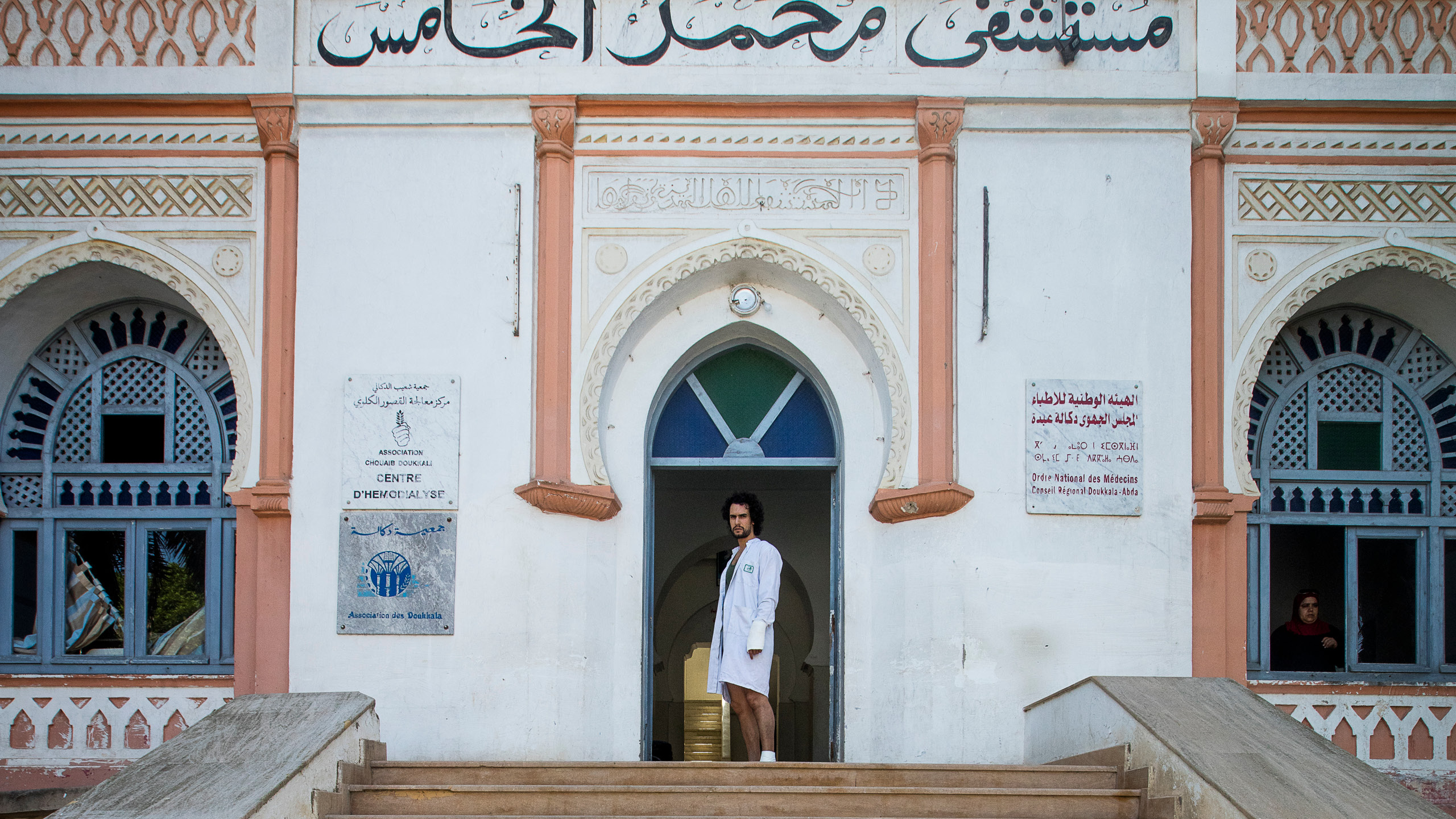
In An ordinary emergency, the French-Moroccan director Mohcine Besri plunges us into the hellish wait of a family victimized by the healthcare system. obsoletee from Morocco. A drama charged with emotion and dark humor, which denounces and prompts its viewers to reflect. In the background, the story of a country incapable of loving its people.
Thursday, August 25, at the Zinéma in Lausanne. The director is on hand to explain the origins of his script. The idea for the film, he says, stems from a conversation in Tangier with a young man wishing to leave Morocco. The co-writer and director asked him why he wanted to leave. The stranger simply replied that his love for Morocco didn't seem to be reciprocated.
Now here's what the film is about. Zahra and Driss take their five-year-old son Ayoub to hospital in Casablanca. He has been suffering from migraines for several weeks. Unfortunately, his condition seems more serious and costly than expected. A long wait inside the overcrowded hospital begins. As Driss's brother Houcine and his wife contemplate selling their future child to finance Ayoub's operation, the family meets a desperate young man who has tried to end his own life and who will support them in their ordeal.
«If his father was a minister, he would have gone first».»
As soon as the film opens, we notice the work done on depth of field. Its vastness, which gives an impression of infinity, hypnotizes. Immersed in the narrow corridors of the Casablanca hospital, the audience, like the characters, finds itself squeezed between its walls. The walls aren't the only architectural elements to fascinate the viewer. In the film's opening sequence, several shots show off the city and its overwhelming urbanism: tall buildings, modern streetcars and endless roads.
But when the parents arrive at the hospital, the opposite is true. With this contrast, Mohcine Besri masterfully denounces the financial and health difficulties from which Morocco suffers. The director's message is conveyed through images. The paucity of dialogue in no way detracts from the effectiveness of the message. The length and breadth of the shots, and the silence of some of the characters, help to build a slow rhythm, in phase with the expectations of the family, helpless in the face of the situation.
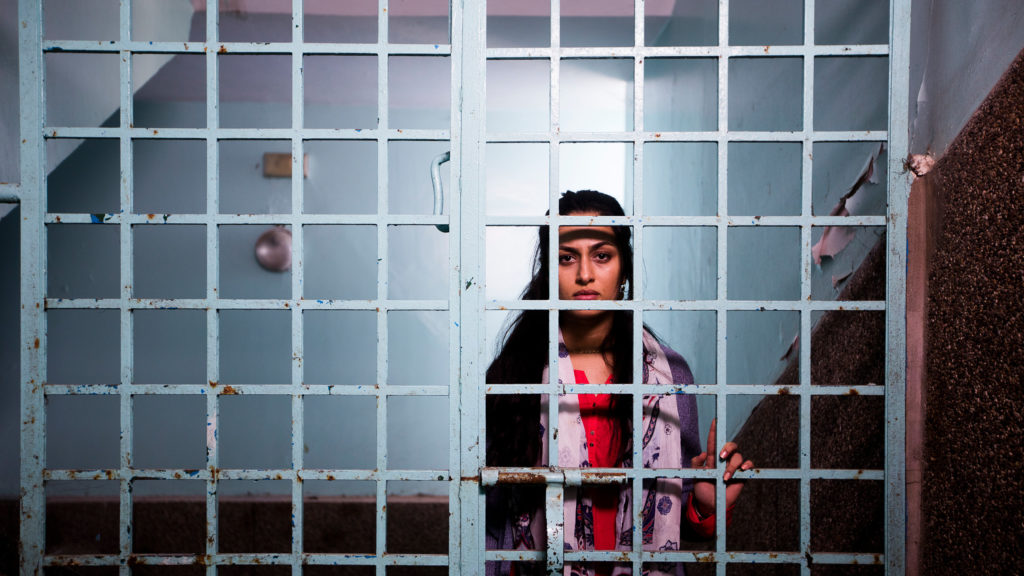
While waiting plays an important role in the film's expression, it also perfectly conveys the helplessness and frustration of Ayoub's parents, as well as that of all the hospital's patients. The predominantly seated position makes explicit the passivity of the individuals, unable to move, crammed together in corridors, staircases or on the floor. The film's singularity lies in its point of view. The audience follows the wanderings of the suicidal young man; he is the one who has been prevented from dying, observing those who are desperately trying to live. The audience accompanies the man through the maze of the hospital, as he probes the premises. It is through this silent walk that empathy emerges; it forces us to wait. with characters.
The film may seem long and slow, but that's precisely the effect it's intended to have. Time is perfectly reproduced; while the theatrical screening doesn't exceed an hour and a half, the interminable night of waiting experienced by the characters is nevertheless understood and shared. There is, however, a somewhat irritating recurrence: the sighs of the young man whose footsteps we follow. The patients' despondency is palpable, and his complaints add nothing but heaviness to a finely-written script. Indeed, with no music, words or superfluous shots, the film gets straight to the point.
A hospital full of life
Fatima Zahra Banacer and Rachid Mustapha, playing Driss and Zahra, strike a fine balance between apathetic dismay and impotent resolve. While the father's mute, closed face moves us, the mother's will gives us hope. Ayoub's character is touching and believable, despite his young age. Houcine and the Chief Nurse, laughable characters, provide a little levity in the face of the events the family endures. The characters, sometimes weak and sometimes deceitful, are more human than ever. They stand out against the coldness of the surroundings, tinted in various shades of blue.
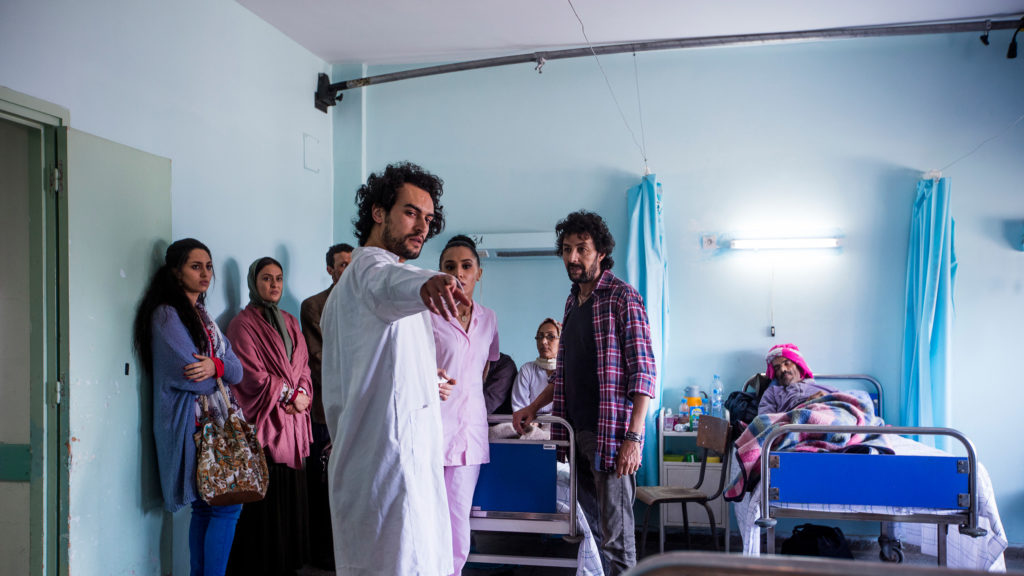
The amplification of despair is admirable. Secondary elements, experienced by Driss's brother and his wife, are slipped in over the course of the story, eventually becoming part of the heart of the plot. This emotionally charged story is laced with a welcome touch of cynical humor. At its heart, it captures the amorality of human beings.
However, the twist at the end of the film, when the characters - and other extras - find themselves on the bridge from which the young man we're following has thrown himself, is regrettable. Like a music video accompanied by a rap song, the change in tone is disconcerting. It's only when we understand the lyrics that this lyrical moment takes on its full meaning; a protest through words, unlike the feature film, which protests through silence and images. The film does not show the outcome of Ayoub's story, nor does it propose any solutions, just as the state, outside fiction, is itself incapable of taking action. Mohcine Besri and his team have succeeded in creating a tour de force of gentle indignation, with effective dialogue and a highly polished image.
Photo credits: © Louise Productions Lausanne and La Prod (Morocco)
You've just read an open-access article. Debates, analysis, cultural news: subscribe to support us and get access to all our content!
 French
  German
  English