



Antigone in the media age

Unpublished article - Malika Brigadoi
Castellinaria is a festival dedicated to young people, as evidenced by its target audience and its four youth juries. This 33rdth This year's event took place entirely online, and offered a program of the highest quality - in terms of narrative, aesthetics and technical aspects. The Young competition featured eight films, including Antigone by Sophie Deraspe. The latter was included in the prize list revealed last Saturday, having been singled out by both juries in its category. It received a mention from the Fuori le Mura jury and the «Environment and Health: Quality of Life» prize from its Italian-speaking counterpart.
Antigone (Nahéma Ricci) fled her homeland and arrived in Canada with her sister (Nour Belkhiria), her two brothers, and their grandmother following the sudden death of their parents. She fights against the law and injustice to defend her brother Polynices, despite official morality and his own questionable actions. Antigone is willing to sacrifice herself for him, but isn’t he the sole master of his own choices? That is not the question: Antigone conveys a message about the state justice system—by cleverly poking fun at its absurdities—as well as family, self-discovery, and the battles each of us chooses to fight.
La réalisatrice, qui n’en est plus à son coup d’essai, remet au goût du jour l’antique tragédie homonyme de Sophocle, dans son cinquième long métrage. Elle conserve les prénoms grecs et le phrasé poétique et traduit le chœur par les médias de masse. Les paroles et les images de l’héroïne deviennent virales sur les réseaux sociaux. Ces séquences montrent la fragilité de la sphère privée face à la surmédiatisation et combien il est difficile de maîtriser le feu une fois que l’étincelle a pris. Ce battage médiatique permet à Antigone de rallier les foules à sa cause, mais lui est également défavorable puisqu’il crée, en manipulant les images pour augmenter leur audimat, des amalgames malheureux entre son combat et ses origines arabes d’un côté, et l’islamisme politique de l’autre.
The composition of the image and the choice of colors captivate the viewer and convey a powerful message about the psychology of the character Antigone. Nahéma Ricci, discovered in casting Sauvage—like most of the other actors—brilliantly portrays a courageous, sensitive, virtuous young woman who follows her heart and must make a heart-wrenching choice between her future and her brother. The editing, masterfully executed from start to finish, is perfectly paced, with striking contrasts between scenes set in the juvenile detention center and others featuring that infamous media narrative—a dynamic that perpetuates the vicious cycle in which Antigone finds herself.
Antigone has stood out for its technical, narrative, and aesthetic qualities. The film promotes values such as empathy and support. It captivates and entertains its audience while also carrying significant philosophical and social implications. The feature film was also selected to represent Canada at the Oscars in the Best International Feature Film category. A moving and authentic film that touches on a wide range of topics, it leaves viewers eager to discover future works by Quebec filmmaker Sophie Deraspe.
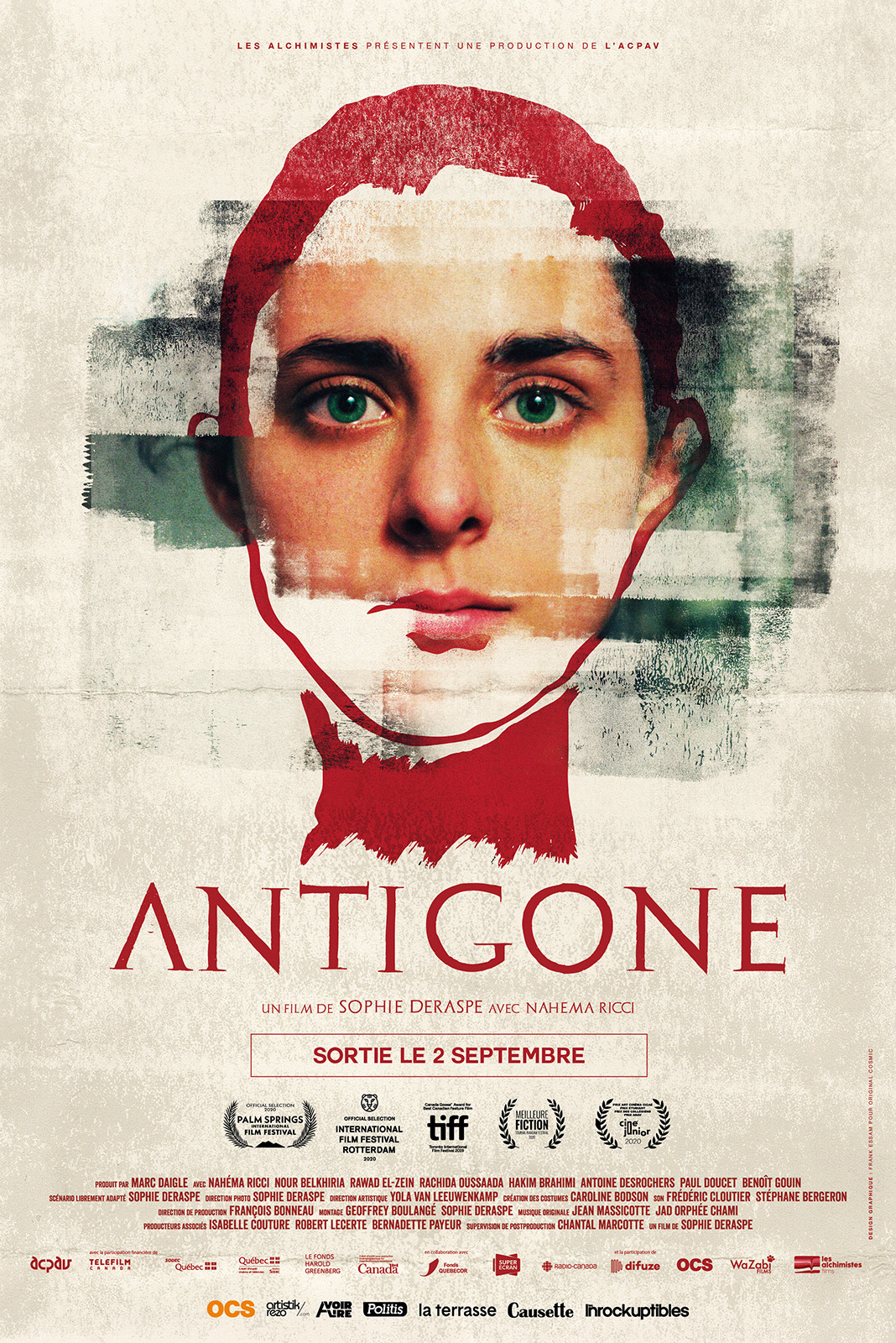
Photo credits: © Line 7
You'll also like

 French
  German
  English
Leave a comment