




«Baghdad in My Shadow», in the shadow of depth and caricature

Cinema Wednesdays - Loris S. Musumeci
From Baghdad to London. London to Baghdad. Two cities linked by the exile of a group of Iraqis. Exiled for what they are. Exiled for who they are: communists, a divorced architect, a young homosexual computer scientist. They don't fit in, least of all under Saddam Hussein's dictatorship. United in exile, they all meet at the Abu Nawal café. A place where Iraqis, English and all kinds of people meet. A place of tolerance and diversity. In an atmosphere of dolce vita between nostalgia, typical dishes and music from over there. But fanaticism breaks all that. Literally and figuratively.
Some are joined by their past, others by their destiny. Taufiq, one of Abu Nawal's most loyal followers, sees his peaceful life turn into a nightmare. Poet and night watchman at the British Museum, he writes in his notebook during his shift «Baghdad, you will always remain in my shadow». Yes, because he is summoned to the police station, the communist who was once tortured by Saddam's henchmen. The shadow of Baghdad falls on him as soon as his nephew becomes radicalized. Stabbings; the worst has happened. In the tears of the past and the blood of the present.
The depth
This same blood of the present legitimizes the film, which is undoubtedly militant. A strong message about feminism, culture, homosexuality and Islamic fanaticism. And blood is still flowing in Baghdad today: that of atheists condemned for apostasy, that of homosexuals condemned for sodomy, that of women condemned for emancipation. In the West, the situation is different, less tainted by blood, and yet it speaks to us.
Baghdad in My Shadow deserves interest and respect. Especially for its actors, notably Zahraa Ghandour, who plays the divorced architect currently going through a difficult time in an Iraq that doesn't appreciate discrepancies, even in a work of fiction. Which isn't quite fiction, by the way. Samir, the Iraqi-Swiss director, declares that the content of his script is more documentary than fiction. Every character is directly inspired by reality.

The film still deserves respect for its ability to revisit contemporary Iraqi history through the lens of individual stories. The script is also well crafted, in the shadow of Baghdad, in the shadow of suspense. The roles played create a good balance between the lightness of life, the joys of tea, discussion, friendship and literature, and the anguish of the past, nausea, persecution, slips and fear.
The cartoon
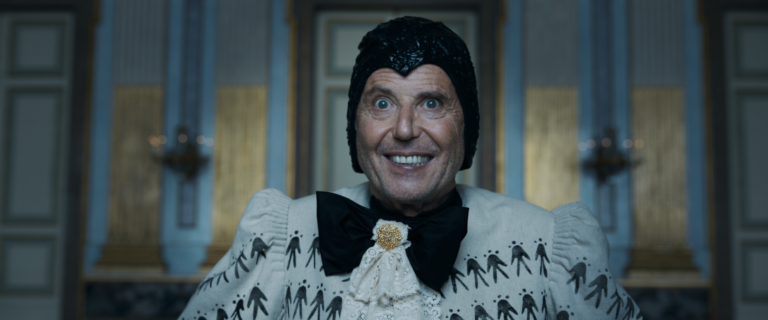
The Abu Nawal community lies on the borderline between the film's qualities and flaws, insofar as the scenes in this café show us both the best and the worst. The best is the gentle way of life, the humor of the protagonists, all of whom have very different backgrounds, yet all of whom meet in the shadow of the Baghdad they left behind. The worst is the caricature that they all embody throughout the film, in spite of themselves. Worst of all, the overflow of diversity creates confusion and weariness.
Samir wanted to embrace a general point of view on the problems of intolerance that follow Iraqis to their London exile. He did well. But he also wanted to say too much, do too much, tell too much. To the point of leaving a bitter taste in the face of his achievement: that of having lost his way. Lost in too many causes, struggles and problems that, in the end, are only touched on superficially, gradually losing the depth they had at the start of the film.

Baghdad in My Shadow becomes a superficial, cartoonish mishmash. Even if it's not true that the beginning is absolutely successful and the end absolutely bad, if only for the moving, rich and masterful last scene that brings it full circle. Nevertheless, it has to be said that this Swiss film missed its opportunity to be a great Swiss film, for its second half is weakened in terms of substance. And in form, too. While the first part opens with the journey of a light through Babylonian engraved stones, the other scenes pay little attention to the care of the photography.
Light and shadow. London, Baghdad. It creates contrasts. Crossbreeding. The kind born of exile. That of director Samir, whose eyes are both Swiss and Iraqi. The film, which combines depth and caricature, has at least had the merit of entertaining, distressing and giving us a glimpse of Baghdad's shadow.
Write to the author: loris.musumeci@leregardlibre.com
Photo credit: © Filmcoopi
You'll also like

 French
  German
  English
Leave a comment