



«Bernadette a disparu», heading for Antarctica
Cinema Wednesdays - Eugène Praz
American comedy-drama Bernadette has disappeared (Where'd You Go, Bernadette in its original version), released in 2019 and directed by talented Texan Richard Linklater, is a successful adaptation of Maria Semple's epistolary novel, published in 2012 and a huge popular success. Meticulous editing and a skilful blend of humor, outrageous situations and genuine emotions are used to tell the story of a former architect whose relatively idle life since moving from Los Angeles to Seattle with her husband, who works for Microsoft and promotes daring inventions, and their gifted 15-year-old daughter, still fails to fully satisfy her. Above all, it is ultimately an ode to mother-daughter love.
For some mysterious reason, Bernadette Fox (Cate Blanchett, who, as always, delivers an excellent performance) has wanted nothing to do with her past for years. Yet she was once recognized as a leading figure by her peers in the architectural world, and her name is still occasionally mentioned by some students alongside the greatest names: Frank Lloyd Wright, Mies van der Rohe, Frank Gehry, Renzo Piano… Preferring to live in seclusion in her large, dilapidated house rather than subject herself to idle chatter with her daughter Bee’s (Emma Nelson) parents—whom she finds boring and intrusive— she nonchalantly drags out a life as a DIY-loving homemaker, where her virtual assistant, Manjula—supposedly based in India—serves as her confidante. In reality, that name hides a Russian criminal group, providing the pretext for a subplot in which an FBI agent, Marcus Strang (James Urbaniak), comes to her home, along with a psychiatrist hired by her husband, Elgie Branch (Billy Crudup), who fears for her mental health after discovering a jar filled with unidentified medications in a cabinet. The director’s talent lies in his portrayal of an antisocial personality—yet always in a sympathetic light—so that the viewer understands the motivations, demotivations, and disappointments of Bernadette, as well as those of her daughter, who resembles her in more ways than one.
Reports of Bad Neighbor Behavior
Gone are the days of grand, avant-garde architectural projects—one of which had earned Bernadette the prestigious MacArthur Fellowship! Those days have now given way to the inventive—albeit arguably merely a pretext—decor of her Seattle home. In addition to this home, it’s worth noting the film’s very judicious set design choices—even when they’re meant to stand out—whether in interior scenes (a Dale Chihuly chandelier in a pharmacy) or exterior ones (the Antarctic scenes, partly filmed in Greenland). The first half of the film sets the stage and explores what has become of this woman in her fifties’ life, while hinting at the professional and creative heights from which Bernadette has fallen, through a documentary video about her career that she discovers online, after hearing about it from one of her ardent admirers, whose request for a selfie together she rebuffs with the panache of a tragic heroine. We thus learn of the terrible relationship and the distance she maintains with her neighbor Audrey (Kristen Wiig)—the mother of one of Bee’s classmates—and other parents, such as Soo-Lin (Zoë Chao), who is also Elgie’s business partner. Bernadette’s life reaches a point of no return in its decline when, following a brush-clearing job she had commissioned, a landslide fills her neighbor’s ground floor with mud—and to make matters worse, it happens during a brunch party for parents and children—which Bernadette doesn’t attend, of course…
One memorable scene is when Bernadette accidentally runs over Audrey’s foot with her car as Audrey, on her way out of school, runs toward the car where the mother and daughter are sitting so she can talk to her about one of her parent-teacher association issues. For Bee, the dog takes priority—he’s accidentally locked in the confessional at their house, which happens to be a former religious school. The mother agrees with her daughter and steps on the gas; exultation is written all over the faces of the two friends, who, as chance would have it, are also mother and daughter. Audrey’s cries of pain and indignation have something refreshing about them, and we find ourselves thinking that Bernadette must have her reasons for acting so abruptly.
A Special Relationship
The emotional center of Bernadette’s life is hardly her husband Elgie—a rather uncharismatic man with a forced smile—but rather her daughter Bee, whose real name is Balakrishna and who dreams only of visiting Antarctica, about which she has read—pushing herself to the limit— the explorers’ accounts, and to discover the penguins—whose species on the frigid Southern Continent she seems to know quite well. This comes at just the right time, since her brilliant end-of-year grades force her parents to keep their promise to give her just about anything she wants. Her wish, revealed at the very beginning of the film? A trip to Antarctica with her parents, who agree to go with her. But Bernadette’s agoraphobia—which makes it agonizing for her to leave the house—leads her to come up with an excuse, which she sets aside out of love for her daughter. Nevertheless, she’ll escape from home, exasperated by her husband—who’s accompanied by the psychiatrist and the FBI agent—and find refuge at her neighbor’s house, where the neighbor has suddenly become conciliatory and capable of restoring, to some extent, her faltering faith in humanity, despite the malicious joy one couldn’t help but feel at the sight of her recent misfortunes.
Bernadette finally decides to leave for Antarctica, without her daughter or her husband. But Bee investigates and figures out where her mother has gone. With her father’s help—after strongly insisting that he assist her—she’ll find her mother in Antarctica, but in the meantime, Bernadette will have found a new purpose in her diminished life: with sheer nerve, she manages to get hired as the architect for the project to rebuild the scientific research base at the South Pole under extreme conditions, marking the revival of a career that had been cut short by the destruction, not long ago, of her architectural masterpiece.
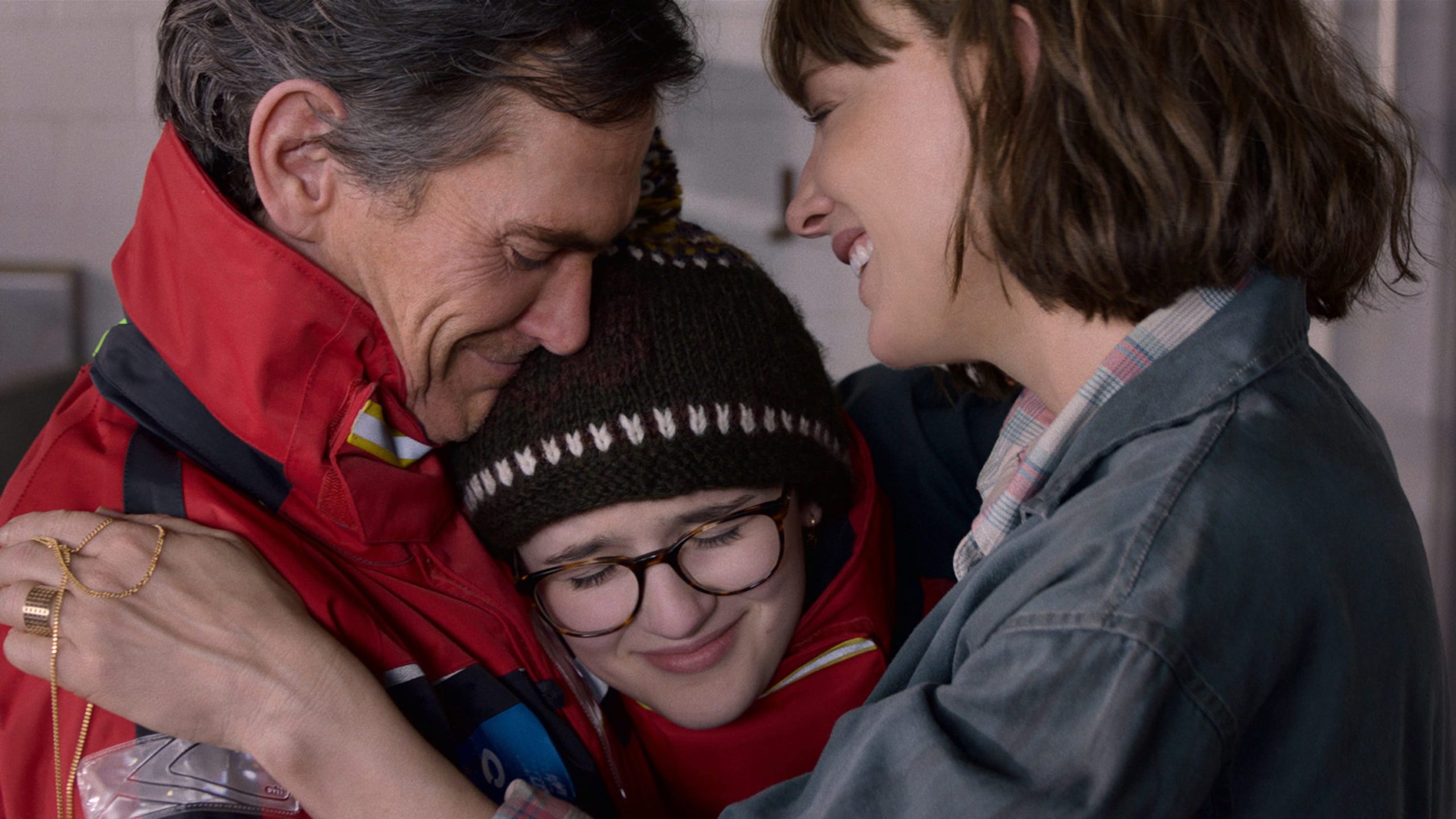
The many moments of deep connection between Bernadette and Bee leave no doubt about the love that binds them. Throughout the song Time After Time by Cyndi Lauper that they sing along to in the car as the radio or a record plays, or during a hug, or the daughter’s defense of her mother against the neighbor, or a children’s performance accompanied on the shakuhachi by the great Bee—which brings a few tears of tenderness to Bernadette’s face—the emotion one feels is no crime. One can, without risk of error, describe the story of this fifteen-year-old girl who travels to the ends of the earth to find—after careful calculations and a frantic race—her mother, whom she loves more than anything in the world, as deeply moving.
The film’s stunning opening bird’s-eye shot—which shows eight kayaks making their way through the cold waters off the coast of the White Continent, one of which breaks away from the others to head in a different direction—already symbolically introduces the character of Bernadette, who is, in fact, the eighth paddler. Her independent spirit naturally drives her, as always, to set out on her own. While we see Bernadette gazing at the snow, the ice, and perhaps the strangeness of her own life, the voice of her daughter Bee—the narrator—tenderly reflects on her mother through an anthropological and behavioral lens, revealing her precocious mind and unconditional love. Then we’re taken back five weeks earlier, so that we can understand this initial excursion. By the end, we know that very soon, mother and daughter will set out toward new miracles…
Write to the author: [email protected]

Photo credits: © Universum Film GmbH
You'll also like



 French
  German
  English
Leave a comment