




«Black Adam»: the heavy fall of the American blockbuster
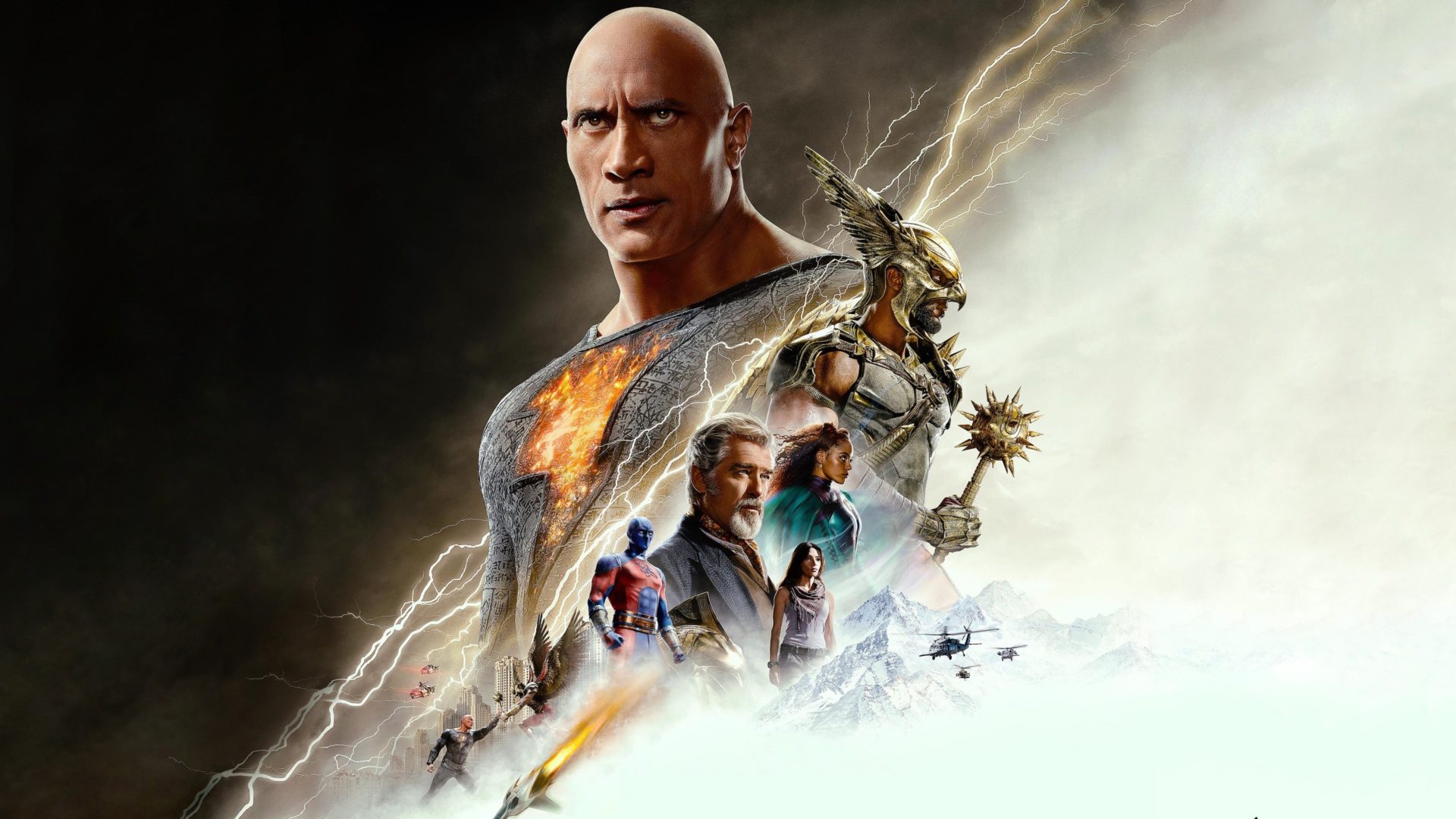
For over a decade now, superhero movies have been unleashed on the public like a long line of Campbell's soup cans. Black Adam manages to blend blandness and ugliness, further blurring the line between filmmaking and opportunism. A look back at a $200 million train wreck.
In an imaginary Middle Eastern world, a superhero (Dwayne Johnson) awakens to fight against the Intergang, a kind of militia wicked enough to justify the violence engendered against his regime. On this simplistic basis, the film attempts to complicate its plot with clumsy interventionism by Western forces, artificial flashbacks and plagiarism of Terminator 2 based on a bizarre friendship between the hero and a child.
An accumulation of defects
Let's start with the most obvious: the film is ugly. The image oscillates between too dark, too bright and too dull. But more than that, it's the inlays that are a real eyesore. Characters often seem to have been added too quickly to an artificial digital backdrop. The boundaries between the character and the digital universe are sometimes mind-boggling, so little effort is made to conceal them. Too few of the digital effects prove to be successful; most of them offer a mush of approximate information to the viewer's eye. And that's not even mentioning the art direction, with its ridiculously animated demons, unimaginative sets and a final antagonist that pays homage to Luis Buñuel, so much so that it makes you want to slit your eyes open with a scalpel.
But the film offers a solution to this problem: how can you tell that these shots are awful if they don't last more than a second? But this solution doesn't hide the film's tastelessness, since too many exceptions to this rule are made in the form of slow-motion shots scattered throughout the film. The realization that at these moments, the director thinks he's doing a good job makes us shudder.
Read also | Ambulancethe adrenalin shot that awakens the American blockbuster
This editing serves a narrative that's rushed, without giving us a chance to get attached to any of the characters. Everything has to be done quickly, culminating in a few fight scenes accompanied by indigestible music that alludes to a DJ on substances, jumping from one track to another with the sole aim of making ungainly winks at his audience, as if to broadcast his entire catalog in two meagre hours.
The icing on the cake is undoubtedly the only two moments when the scriptwriters are bold enough to offer a critique of American and, more broadly, Western foreign policy. First, the American superheroes are criticized for not intervening sooner. A second time, they're asked to stay out of the country. In its adolescent critical intent, the film manages to contradict itself. The only bright spot in the film is Dwayne Johnson, whose performance is a perfect match for the character he portrays.
The blockbuster impasse
Black Adam is not only at the end of an artistic and industrial impasse. He's trying to break out of it by crossing the wall in front of him. It's the observation of an industry running on empty, eternally producing the same copies, changing only a few nuances without ever revisiting the basic formula. But what is the audience that will fill theatres with this film still looking for?
The blockbuster offer was originally based on the spectacular. We want to see action, impressive confrontations, majestic settings and intense emotions. The blockbuster is a cinema of hyperbole. In this sense, this type of film requires time and skill to ensure a form and tone that will thrill the viewer.
Black Adam, in the tradition of most superhero films, today contradicts this principle. The spectacular is sacrificed in favor of a slapdash agenda. Which leaves no time for a full treatment of the digital effects. Similarly, the poverty of the protagonists is a clear indication of the impasse the blockbuster has reached. The serial dimension of these films has shifted the pact made with the viewer: we no longer come looking for thrills, we only come to update our knowledge while waiting for the next big event that will bring all these characters together. In the meantime, we hope it won't be too bad.
The superhero blockbuster genre spends its time quoting itself. This is its only strength, and the only reason why audiences still fill cinemas. Cinema is no longer spectacular; it has become a school of pop culture where you have to learn your lessons regularly, in the hope of being entertained. But fortunately, every culture has its fad. And it's only a matter of time - maybe five years? maybe ten? - for new generations to question our taste for these outdated products with justifiable mockery. So, let us salute Black Adam, which, to its credit, holds the key to accelerating this release.
Write to the author: jordi.gabioud@leregardlibre.com
Image: Black Adam Warner Bros. Entertainment Inc.
You've just read an open-access article. Debates, analysis, cultural news: subscribe to support us and get access to all our content!


Vous aimerez aussi



 French
  German
  English
Laisser un commentaire