



«BlacKkKlansman»: art as a weapon
Cinema Wednesdays - Virginia Eufemi
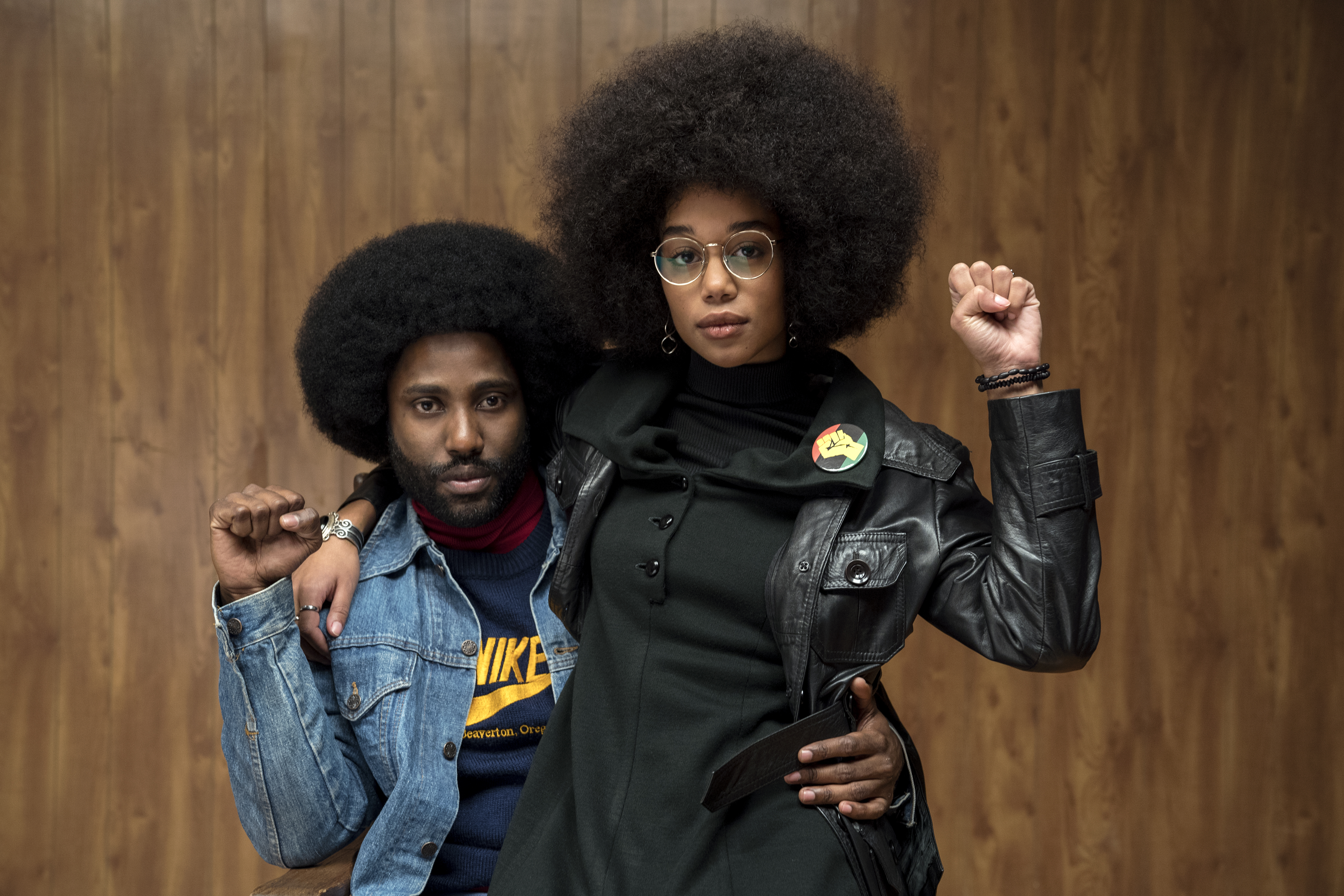
The viewer of BlacKkKlansman: j’ai infiltré le Ku Klux Klan leaves the cinema with the particular sensation of having attended not just a film screening, but an event that may well go down in cinema history. We therefore feel it would be a good idea to analyze Spike Lee's latest work from two angles, one more formal and the other taking a closer look at the film itself. BlacKkKlansman as a committed socio-political object.
The Art Object
From a formal and technical standpoint, BlacKkKlansman is flawless. The cast is excellent, the pacing is brisk, the cinematography is meticulous, the music is memorable, and the screenplay is intelligent and relevant. This feature film is an adaptation of Ron Stallworth’s book of the same name, in which he recounts his improbable story—that of the first African American police officer in Colorado Springs and his unprecedented investigation. It’s the late 1970s, in post-Vietnam War America, and Ron Stallworth, supported by his Jewish colleague Flip Zimmerman (Adam Driver), infiltrates the Ku Klux Klan.
In terms of the plot, the linear narrative draws us into a story that follows all the conventions of the police comedy genre: a likable cop duo, a suspenseful investigation, happy ending. Humor is also used sparingly; the audience often laughs nervously, as the subject matter is not exactly lighthearted. The «brothers and sisters» of the Colorado Black Student Association come together to fight for their rights, while the local chapter of the Ku Klux Klan organizes armed attacks.
The colors are muted. Certain images leave a lasting impression: the aerial views of Colorado’s wilderness and the magnificent faces of the students, absorbed in a meeting that stand out and float against a black background. This suspension of space-time universalizes them, elevates them. Spike Lee is collaborating with Terence Blanchard for the umpteenth time on the score, and he’s right to do so: the crime-thriller-style melody we hear in Inside Man (2006) emphasizes the detective aspect of the investigation. John David Washington’s performance far surpasses that of his father, Denzel Washington, in its freshness and verve.
The director plays with the atmosphere seventies thanks to the split screens and titles that evoke the tradition of films by blacksploitation. But BlacKkKlansman is not a tribute to the blacksploitation, because it’s much more nuanced; no clichés or stereotypes, just the subtlety of the fight against racism. A little gem: the 4:3 opening shot of a scene from the movie Gone with the wind (1939), with the Confederate flag fluttering in the wind—a clear echo of the film’s final scenes, which we’ll let you discover for yourselves. With this feature film, Spike Lee has created a remarkable work from an artistic standpoint, demonstrating his complete mastery of the cinematic medium.
The Sociopolitical Objective
But BlacKkKlansman It’s not just a movie. It’s a polemic, a manifesto; it’s a work of social commentary. Many directors attempt to weave pseudo-critiques of American society or politics into their feature films, but these attempts often prove to be very superficial. Spike Lee offers something different and manages to make the proliferation of vulgar terms such as «nigger» sensées faire réfléchir au racisme dans les films de Quentin Tarantino (d’habitude ô combien apprécié par l’auteur de ce papier). Spike Lee est définitivement un cran au-dessus et tel un père, il semble montrer l’exemple d’une critique élégante mais non moins puissante du racisme et des dérives politiques.
Read also | Tarantino, such exciting cinema!
The author of the most scathing Malcolm X (1992) semble avoir compris que le suprémacisme noir n’est pas la réponse à celui des blancs et rejoint le camp plus mesuré d’un Martin Luther King. Il aurait été simple et simpliste de dépeindre les policiers blancs tels de méchants racistes et les étudiants noirs comme des gentils. Tout en dénonçant les violences des premiers sur les derniers – d’une brûlante actualité – il ne se limite pas à cela et dresse un portrait complexe et non manichéen du peuple américain. Spike Lee prône l’égalité avec l’élégance propre à l’art.
The role of women is also interesting in this film: young African-American female students hold high-ranking positions within anti-racist movements, while the wives of Ku Klux Klan members bake cakes, dreaming of taking a prominent role in the struggle their husbands are waging. Openly anti-Trump, BlacKkKlansman resonates in 2018 and takes a clever swipe at the U.S. president. And in a country where gun ownership sparks heated debates, Spike Lee wields his own weapon: cinema.
Write to the author: [email protected]
In our October print edition: our editor-in-chief Jonas Follonier’s contrasting commentary on the film’s political dimension.
Photo credit: © Universal Pictures
You'll also like



 French
  German
  English
Leave a comment