



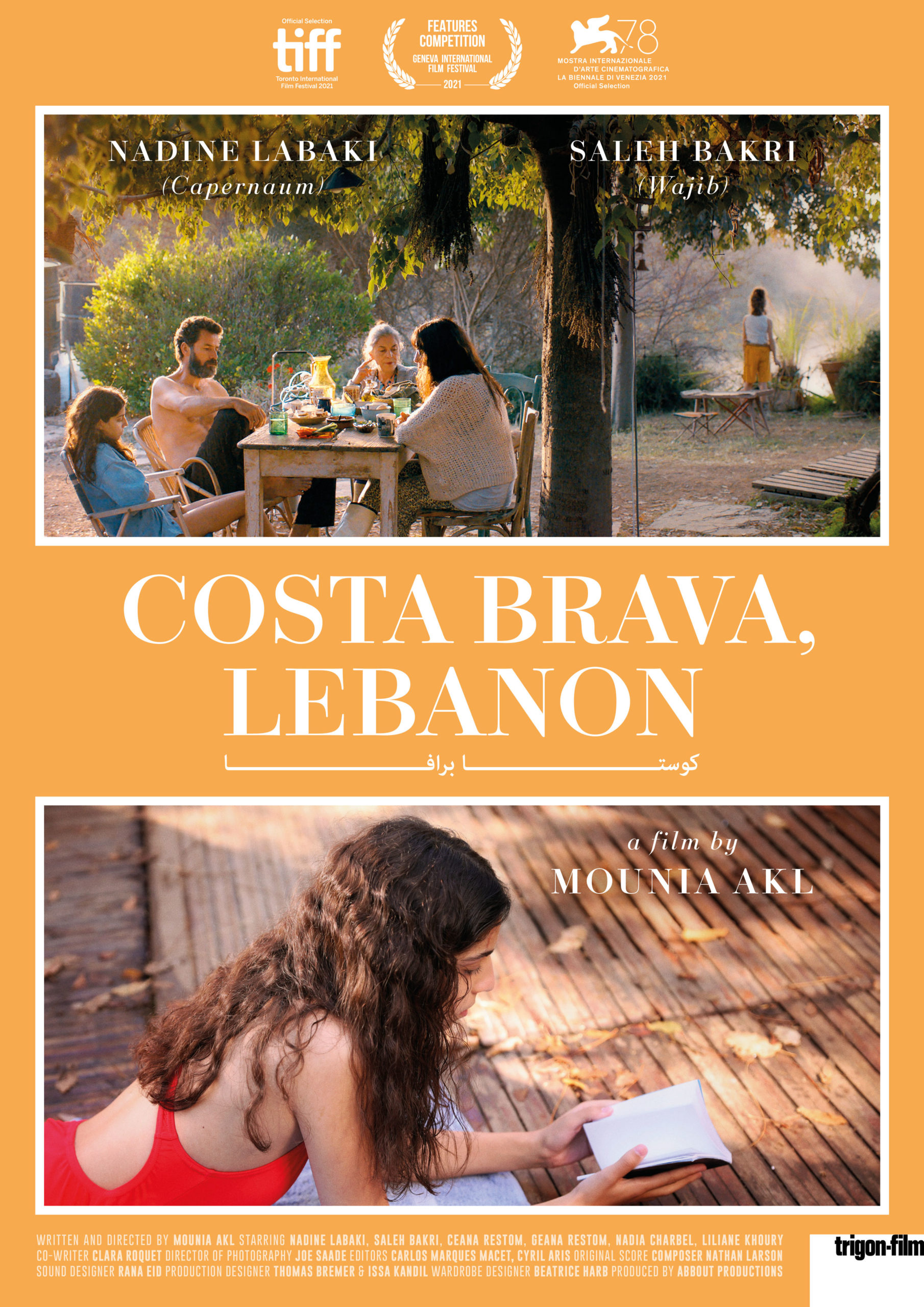
«Costa Brava, Lebanon»: beyond nostalgia
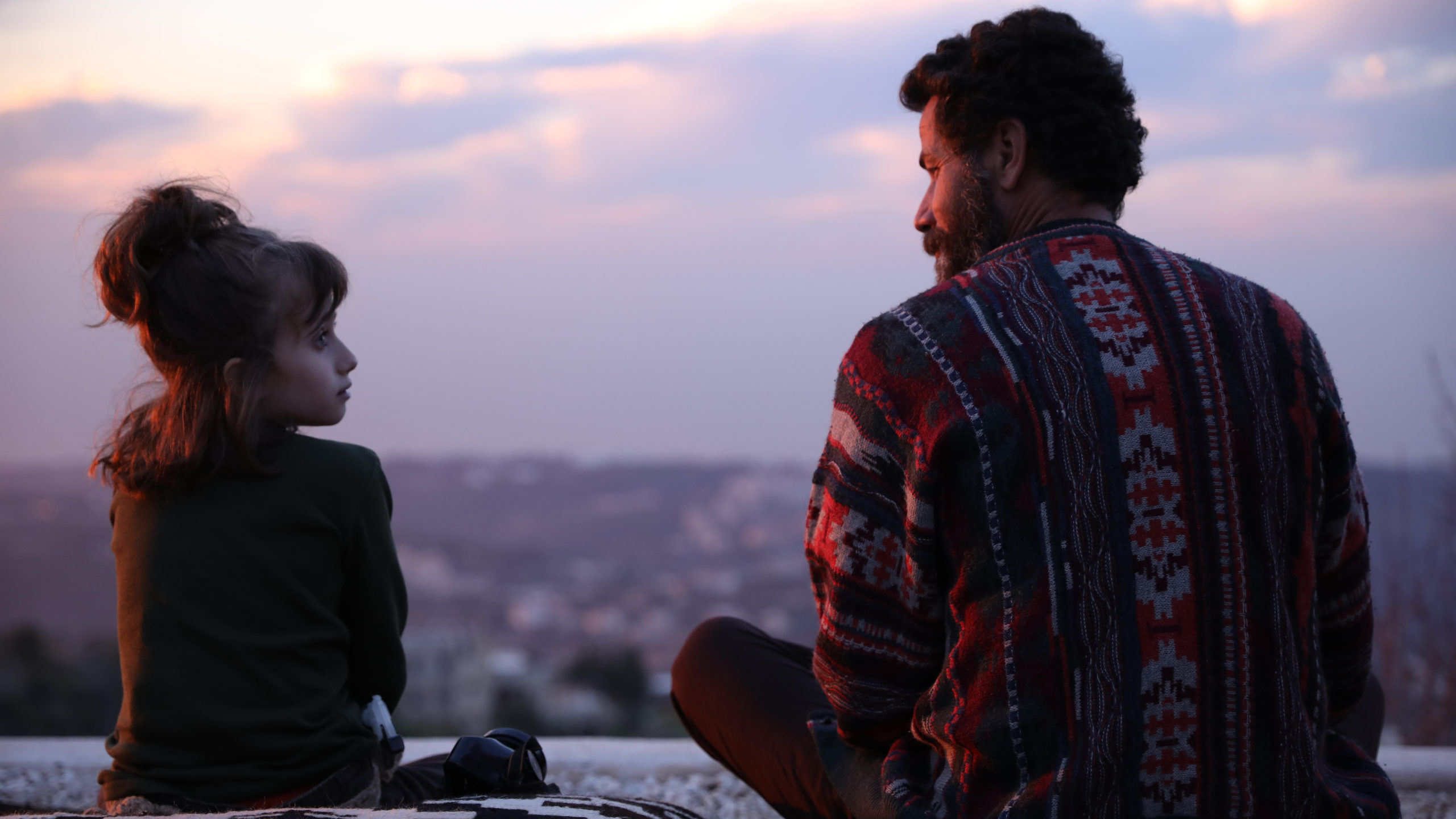
Costa Brava Lebanon © Trigon Film
Cinema Wednesdays - Alice Bruxelle
Selected for the «Cinéfondation Selection» at the 2016 Cannes Film Festival, Mounia Akl’s first short film, Submarine, was already introducing a young talent to the film world. Costa Brava, Lebanon This is proof of that. Submitted to the 2022 Oscars to represent Lebanon, but not selected for the appointments, the film paints an intimate portrait of a family against the backdrop of a political crisis. Le Regard Libre had the privilege of speaking with the filmmaker (a separate interview will be published soon).
In Submarine, Hala, the main character, embodies the strength of a rock. Faced with the ghost town that the city has become, she goes against the flow of the fleeing Lebanese residents. She stands her ground by continuing to dance. The successive layers of trash, like the waves of the sea, stand no chance of shaking this rock. Submarine is a science-fiction short film. Five years separate the release of Submarine and that of Costa Brava, Lebanon. The line between dystopia and reality is sometimes a fine one. In this new film, Mounia Akl masterfully explores family life to portray a reality that the people of Lebanon are still struggling against today.
Read also | Shortages, reconstruction… columns by freelance journalist Sophie Woeldgen, reporting from Beirut
Since 2015, tons of trash have been piling up on Lebanese streets following the closure of the country’s largest landfill. Although the government is trying to find short-term solutions, such as landfilling or incinerating waste, the Lebanese people are denouncing these false solutions, which are further exacerbating tensions—if not outright breaking the bond—between the population and its government.
Utopian Refuge
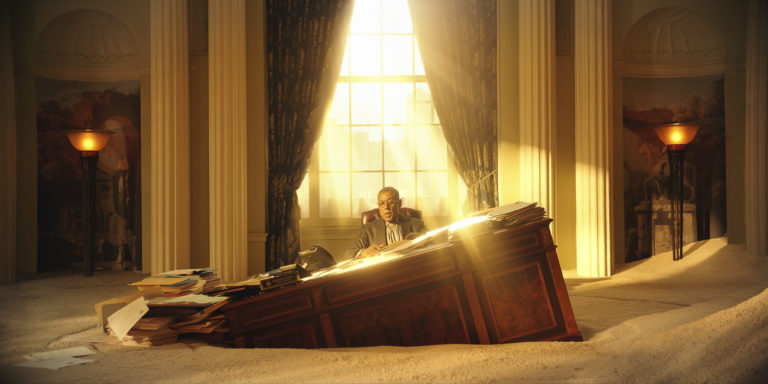
The Breakup, the Badri Family from Costa Brava, Lebanon has been forced to live there for the past eight years. Perched atop the hills overlooking Beirut, they have made their home in an idyllic retreat that evokes the beauty and glory of Lebanon’s past. While Hala embodies the resilience of the rock, Costa Brava, Lebanon revisits the mineral metaphor by revealing, in the opening scene, the stone statue of the Lebanese president lying down and swaddled in a truck. The camera follows the vehicle’s path in a long tracking shot, amid the jeers of passersby. Is this a display of indecent glory or a vision of a funeral procession symbolizing the end of a Lebanon lost forever? The line is a fine one.
This megalomaniacal sculpture ends up on the plot of land adjacent to the Badri family’s peaceful enclave. The land belonged to Alia (Yumna Marwan), Walid’s (Saleh Bakri) sister, but it was expropriated by government order. This refuge from Beirut’s toxic reality is transformed into an open-air dump. From then on, the boundaries of this remnant of paradise become blurred. The water turns red, the lush green mountains give way to a mountain of trash bags, and gray takes over the blue of the sky. Paradise turns into hell, a metaphor that borders on cliché. As the trash creeps closer to the doorstep, torments and tensions resurface within the Badri family.
The filmmaker set the scene Submarine in the streets of a fictional city, which we can guess is Beirut. The action of Costa Brava, Lebanon is rooted in a single space. Former political activists, the Souraya couple (Nadine Labaki) and Walid have made a radical break with Beirut, which we never see. The city belongs to the past. The only witnesses to the reality of the activist movement—the monotonous voices of journalists and media images—make occasional inroads into this fragile bubble. The mise en abyme is subtly introduced: the decay of the family microcosm goes hand in hand with that of the urban macrocosm. With no possible escape, both undergo their slow deterioration in parallel.
Conflict with a Human Face
Mounia Akl says she wanted to capture the political repercussions on family life. Costa Brava, Lebanon avoids the trap of a miserabilist caricature in which only pathos is evident. On the contrary, while the livable space eroded by the garbage is gradually shrinking, it symbolizes the very nature of their existence—caught between nostalgia for a lost past and the possibility of building their own bright future. Souraya dreams of her former life as a successful singer, while the teenager Tala (Nadia Charbel) fantasizes about the young engineer in charge of the landfill project. The filmmaker skillfully interweaves these personal worlds, where each character, much like the unbreathable air, is heading toward their own suffocation. Walid is the emblematic embodiment of this, caught between overprotectiveness and violence.
The internal rift is inevitable: they set off separately for Beirut. This rift opens a glimmer of hope, like an affirmative response to Beirut’s call to regain its former glory. Grandmother Zeina’s final words are a call not to take life too seriously. Laughter replaces oxygen masks; dancing and singing take the place of protests. Costa Brava, Lebanon is a testament to the immanence of life, despite its ups and downs. A flower has bloomed on a landfill.
Write to the author: [email protected]
You'll also like

 French
  German
  English
Leave a comment