

Le Regard Libre N° 26 - Loris S. Musumeci
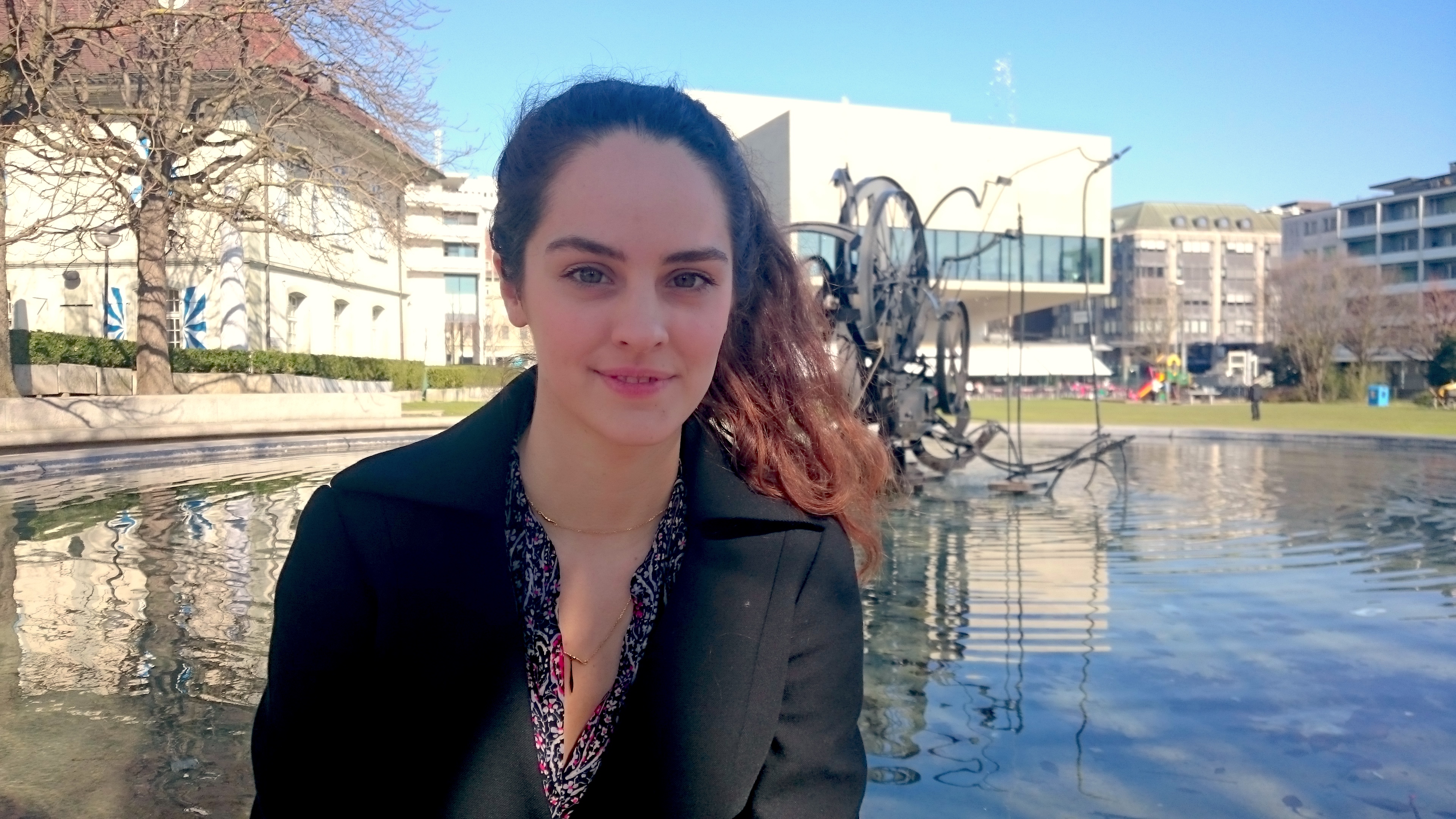
Noémie Merlant is a young French actress. A theatrical revelation, she also enjoys the art of song. Her career is still in its infancy. After appearing in the films The Orphan with a missing arm and The Heirs, she was nominated in the Best Emerging Actress category at this year's Césars, for The sky will have to wait. Written by Marie-Castille Mention-Schaar, the film tells the story of Sonia (Noémie Merlant) and Mélanie (Naomi Amarger). Two normal young girls, who seem to have nothing in common other than an unfortunate recruitment for jihad. In a France ravaged by the rise of Islamism.
Le Regard Libre: What drew you to play in The sky will have to wait?
Noémie Merlant: I wanted to take part in this film for several reasons. I had already worked with Marie-Castille for The Heirs, I really enjoyed it, from both an artistic and a human point of view. This woman deals with current affairs, youth and hope, always with depth. When she contacted me to The sky will have to wait, So I rushed off to read the script, and that's when I realized just how broad the theme was. For me, it had simply become necessary to talk about it. Other than in the media. Who had ever heard of a female jihad? Probably very few. Also, the advantage of an artistic medium to deal with this serious issue is that it touches these young people in their emotional lives, always from a safe distance. Secondly, I also felt caught up in the mission of revealing the truth about the identity of the teenage girls who leave for Syria. They're not necessarily girls from the suburbs, abandoned, poor, without parents. The percentages tell us that half of them are converts. From all social backgrounds.
In fact, most of them are absolutely normal girls.
Yes, they are. They may be very good at school, have wonderful friends and parents. But Daesh raises questions that concern us all. These concern the meaning of life and the excesses of our over-consuming society. The Islamist networks on the web are actually asking real questions, to which they are obviously providing false answers.
The film brings to the screen a reality as tragic as it is contemporary. Was the atmosphere tense during filming?
In the beginning, things were very tense. It was just after the Paris attacks: Marie-Castille didn't even know if she really wanted to make the film or not. She wondered whether it was legitimate to broach such a subject in the wake of a national tragedy. How could we talk about it without offending French people still reeling from the shock of the Bataclan bullets? On our side, the actors, there was the fear of failing. We feared that we wouldn't be able to interpret such roles, that we wouldn't be close enough to the truth. But unity was our strength; and through goodwill, we pledged to give it our all. In short, what characterized the atmosphere on the set was concentration.
The film begins and your character, Sonia, is already radicalized. What could have been the causes that led her to the doorstep of jihad?
The causes are different for each radicalized person. However, the character of Sonia was born out of the experiences of several young girls who had been radicalized. I myself was called upon to meet and work with them. This collaboration was extremely valuable. I realized that I too, at that age and in a similar context, could have let myself be manipulated by the Daesh organization. It's destabilizing. Each of these girls harbored a sense of unease about today's society, which is built on a race to the top. like, at selfie, popularity. In response, there's a sudden search for spirituality, fueled by anguish. Anxiety about the world around her, fear of death and the meaning of life. Sonia finds herself in a situation totally comparable to that of any other teenager she encounters. What's more, the film's protagonist has a father who is Muslim, but not practicing. The need to rediscover her religious identity through her origins increases considerably.
Family scenes play an important role in the stories of Mélanie and Sonia. What is Sonia's relationship with those closest to her, before and after her deradicalization?
Before her radicalization, Sonia was close to her parents, like me. In fact, she has a fairly close relationship with her mother. In principle, one thing is certain: Sonia didn't lack love as a child. Then, in the evolution of the character when he's already radicalized, we see a more difficult relationship with the father than with the mother. This is often the case in families: the mother's presence persists, while the father is powerless, blaming himself. This doesn't mean that Sonia's father is absent; he simply reacts with more modesty and natural awkwardness. When fathers, however, say what's really on their minds, then what a poignant speech! We see this in Yvan Attal's character in the film. Of course, situations where parents withdraw completely are much harder to deal with.
What is it about today's malaise that makes some young girls interested in jihad?
Specifically for young girls, those in charge of recruitment don't talk about weapons and war. Women are used to replenish the ranks. The call to combat is addressed to men. And yet, the same sectarian methods are used for manipulation. The key is social networks - behind which young people have a certain feeling of invincibility. There's no better age or virtual place to be targeted as ideal prey. Among girls, what works best is the constant sending of messages calling for freedom, as well as videos featuring humanitarian, food and political scandals. The sexual condition of Western women is also constantly raised by jihadists. Victims, inundated with this content, live on nothing but anguish. And little by little, as this devastating feeling dies down, recruiters come up with ideological answers. Finally come their famous solutions: conversion to Islamism, departure for the «holy war».
What role do feelings of love play in recruitment?
Some girls fall in love with their recruiter, to the point of making it their reason for leaving; others don't. One thing's for sure, though: everyone's looking for meaning in their lives. For those in love, there's the classic fantasy of prince and princess. They also succumb to the desire to feel important, jealous and protected.
What does the title The sky will have to wait?
Personally, this title can only inspire hope. It also asks us to live in the present moment. Of course, there's no desire to assert that heaven doesn't exist, but rather to reveal the importance of life, to anchor oneself in it, to discover its true meaning and to love it. We don't exist for nothing. Let's think about purifying ourselves in a good and beautiful existence; perhaps paradise will follow. But later, because now we live, here.
Do you have any other projects for the good of young people and society?
Being committed is what gives meaning to my life. It simply drives me. I continue to write about society's problems and feelings of guilt, for men and women alike. In my next works, in a less frontal way than in Le ciel attendra, I'll be asking questions about the freedom to become a full-fledged woman.
I'm looking forward to finding out. Thank you for your time.
Write to the author: loris.musumeci@leregardlibre.com
Photo credit: © Loris S. Musumeci for Le Regard Libre
 French
  German
  English