






«Ich bin dein Mensch»: the rejection of ready-made happiness

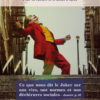
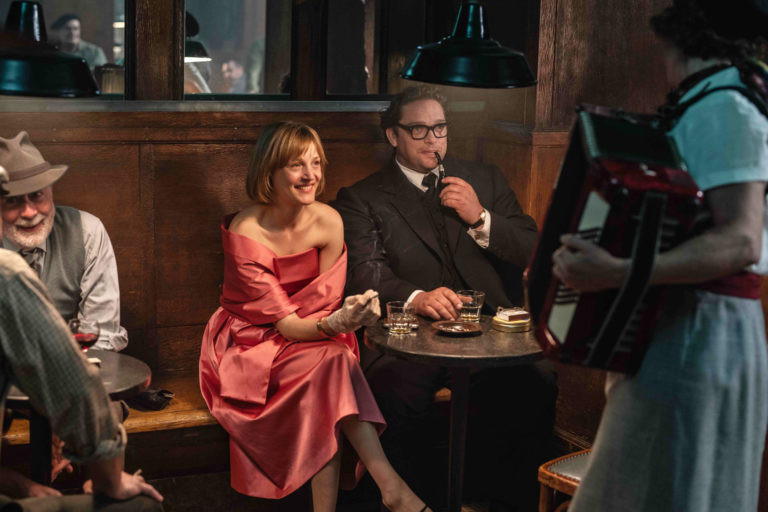
After the success of the mini-series Unorthodox, Maria Schrader immerses us in a futuristic Berlin. At the heart of an extraordinary romantic experiment, Alma, a brilliant, solitary archaeologist, questions the concept of the ideal partner. By sharing three weeks of her life with the humanoid Tom, the researcher undergoes ideological reprogramming.
If the plot of the film, which questions the cohabitation of humans and robots, isn't the most original (we're thinking in particular of the many films of the last ten years tackling the subject, such as Pacific Rim, Ex Machina, Blade Runner, Alita or series such as Black Mirror and, more recently, Westworld), the wide shots of the German capital and its tall buildings deserve our full attention. The director plays with heights and distances in several low-angle shots and plunges, notably the scenes from Alma's balcony. This depth of shot and the film's soft lighting are unmistakably reminiscent of Esther Shapiro's Berlin adventure (Unorthodox, 2020). Also, Ich bin dein Mensch is bathed in bright light, accentuated by the presence of different shades of white that subtly remind us of the sterile nature of Alma and Tom's growing relationship.
What remains a little less subtle, however, are Alma's thoughts. Alma is a single woman traumatized by the premature loss of a child, the painful event that shattered her marriage. To forget her wounds, the scientist allows herself no other occupation than hard work and recurrent visits to her demented father. Yet Maren Eggert's performance contrasts with this slight script heaviness; the actress's acting makes her character authentic and more alive than ever. Alma lives her contradictory emotions and experience in all their completeness and complexity. The critical acclaim and the numerous awards won by the actress are fully justified.
Making humanoids human
Dan Stevens' acting is equally remarkable. He impeccably plays the perfect artificial man - an image that fits him like a glove compared to his other roles in the same genre, such as the cursed prince in Beauty and the Beast in 2017 or the wealthy lawyer in the Downtown Abbey (2010-2015). Despite his frozen, mechanical expression, typical of the archetypal artificial intelligence, Stevens manages to make us appreciate this robot with its questioning gaze. More importantly, he manages to make us laugh. For the comic and touching moments are often linked to Tom's observations and (non-)reactions, confused by the mass of inconsistencies that make up the world of the living. This robotic Romeo, or rather his absolute pragmatism, allows us to question the humanity that the director portrays in all its absurdity.
Ultimately, this film doesn't really reinvent the relationship between robot and human, which doesn't seem to be Maria Schrader's primary objective anyway. In fact, the relationship between Alma and Tom is merely a gateway to the film's real theme, namely the quest for happiness and the relationship with pleasure. Finally, beyond the light-hearted and amusing nature of the plot, Benedict Neuenfels' lighting effects and cinematography are strong arguments in favor of seeing the film in theaters.
Photo credit: © Majestic Filmverleih, ard-foto s1
You've just read an open-access article. Debates, analysis, cultural news: subscribe to support us and get access to all our content!
You'll also like

 French
  German
  English
1 comment
What’s also great about this movie is that you can love it both for the intellectual reasons mentioned here and there, and for purely romantic reasons (well, yeah, I’m blonde—what can you do?). And in fact, what the reviews never touch on—unfortunately—is how to interpret Alma’s very last line when she "reunites" (?) with Tom, the line on which the film ends. My romantic mind would like to believe that Tom isn’t one of those illusions she’s so often experienced, and that he’s really there. On the other hand, my slightly more critical mind pushes me to think that if he were there, we’d see him lean his face toward Alma’s when she speaks of her past despair at realizing that Thomas—whose face she felt above hers—was nothing but an illusion…. And then there’s the conclusion of her report on the possibility of a humanoid being having a relationship with a human being—a conclusion we’ve just heard, and which is negative. So, unless the point here is to illustrate human contradiction—saying one thing but doing another—I’m afraid we’re not really looking at a happy ending... But then again: maybe we should see this ending—and the freedom it gives us to interpret it—as a really great gift!
Leave a comment