



Once upon a time... Quentin Tarantino
Cinema Wednesdays - Jonas Follonier
American director Quentin Tarantino's ninth film - which is almost reminiscent of his as-yet-unreleased tenth, which would be his last - stands out as a true masterpiece. Packed with cinematic allusions, the eagerly awaited Once upon a time... in Hollywood is the perfect Tarantino fable.
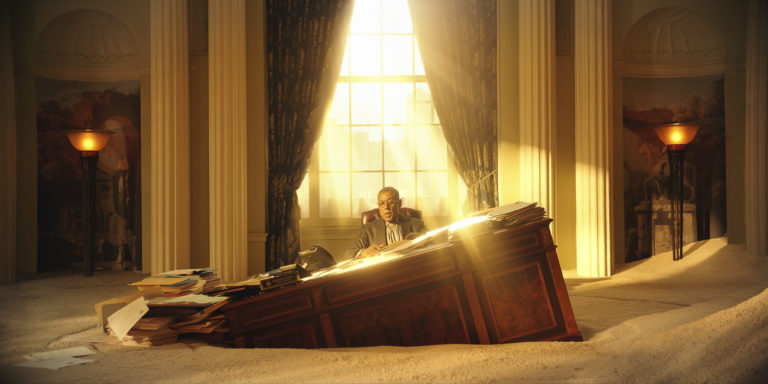
Hollywood, 1969. The golden age of Hollywood cinema is over, and actor Rick Dalton (played by Leonardo DiCaprio, excellent as usual) discovers he's not the only one. has been. His understudy Cliff Booth (Brad Pitt, also excellent for a change) follows him everywhere, driving and assisting him, as well as performing stunts on the ever-dwindling film shoots. The city's star-studded cars speed by, and cinema is omnipresent. Visit fucking hippies, Rick's (or Tarantino's?) word, are displayed one last time in the general carefree atmosphere, which is brought to an end by a tragedy that takes place on the night of August 8-9, 1969. Everything in the film foreshadows this night, which is the second date of the film, along with February 9, 1969, the day on which the first part of the film takes place.
In reality, it was Roman Polanski's then-wife, Sharon Tate, who was stabbed to death by Charles Manson's Satanist hippie sect. In the film, Quentin Tarantino changes the story, just as he had done previously in his work. All in all, this ending, which we won't reveal any further, is of no more importance than that, except that it makes us aware of the fact that’Once upon a time... in Hollywood, as its title suggests, is first and foremost a fable. The aim is not to reconstruct real events, but to create a personal work based on a context, that of the end of Hollywood's golden age. With a soundtrack sixties we're nostalgic for.
Nostalgia for an era he never knew
All the critics have said it: this ninth Tarantino film has the particularity of being nostalgic and more serious than its predecessors, more mature one might even say. True, but the case is all the more interesting in that this nostalgia is the most artistic of all: that of an era the director never lived through. In 1969, Tarantino was six years old, so he didn't experience this Hollywood period from the inside. And this is the mark of the most grandiose men of our time, the most touching and vulnerable: those who regret a time that was not theirs, and may never have existed!
Yes, the nostalgia also present in the characters played by Leonardo DiCaprio and Brad Pitt is in turn likely to be subjected to this question: did the golden age of the American western, which they regret, ever exist? And all this reflection - by no means abstract in Tarantino's work, it's made concrete by the setting and the prosaic nature of the dialogue - reaches its full depth when we consider that the western genre itself is based on a myth. The cowboy never existed as such, and yet we miss him. If there is nostalgia, then it's more melancholy. There's something inexplicable and irresistibly Western about it. It is completed by a nostalgia for childhood, where dreams are realities. All of which pierces the screen.
A cinema about cinema
And there's so much more to say about the film's various themes. As we've already suggested, Once upon a time... in Hollywood is about the end of the American western and the advent of the spaghetti western. In addition to the various scenes of fake flashbacks contained in the film, its title conveniently echoes Sergio Leone's two most personal and prodigious films: Once upon a time in the West - released in the United States... in 1969! - and Once upon a time in America. I firmly believe that Quentin Tarantino's penultimate (or last?) film, which is highly personal, is about Tarantino himself. One of the characters asserts that there are cinematic geniuses every fifty or a hundred years. Our director undoubtedly hopes - and he may - that one day the collective memory will remember him as one of them. And it will then be able to say, nostalgically: once upon a time, there was Quentin Tarantino.
Write to the author: jonas.follonier@leregardlibre.com
Photo credit: © Sony Pictures
-
 Standard subscription (Switzerland)CHF100.00 / year
 -
Support subscriptionCHF200.00 / year

Vous aimerez aussi

 French
  German
  English
Laisser un commentaire