

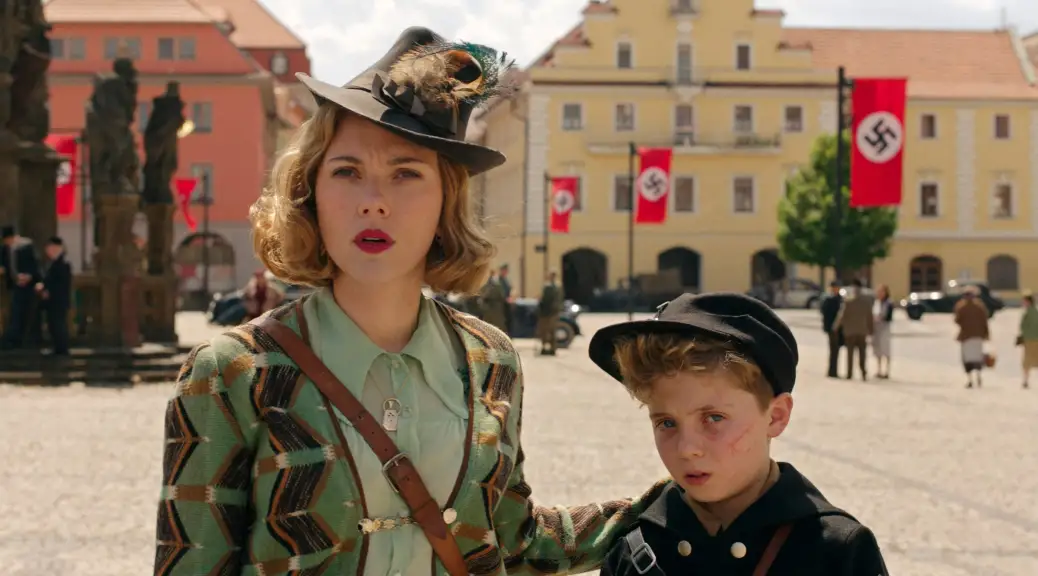
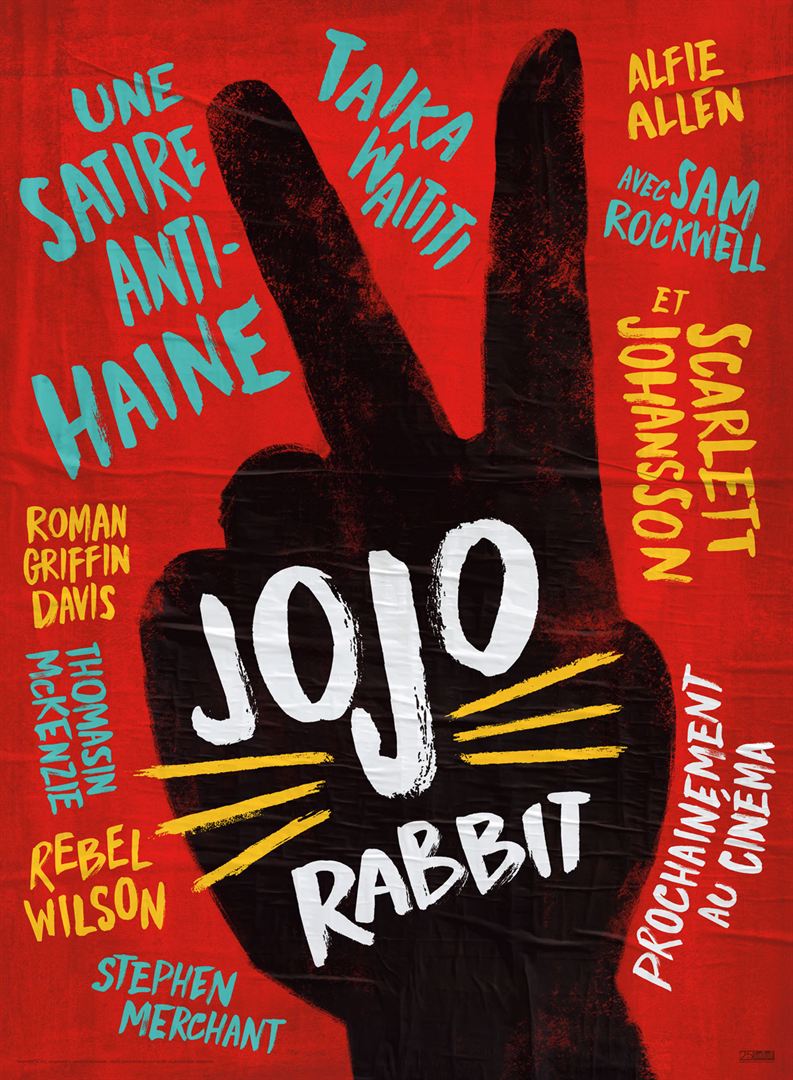
After the success of Thor: Ragnarock, released in 2017, New Zealand director Taika Waititi resurfaces with his satirical comedy Jojo Rabbit. Cette adaptation of the novel Le Ciel en cage by Christine Leunens follows the colorful life of young Johannes Betzler, a new member of the Hitler Youth. Despite a theme that has been seen over and over again in the cinema, Waititi's project takes an innovative approach to the Second World War. The film's original, offbeat approach makes it timeless. Close-up of this satirical comedy, available on Disney+ since August 12.
Ten-year-old German Jojo Betzler joins the Hitler Youth as the Second World War draws to a close. Despite his enthusiasm, his patriotism and his imaginary friend - a sympathetic Hitler, played by Taika Waititi himself - the young boy is soon disillusioned by the reality of war and the actions of the regime.
A flying start
The film's opening minutes are unsettling and abrupt; bright, almost garish colors, anachronistic and offbeat costumes, grotesque humor - like a knee to the crotch - overhang the narrative. The presence of Rebel Wilson in this motley cast reveals the director's chosen direction: excess and burlesque.
Yet the film's composition is far more subtle than it seems. Waititi introduces a tonal shift that reveals the darkness of the events of the Second World War, at the same time as ten-year-old Jojo, a member of the Hitler Youth, detaches himself from his whimsical, naïve world. The shots are longer, the jokes less heavy-handed, the music less frequent, and Johannes's imaginary friend, a gleeful, childlike version of Adolf Hitler, is gradually transformed into a chilling, authoritarian figure. This structure, based on the slowly disillusioned young boy's point of view, is divided into three parts. Each in turn expresses the absurdity of fanaticism and propaganda, the establishment of collective doubt and a brutal descent into reality as the end of the regime approaches.
If this crescendo is finely crafted, its application in the performance of Sam Rockwell as Captain K, Jojo's training camp leader, is a little less so. While this character is introduced as a sarcastic ex-commander who has become glib in the wake of war, his sudden awareness and seriousness raise questions about the intentions and role of this hermetic character.
Read also | Jojo Rabbitfunny little Nazi fanatic
Conversely, the young Nazi's mother, Rosie, played by Scarlett Johansson, is a good example of the balance between comedy and depth. Rosie Betzler bridges the gap between the reality of war and the skewed reality experienced by Jojo. When portrayed alongside the Germans, she symbolizes the archetype of the pretty, slightly naive, laughing mother, in keeping with the film's comic tone. But when she finds herself with Elsa, the young Jewish girl she's hiding under her roof, her concern for her son and the rest of the world shines through.
In the big leagues
The film's virtuosity can be seen in the repetitive mechanics of certain technical and thematic devices. The wide shots of the opening sequences, depicting groups of noisy, restless children, contrast with the wide shots of the following sequences, where the characters are often alone, illustrating their disappointment. The use of slow motion is also impressive. At the start of the plot, they characterize Jojo's euphoria as he play the one at the end of the film takes a completely different turn, highlighting the ravages of war.
In addition to more or less overt references to other films such as The Great Dictator (1940) and Moonrise Kingdom (2012), this satirical comedy also shares a characteristic with certain productions set in the context of the Second World War or the post-war period: the exploitation of the child's perspective. This point of view on the world, taken to extremes in Jojo Rabbit by the play on rumors spread by adults, is reminiscent of schoolyard stories and underlines the inanity of Nazi propaganda. The child's gaze, an innocent witness to reality, has often been used as a comforting symbol of hope for a society traumatized by war. Taika Waititi's appropriation of the child's gaze is a disconcerting reconstruction of history and its vices.
If critics seem to have mixed feelings about the film, and sometimes question the awards it has won, it's perhaps because Jojo Rabbit is a multi-faceted film. The tonal variation in the staging, the performances of the performers and the plot itself are all worth a closer look.
Photo credits: © Twentieth Century Fox
You've just read an open-access article. Debates, analysis, cultural news: subscribe to support us and get access to all our content!
 French
  German
  English