




«La Grande Bouffe», life and death!
Cinema Wednesdays - Special edition: Tribute to Michel Piccoli - Jonas Follonier
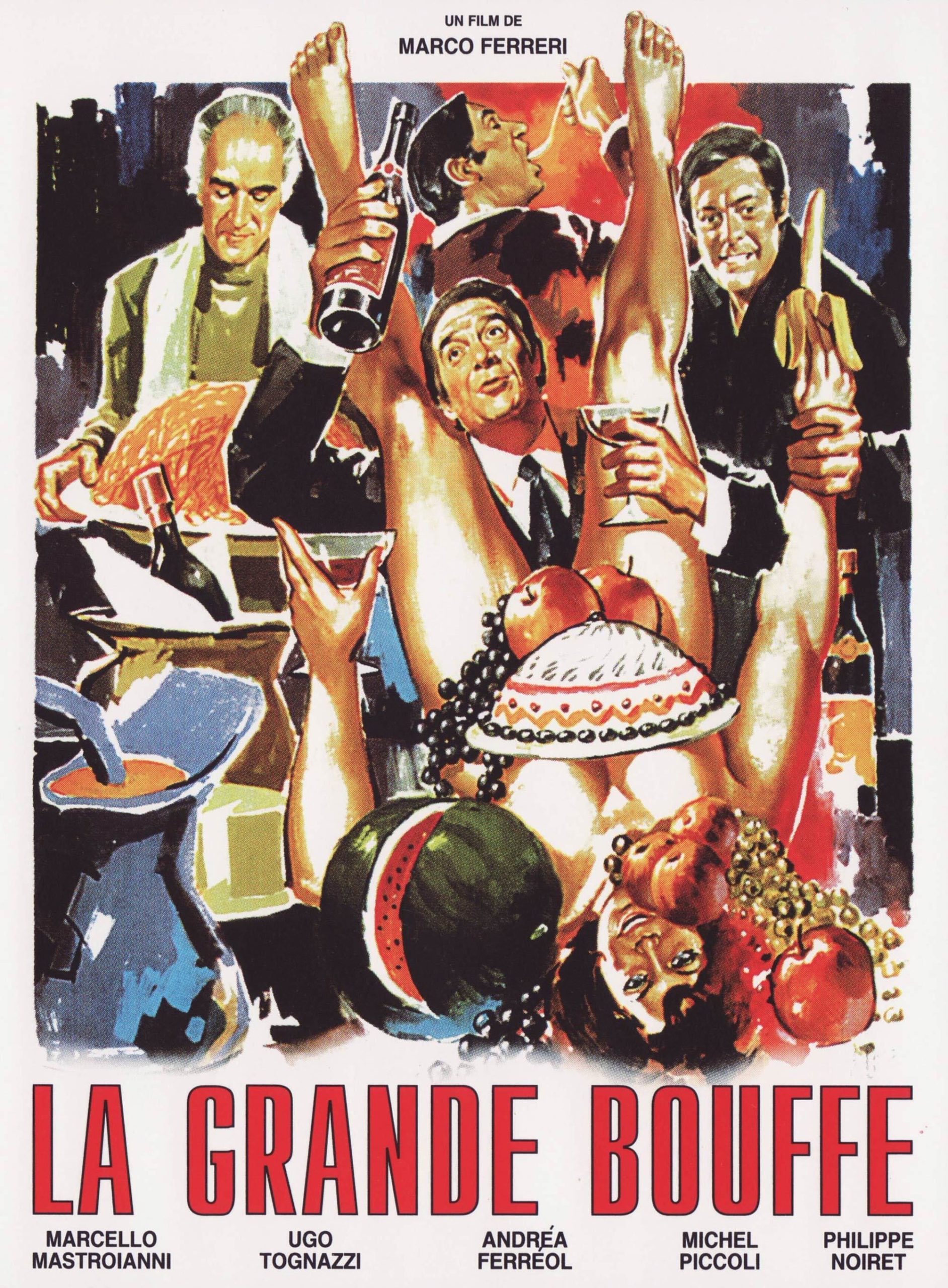
Who hasn't dreamed of organizing a culinary orgy with friends? There are probably more of us than you think who have. But to have done it to the degree of Michel Piccoli in La Grande Bouffe, there's little chance of that. But excess is often a quintessence of depth - and not just of the throat. In Marco Ferreri's 1973 Franco-Italian film, good food and the pleasures of the flesh are celebrations of life, its absurdity and ease; as for the weeping and vomiting, they mark the premises of what is bound to seize us all in the end: death. As present as life itself in this feature film. As in life itself.
Four men with a common desire: to lock themselves away in a mansion for a weekend and eat themselves to death. Under the guise of a so-called «gastronomic seminar», this band of friends applies to the letter Epicurus' famous idea that the quality of a meal depends not on its length, but on its quality. Life, of course, is like a meal - and isn't life reducible to the table and all the joys that surround it? So, bored by their routine, these guys decided to treat themselves to something special. Poultry, cakes, oysters, chicks and pinard are invited to the large, strange villa of the effeminate character played by Michel Piccoli... a certain Michel.
«Ideally, I'd like to be able to keep eating like this indefinitely. What do you think?
- Of course, it would be wonderful.
- Your turn for the quail, minus the cockerel.»
The four little pigs
«Look, gentlemen, we're not here to have a crappy orgy, we're not going to linger around this table.» You bet, Charles! During the first meal of this weekend of «confinement and pigging out with friends», the atmosphere is still just right. The guests remain at the table to stuff their faces, following what looks like the usual starter-main course-dessert menu, albeit a well-stocked one. But already an unusual element is present: the men satiate themselves by looking at old slides of naked women. It's art, they say. Or pig. Go figure! The protagonists« »mmh "s concern dishes and non-plates alike. This is the beginning of the metaphor spun throughout this story, which reminds me of one of my favorite moments from The very horrific life of the great Gargantua:
«Grandgousier was a good rascal in his day, as good at gutting as any man who ever lived, and ate voluntarily salted food. [...] In his virile age, he espoused Gargamelle, daughter of the king of the Parpaillos, a beautiful gouge with a good troigne, and the two of them often did the beste à deux doz together, happily rubbing lard, so much so that she begat a fine son and bore him until the unziesme moys.»
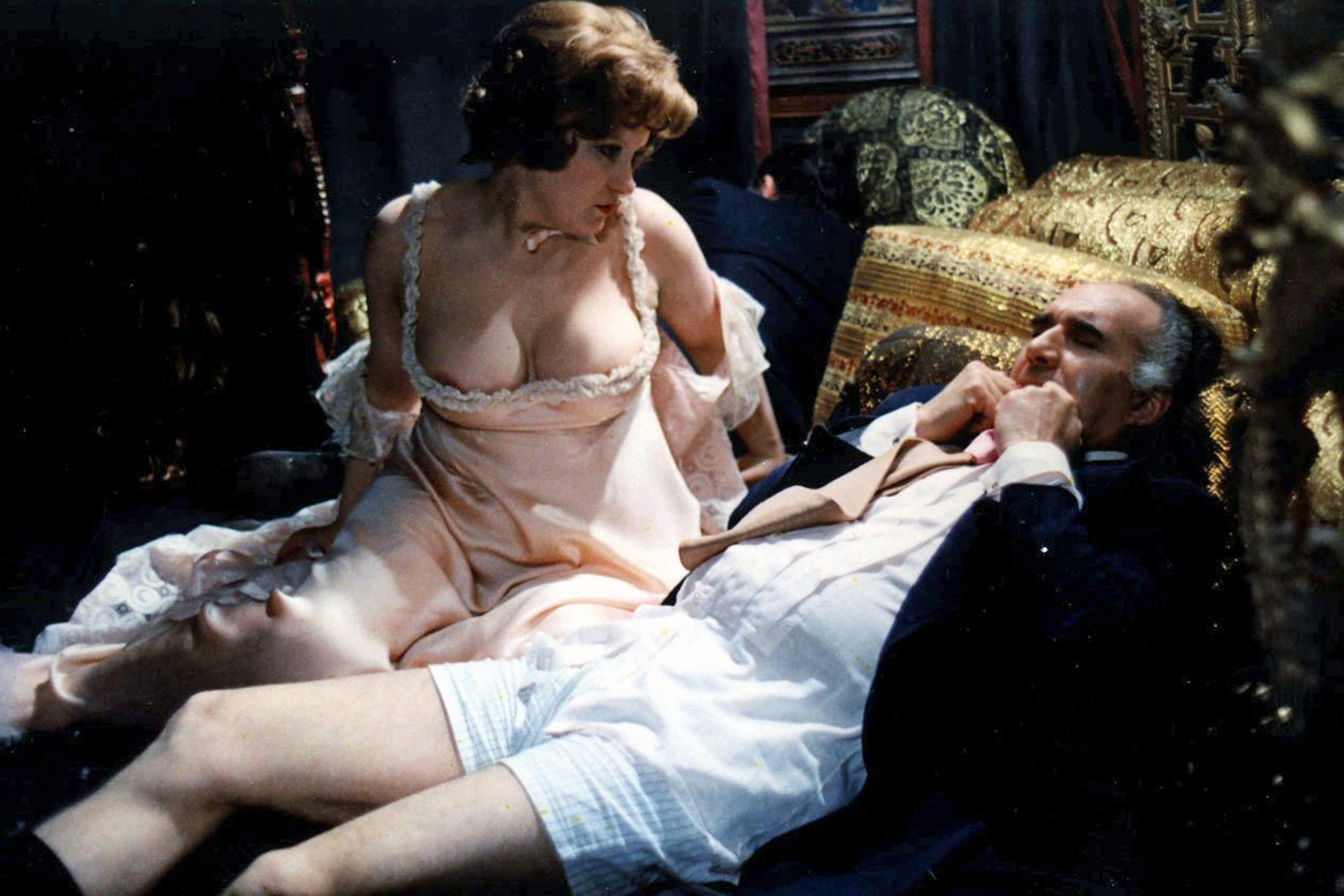
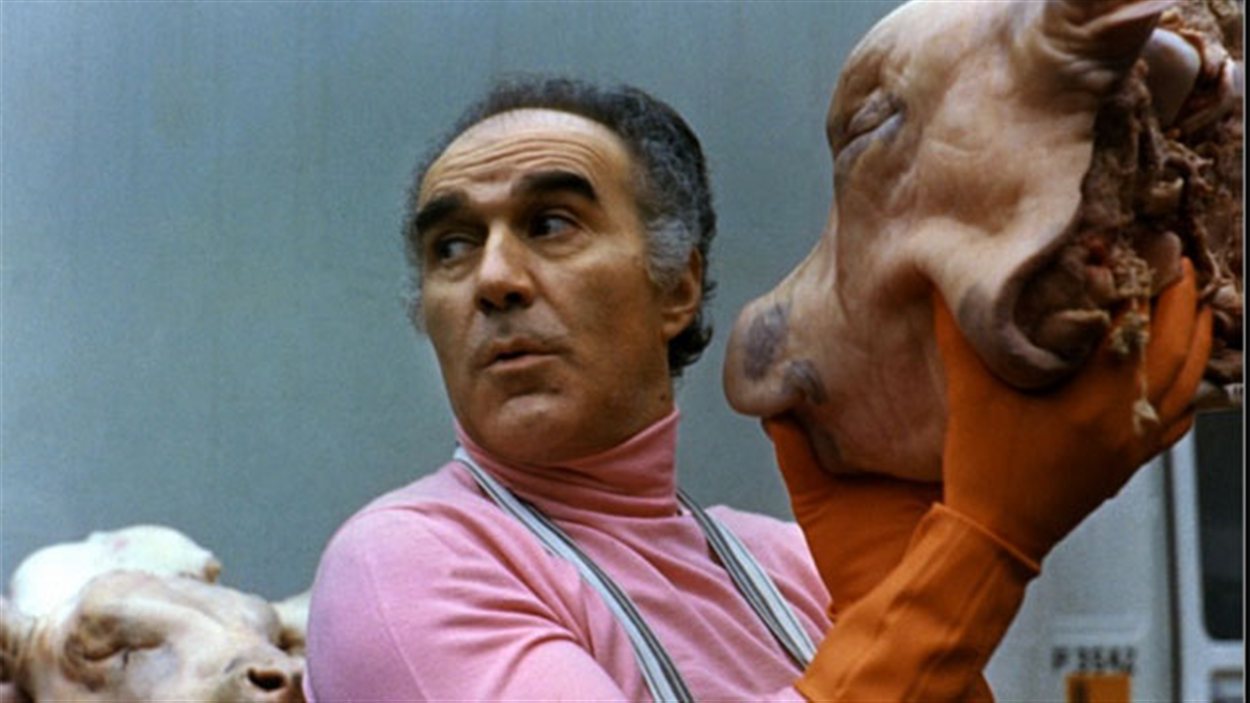
It's all there: the link between goodness and drink, between salt and life, between life and love, between love and sex, between sex and eating, between the womb and childbirth. Sacred unions that La Grande Bouffe, is, of course, staged to the point of overdose. Until the viewer can't take it anymore. It's understandable that the film caused a scandal when it was presented to the coked-up cockerels of Cannes: the spectacle of a decadent bourgeoisie and unbridled consumerism must have caused them a few worries of conscience (hide this life I cannot live). Sucking the marrow from a bone while standing in front of your friends, declaring «to be or not to be» while brandishing a huge pig's head in the air, being straddled by a woman devouring chicken, playing the piano as loud as possible to drown out the sound of your own farts, proposing to a virtual stranger in the middle of a pipe... a grotesque program to say the least.
«You know what we're going to do with the fish? We're going to eat it. Because I have some very, very mean friends who come and eat all the fish.»
A grotesque, even vulgar program, but one that caresses a part of our nature and says a lot about life: sleep, eat, drink, go to the bathroom, copulate - isn't that the vast majority of what we do on this planet? There's so much hypocrisy about our baser instincts that it's a good idea to remind ourselves that filling up on three-liver pie is often more tempting than going to the gym, or whatever. In fact, any erotomaniac worth his salt knows that sex is a great way to get fit. But far from exaggerations, the film is serious about one thing: since life is directed towards death, it's best to fill it with pleasure; and the greatest of these is friendship - Epicurus again. By the way, there's no need to celebrate friendship on a regular basis. well celebrate it.
«So on weekends you lock yourself in here to eat?
- No, only once in a while.»
Friendship, contrary to what one might think, is not only spiritual; it is also, and perhaps above all, embodied in physical things. Friendship means enjoying good company, offering a bottle of wine, shaking hands. Some would even go so far as to say that it's about groping nipples for money. Still half-confined, we're in a good position to know what this set of sensations, made up of little concrete things, brings to the human being. La Grande Bouffe, So that's what it's all about: the great communion. To die, yes; to die alone, yes; but surrounded. Although the film is packed with dialogue gems («Qui veut de mon boudin?», «On peut chanter en travaillant?», «Un peu de laisser aller, nom de Dieu!»), it's Jacques Brel who brings this ciné-gastronomic stroll to a close with The last meal:
«At my last meal
I want to see my donkey
My chickens and geese
My cows and my women
At my last meal
I want to see these funny girls
Whose master and king I was
Or who were my mistresses
When I've got a belly
Enough to drown the earth
I'll break my glass
To make the silence
And sing at the top of my lungs
In the face of advancing death
Les paillardes romances
That scare little girls
Then I want a ride
On top of my hill
See the evening on its way
Slowly towards the plain
And then standing up again
I'll insult the bourgeois
Without fear or remorse
One last time»
Write to the author: jonas.follonier@leregardlibre.com
Photo credit: © Mara Films

You'll also like


 French
  German
  English
Leave a comment