



«Revenge of the Sith, Lucas's tragic testament
Cinema Wednesdays - Danilo Heyer
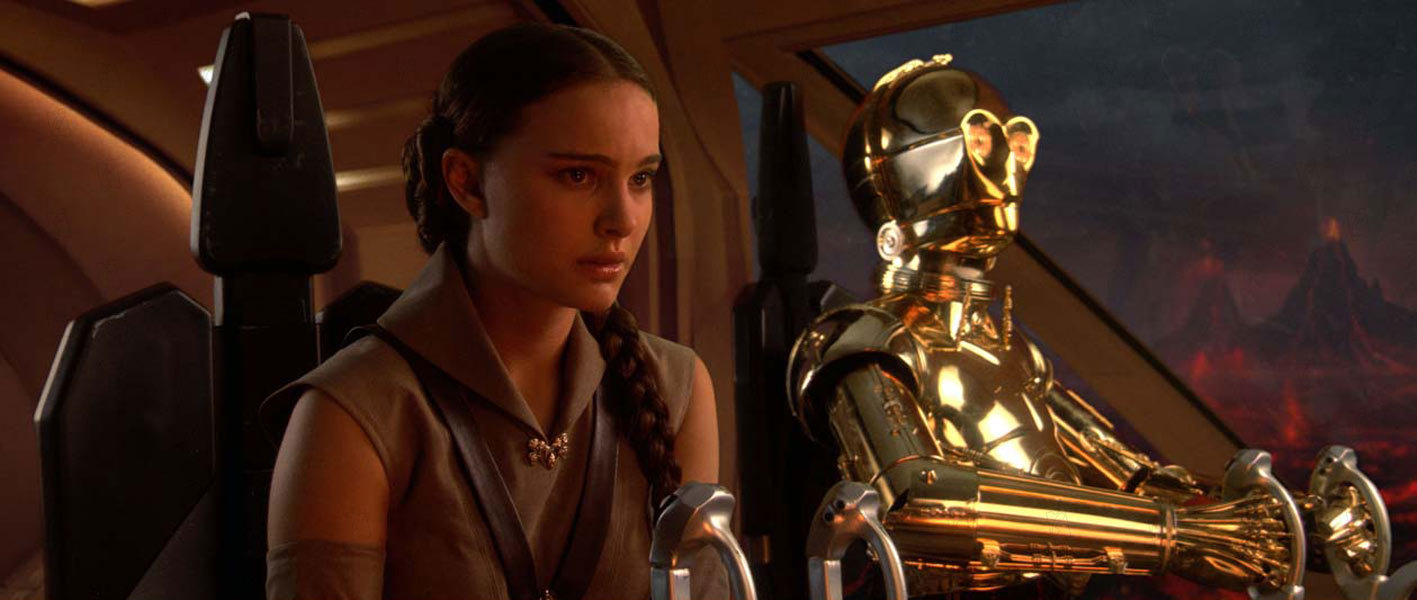
At this stage of the adventure Star Wars, after the postlogic, the spin-off and the end of the second season of Mandalorian, it's perhaps worth turning back the clock and looking at a time when Disney didn't yet have the franchise under its thumb. That is, on the last episode of the prelogy, Episode III: Revenge of the Sith (2005) by George Lucas.
Episode IV (1977) took place in a galaxy dominated by a tyrannical empire and the dark side of the Force. The prequel attempted to show how things could have gone so wrong. And after two rather dubious expository opuses, Lucas achieved the tour de force of proposing a most successful conclusion in a film far more accomplished than it might appear on first viewing. In doing so, Lucas finally fully embraced the tragic essence of the surprising story he had to tell. The childish gags, teenage romance and multiple shifts in tone seen in the first two opuses finally give way to a very dark work that, with great subtlety, convincingly paints the death of a society and the birth of a villain.
A galaxy and a hero adrift
«The fall of the righteous and his shame are pleasurable,» reads an article in The Brothers Karamazov; It's undoubtedly the case that justice is rare, and that its collapse always comes of its own accord. Revenge of the Sith applied this idea in that it made its heroes bear responsibility for the disaster; Palpatine, Sith lord and future Emperor - the film's villain - confines himself to the role of clever tempter, like the devil in Faust. The ruin plays out on several levels. In the background, a Galactic Republic on its last legs, revealing the main flaw of democratic systems: a tendency towards anarchy. Mired in the slow pace of public debate and compromise established in the previous two films, it is unable to resolve an internal conflict of a commercial nature, or prevent it from turning into a horrific civil war between separatists and Republic loyalists. A pacifist, it relied for its existence on the defenders of peace - the religious order of the Jedi. Disarmed at the fateful moment, she had to rely on an army of mercenaries (the Clone Army) whose troubled origins should have warned her of the possibility of them turning against her. In order to win the war, she grants more and more power to Chancellor Palpatine, who takes advantage of the situation to transform her into a Galactic Empire.
The second is a dogmatic, blinded Jedi order that clings to its age-old principles as much as to its last remaining power. A bygone age, it is incapable of appreciating in time the danger that threatens it. By spying on the Chancellor, then trying to stop him, his belated attempts to regain the initiative cause him to lose all legitimacy, so that Palpatine can declare them public enemies before the Senate. In the new world «founded on order and security» - an Emperor and a strong army - there's no room for this demographically starved security double anyway.
Finally, at the center of the drama, we find Anakin Skywalker, the future Darth Vader. Initially on the side of the Jedi and the Republic, he eventually betrays them both and turns to the dark side. Whose fault is this? The first culprit is that strong will, ambitious and impulsive, which refuses to leave the people to whom it is attached; it will drive Anakin to try by all means to save Padmé, the woman he married in secret and whose death he sees in his dreams, even if it means plunging the galaxy into chaos. Talented but arrogant, Anakin has nothing in common with the Jedi: he's a kind of ascetic monk, told to cultivate detachment and favor reason over passion. The Jedi have noticed this. That's why they distrust him, as they do when they refuse to grant him the rank of Master. Anakin, impatient, cannot conceive of these ways as anything other than humiliation. This fundamental incompatibility produces all the resentment Palpatine needs to drive him away from them.
A dazzling finale
The film alternates seamlessly between open-air action scenes and more intimate sequences in which Lucas attempts to plunge us into Anakin's inner dilemma. The former include the space battle and the film's superb opening sequence, in which Anakin and Obi-Wan's ships are easy to follow despite the surrounding confusion. The long duel at the end between these two former friends is also awe-inspiring, given the incredible amount of work that went into bringing the lava planet to life, the exceptional speed with which lightsaber blows are exchanged, and the complexity of the choreography.
In the seconds, two sequences in particular stand out for the power of their emotions and the richness of the ideas they evoke. Firstly, the opera sequence, in which Palpatine delivers his tempting speech to Anakin, in the midst of a highly original visual spectacle. Then there's the one where he and Padmé exchange glances without even noticing each other. With their faces bathed in the same last light of day, but already separated by shots of the city of Coruscant, it only takes a tear on Anakin's cheek to realize that he is about to betray his family and throw himself into the arms of the devil. In these moments, the sumptuous score by John Williams and the visual genius of a Lucas who, at last, has mastered CGI, elevate the story to the sublime. Between auteur film and blockbuster, Revenge of the Sith has all the qualities to remain an original work which, like all Star Wars, and will continue to divide critics and fans alike.
Write to the author: danilo.heyer@leregardlibre.com

Vous aimerez aussi


 French
  German
  English
Laisser un commentaire