




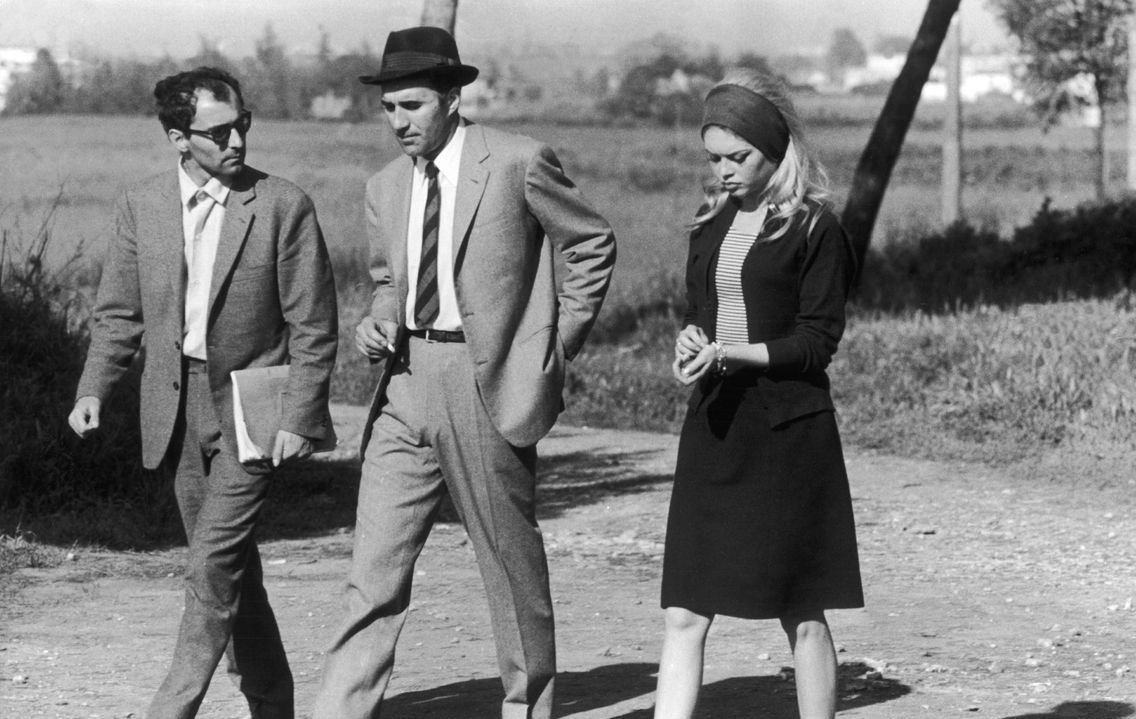
«Le Mépris» and Michel Piccoli wandering around
Cinema Wednesdays - Special edition: Tribute to Michel Piccoli - Loris S. Musumeci
Ucolossus of cinema history, made by a colossus. Jean-Luc Godard was subversive; he has remained so. Even if his cinema, in this case Contempt, has entered the category of classics. Either decried and mocked, or admired and adored, this film has been the talk of the town since its release in 1963. And rightly so, for in a day when the subversive has become something of a norm, it's very easy to see why. bon chic bon genre, very conventional, Contempt always surprises. He annoys, then he surprises. He surprises, then we love him.
«Contempt is the story of this world».»
The credits open the film, but in a special way, because nothing scrolls across the screen. It is read directly by a voice-over by Godard, who closes by quoting: «Cinema," said André Bazin, "substitutes for our gaze a world that matches our desires. Contempt is the story of this world.» This is a film about two things in one: cinema, of course, and a couple. A dying cinema, a dying couple. The end of a cinema, the end of a couple.
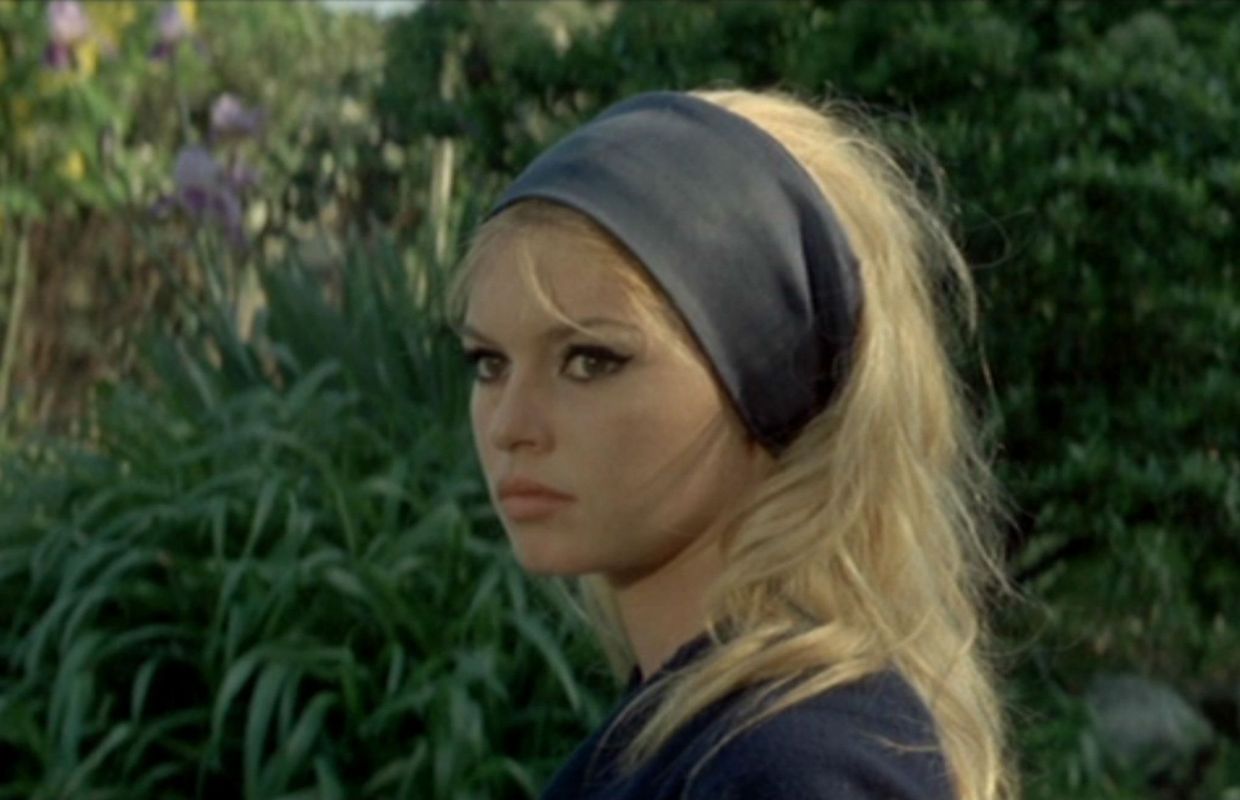
This couple is Paul and Camille. A couple made myth in cinema. It's the sublime, tragic couple played by Michel Piccoli and Brigitte Bardot. Paul is a writer turned screenwriter. His wife has joined him in Rome, where a job opportunity is opening up for him. A despotic, extroverted American producer entrusts him with rewriting the screenplay for a film being made between Cinecittà and Capri by a Fritz Lang, played by himself: it's a super-adaptation, both peplum and philosophical, of the’Odyssée. Paul feels out of step, but at ease, with old Lang. On the other hand, he finds it hard to get on with the producer, on whom his attractive salary depends.
Read also: Le Redoutable, a formidable mixed bag
Since Camille is so beautiful, the producer takes advantage of his financial hold on her husband to take the young woman under his sway. And in full view of her husband, of course. She appears to resist when he invites her - alone - into his car, gently suggesting that Paul take a cab; and Paul gives in. He accepts, especially as he sees no harm in it. From this point on, contempt comes into play. Camille despises Paul, and he doesn't know exactly why, nor do we.
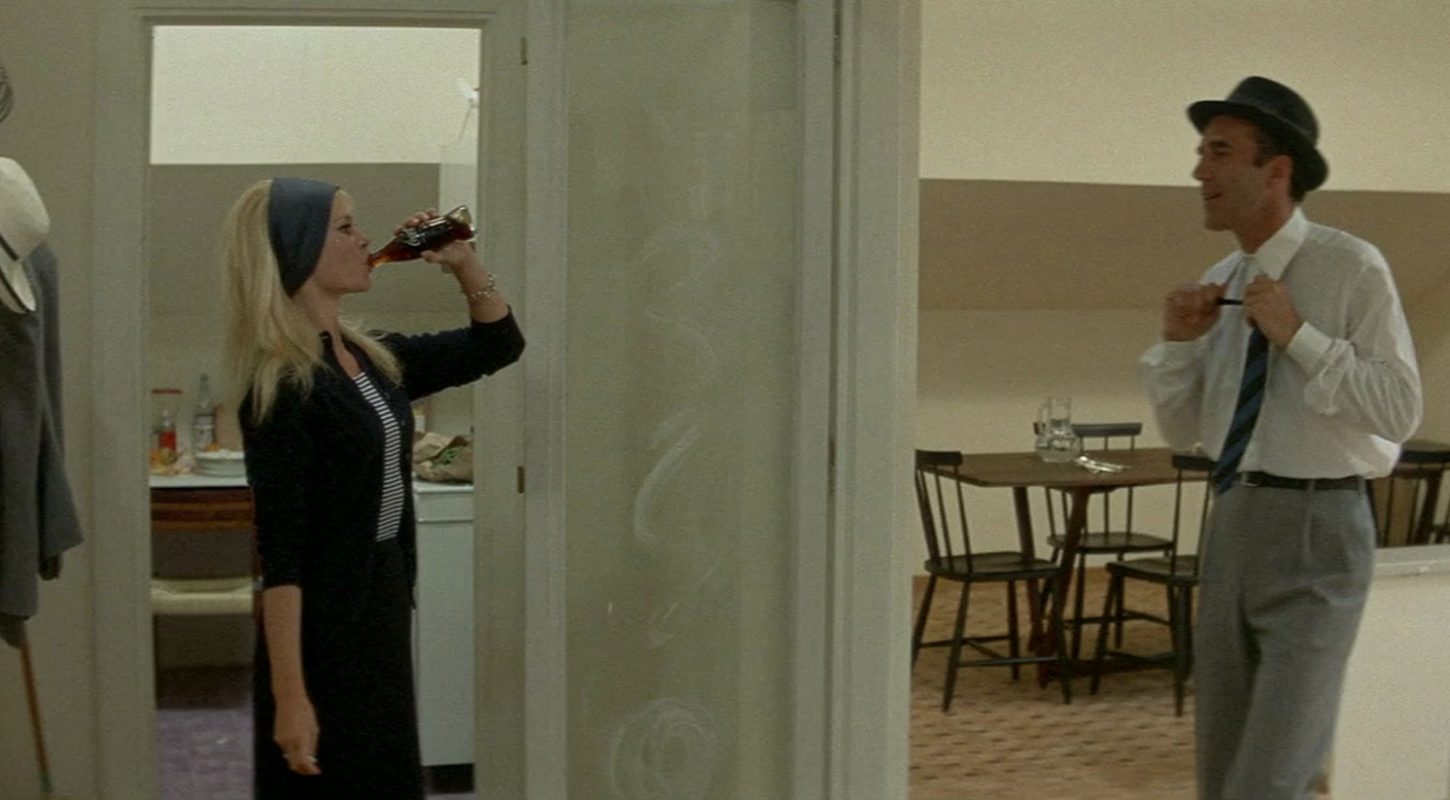
A couple dies, and before their eyes, cinema dies. When the two travel to Cinecittà, where they meet producer and director Lang, they discover a place that resembles a ruin. Decayed. Where a few studios still appear to be shooting, where a few set designers wearily trace brushstrokes on papier-mâché walls. And yet, cinema has known its hours of glory here, just as it has in Hollywood: the presence of Fritz Lang, whom Godard adores but knows he must bury in order to create something new, as evidenced by the visual allusions to westerns, whose wide shots and interplay of glances also bear witness.
Read also: 1966-1971: a golden age nobody lived through
And yet, before the debacle, the couple enjoyed a crazy love affair, with a naked Bardot on the bed, leaning against a Piccoli whose character admires the woman's bodily details in the mirror facing the bed. He admires them because she exposes them with a cultish «And my buttocks, do you like my buttocks?» Yes, he loves her buttocks, he loves everything about her. He loves every feature of her, every color filter the camera plays with - red, yellow, blue. He loves her «totally, tenderly, tragically.»
Piccoli on the move
Then contempt sets in. And the impossibility of understanding, even of sitting down and talking quietly. Every discussion in the film, whether between Paul and his wife, Paul and his producer or Paul and Fritz Lang, suffers from the same incessant wandering. In its three acts, the film bears witness to a growing difficulty in communicating. In Cinecittà, where a translator who translates in her own way interrupts every discussion; in the couple's apartment, where Madame plays the mysterious vexed woman and Monsieur ends up slapping her; in Capri, where disagreements erupt, where everyone finds their place in their own corner, in their own thing, except Paul. And all the while, they keep wandering.
Paul is permanently out of step. And it's this discrepancy that is at the heart of the film, without taking anything away from a Bardot who has given cinema some of the most beautiful buttocks shots in its history and much more through her role, without taking anything away from Georges Delerue's music either, who has given cinema one of its most beautiful soundtracks, notably with Camille - its most moving composition with the overwhelming Melancholy, musical theme from Like a Boomerang, and with the wonderful Departure from Naples, the musical theme of Corniaud.
But the gap remains central. And it's made central by the man who embodies it. In his facial features, in his voice, in his acting, in his race after his wife to find love again, in his race after Fritz Lang to find a truth about cinema that he won't find, simply because it no longer exists. All this is Piccoli. The best tribute we can pay him is to revisit the films he starred in, in which he shone, in loser magnificent, in loser offbeat, as in Contempt.
Write to the author: loris.musumeci@leregardlibre.com
Photo credit: © Studiocanal (Photo taken during filming, where Jean-Luc Godard in turn strolls with his two leading actors: Michel Piccoli and Brigitte Bardot)
You'll also like

 French
  German
  English
1 comment
Contrary to popular belief, JLG is not the voice in the credits of Le Mépris. In fact, the director's diction is unmistakable. The voice is that of Michel Subor, an actor who played in "Le petit soldat" by the same JLG.
Leave a comment