




Les tableaux d'un flâneur by Elia Suleiman

Cinema Wednesdays - Ivan Garcia
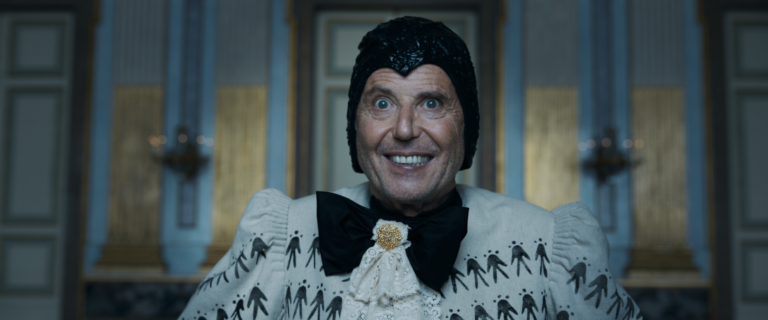
It Must Be Heaven, the latest feature film by Israeli-Palestinian director Elia Suleiman, takes viewers on a journey in the footsteps of a silent protagonist, Elia Suleiman himself, who wanders from place to place, observing the world around him. Through several tableaux, the film humorously depicts the forgotten but everyday moments of our lives, as well as a filmmaker's quest for recognition. A poetic and amusing feature, but not for everyone.
Presented at the 2019 Cannes Film Festival, Elia Suleiman's new film was eagerly awaited. It must be Heaven is a «meta» film in the sense that its protagonist is none other than Elia Suleiman himself, in search of funds to produce his film. It's a device that allows us to embrace Suleiman's point of view, particularly with regard to his daily life and the things he sees.
The speechless gaze
In terms of composition, the film is structured in different tableaux, which the viewer must weave together with the help of visual clues or the words of secondary characters. Indeed, the film's main feature is its protagonist's absolute silence. And this makes for fascinating viewing.
It seems to me that the whole film hinges on a single element: the gaze. For want of words, Suleiman observes everything. This sense of observation, so boring at first sight, is made playful and funny by the protagonist, who plays with a certain comedy of gestures and situations. It reminds me of the acting in old silent films, like Buster Keaton in Steamboat Bill, Jr.
The protagonist's gaze questions - quite literally. In the face of this gaze, the secondary characters express themselves, meet Suleiman and forge links. One example is his neighbor, who breaks into his garden every morning to take care of the lemon trees. This is reflected in the camerawork, which alternates between general shots to describe the landscape and anchor the protagonist in an environment or country, and subjective shots that let us see the scene through the protagonist's eyes.

Elia Suleiman, the flâneur
Since the character doesn't give us any clues, the director has scattered clues here and there to help us understand what's going on. Take geography, for example. At the start of the film, the language of the secondary characters, as well as the signs, tells us that the protagonist is located in Arabic-speaking lands. Later, however, a van in front of the protagonist's house bears Israeli license plates.
Likewise, when Suleiman takes the plane, the television showing the flight route places the point of departure at Tel Aviv airport. All of which forces us to pay close attention to what we see. And what we hear. The beautiful soundtrack highlights a number of poetic passages, such as the chase between a femen and New York City police officers against a backdrop of Darkness by Leonard Cohen.
From Tel Aviv, our director travels to Paris, where he sits on the terrace of a café, contemplating the passers-by in the street. The rhythm of the film, like a great fresco, is slow: we stop, observe and analyze things and people. Especially if they are everyday events, such as passers-by sitting around a fountain, policemen on patrol, garbage collectors playing with cans...

The only time the protagonist speaks is during a conversation with a cab driver. The taxi driver asks him about his country of origin and nationality. Suleiman replies that he is Palestinian and comes from Nazareth. The cab driver got excited and offered him the fare. Because Suleiman is Palestinian... Hence the importance of silence. From city to city, from Tel Aviv to New York, the protagonist - if he doesn't say anything and others aren't interested in his origins - goes unnoticed. A citizen of the world.
Before being a film about Palestine or about the condition of a Palestinian filmmaker, what is highlighted in It must be Heaven, is in praise of the flâneur. You know, that Baudelairean hero who likes to roam the streets? Well, Elia Suleiman takes to the stage to embody this wandering character who is ultimately everywhere and nowhere.
The Israeli-Palestinian director's feature-length film is imbued with a poetic quality that, instead of using the verbal, focuses on the visual and, in particular, on gestures. But then, given today's standards, perhaps this film is more for people curious to see something new, or admirers of «old-fashioned» films. In any case, Elia Suleiman succeeds in giving us a good time in the company of his Palestinian flâneur.
Write to the author: ivan.garcia@leregardlibre.com
Photo credit: © Filmcoopi

You'll also like




 French
  German
  English
Leave a comment