




«Madres paralelas»: boning up on passion
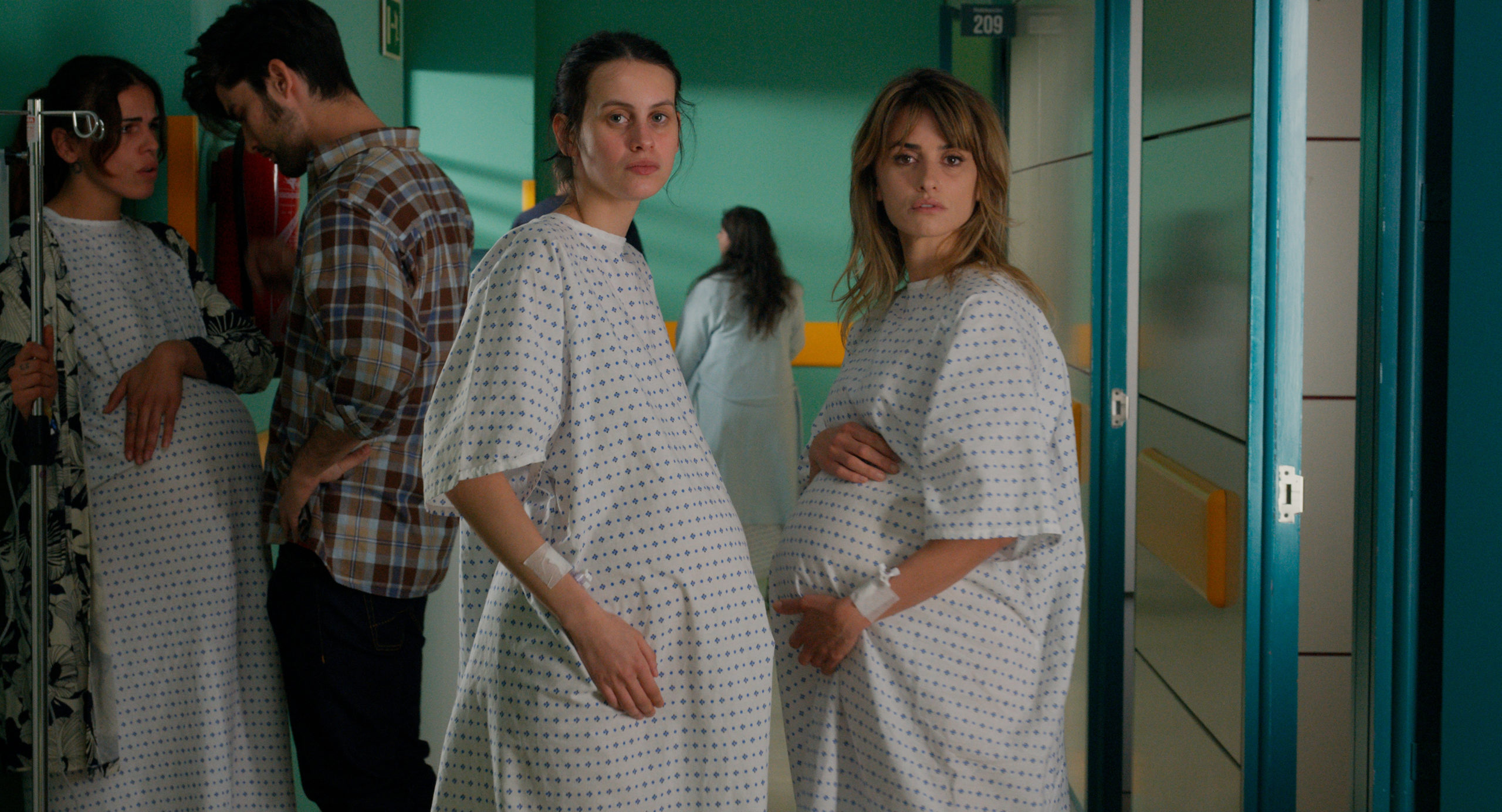
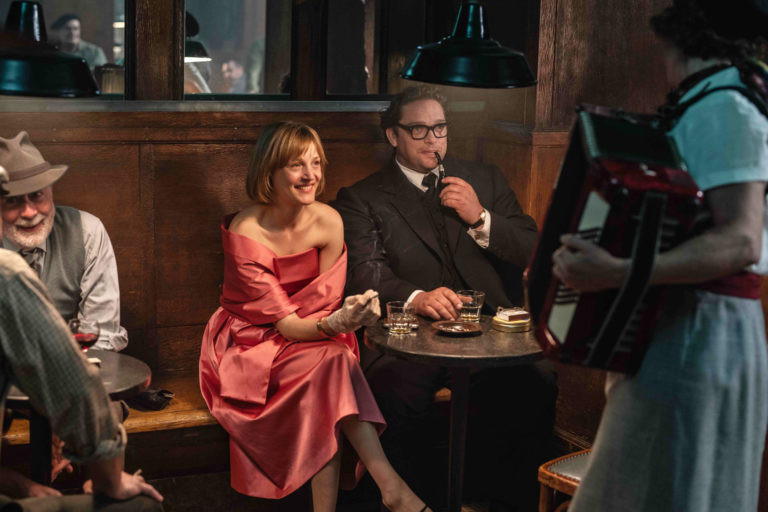
Ana (Milena Smit) und Janis (Penélope Cruz)
Cinema Wednesdays - Alice Bruxelle
Pedro Almodóvar emerges from his introspective tomb. Two years after Pain and glory and a year after his short film La Voix humaine, the filmmaker returns to his favorite themes and his favorite actress, Penélope Cruz. What's new? A historical framework relating to Franco's past overhangs the melodrama.
Provocative without being outrageous, Pedro Almodóvar is a mythical figure of the seventh art. His feature films have the audacity to assume a narrative freedom bordering on anarchy. But Madres paralelas is bogged down in a laborious stammering where historical and biological truth intertwine, one being linked to the other and vice versa. Seizing on the collective history of Spain and that of the two protagonists in the same movement runs the risk of becoming immobilized within the two rights. These parallel, overly rigid straight lines are not as cathartic as the romantic mazes that once characterized his films.
The truth about manchego and Iberian ham
At the maternity hospital in Madrid, the destinies of Janis (Penélope Cruz) and Ana (Milena Smit) are sealed as they share the pain of childbirth. One incident unites them: their two niñas were switched at birth, but this truth will only be discovered by Janis. What do they have in common? Their celibacy; the former can afford the luxury of raising her child alone; the latter doesn't know the exact identity of the father, her pregnancy the result of a rape. Janis is a fashion photographer, while Ana is still a minor in the clutches of parents with little regard for the fate of their daughter. A friendly, then carnal rapprochement begins, as Janis's silence on the biological truth becomes increasingly difficult to accept.
Another need for truth adds to the melodrama. Janis wants to excavate the mass grave in the village where her ancestors, victims of Franco's dictatorship, lived. She enlists the help of Arturo (Israel Elejalde), forensic anthropologist and father of her child.
Micro- and macro-history intertwine, sometimes touching. History intrudes into the close intimacy of the two protagonists, where the themes (or obsessions?) of the Spanish filmmaker resurface: death, desire, the figure of the mother. A few Almodovar-like flashes awaken nostalgia for his best films. The intensity of the pain of childbirth, in tune with the instruments guided by composer Alberto Iglesias, resonates with the pleasure experienced during the carnal encounter to the sound of Janis Joplin's voice, linking past and present.
The usual use of an intense chromatic palette was the cement of aesthetics and emotion, making Almodóvar's cinema so atypical and visually intense. The palette of Madres paralelas is more limited, and the staging confines itself to an artificial register. This impression is reinforced by Janis's slideshow of photos of luxury goods. Is this a metaphorical vision of the future (or has it become?) of Almodóvar's genius? Are the few flashy glimpses we catch a glimpse of the residue of the passions embodied in his earlier works?
Putting politics into words
Even if the plot reaches its climax in a very predictable way, the relationship between the two protagonists can be moving. What makes Almodóvar's cinema so special is that he manages to endear even the most detestable characters by constructing a psychological puzzle that is always highly complex. In All about my mother, Huma's character, despite her indifference to Esteban's interest, which leads to her fatal accident, arouses compassion for her fate as a woman in love. Or Begnigno's rape of Alicia in Talk to her is not seen as rape, but as an expression of love, as expressed in the metaphorical short film The shrinking lover which poeticizes and distances the audience from the tragic act in progress.
One of Almodóvar's artistic powers is to create in each story and in each character a space of liberation in which to live out one's destiny in a messy, cathartic way. But Madres paralelas fails to achieve this apotheosis. Staged too smoothly, the couple Janis and Ana seem trapped by the political showcase that the filmmaker adds as a filigree. A whole host of issues are glossed over: rape, cyber-bullying, single parenthood, emancipation. We all should be feminist is the slogan on the T-shirt worn ostentatiously by Janis. If the feminist component is almost systematic in his filmography, it manifests itself mainly in the intrinsic behavior of the characters, all driven by a desire for self-determination.
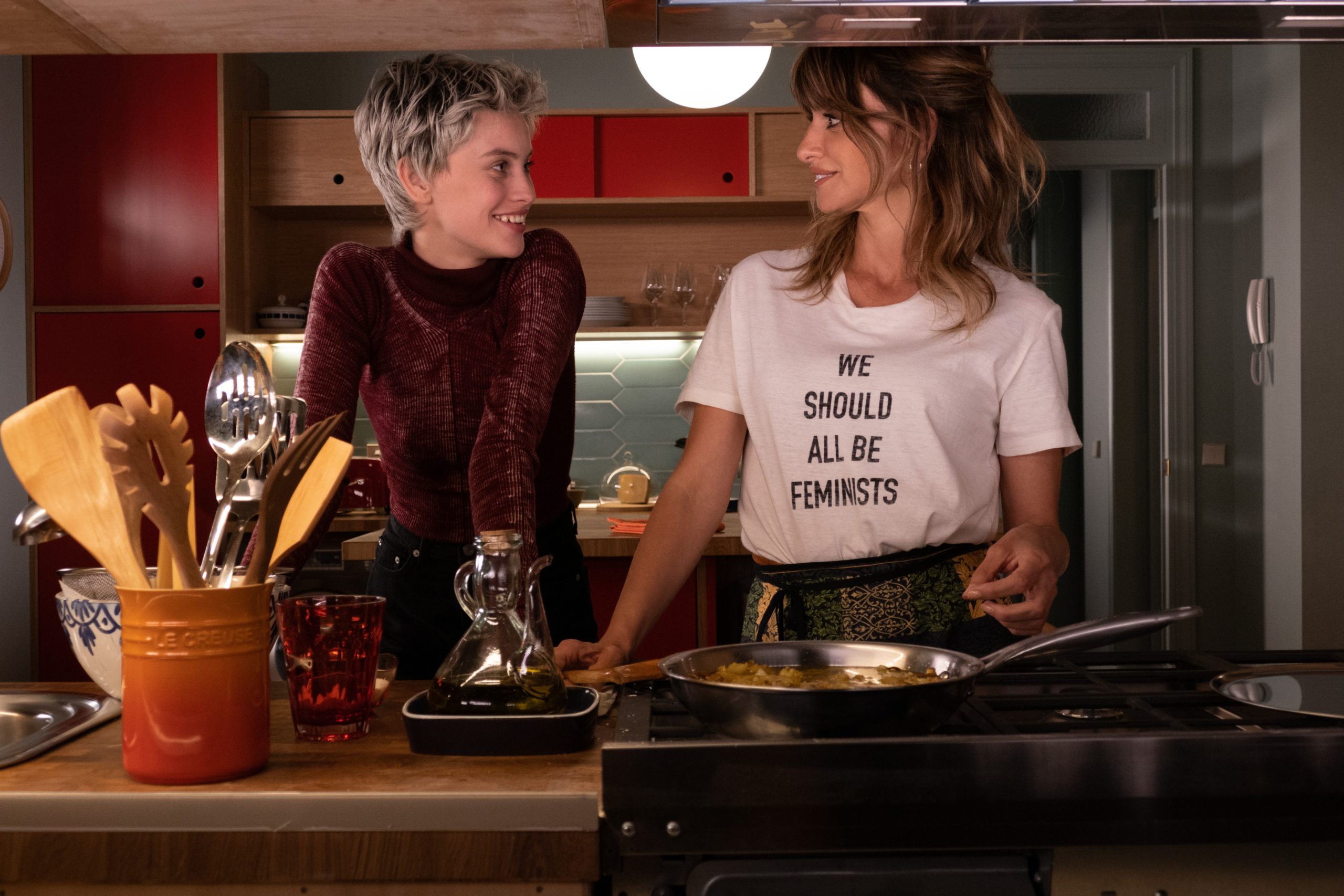
This political explicitness through the medium of words, to the detriment of the freedom granted to his characters, resonates with the historical drama of mass graves. In 1994, Almodóvar confided to Frédéric Strauss: «[...] my films have never been anti-Franco, because I simply don't recognize Franco's existence in them. It's a kind of revenge against Francoism: I want there to be no memory of it, no shadow of it». Although Francoism was briefly evoked in In the flesh in the first sequence, this reversal of position raises questions.
A great storyteller, the filmmaker improvises with Madres paralelas storyteller. The salt of his cinema freezes into statues or skeletons, those unearthed from the common grave.
Write to the author: alice.bruxelle@leregardlibre.com
Header image: © El Deseo
You'll also like

 French
  German
  English
Leave a comment