




«Motherless Brooklyn»: a film we embrace with groove
Cinema Wednesdays - Melisa Oriol
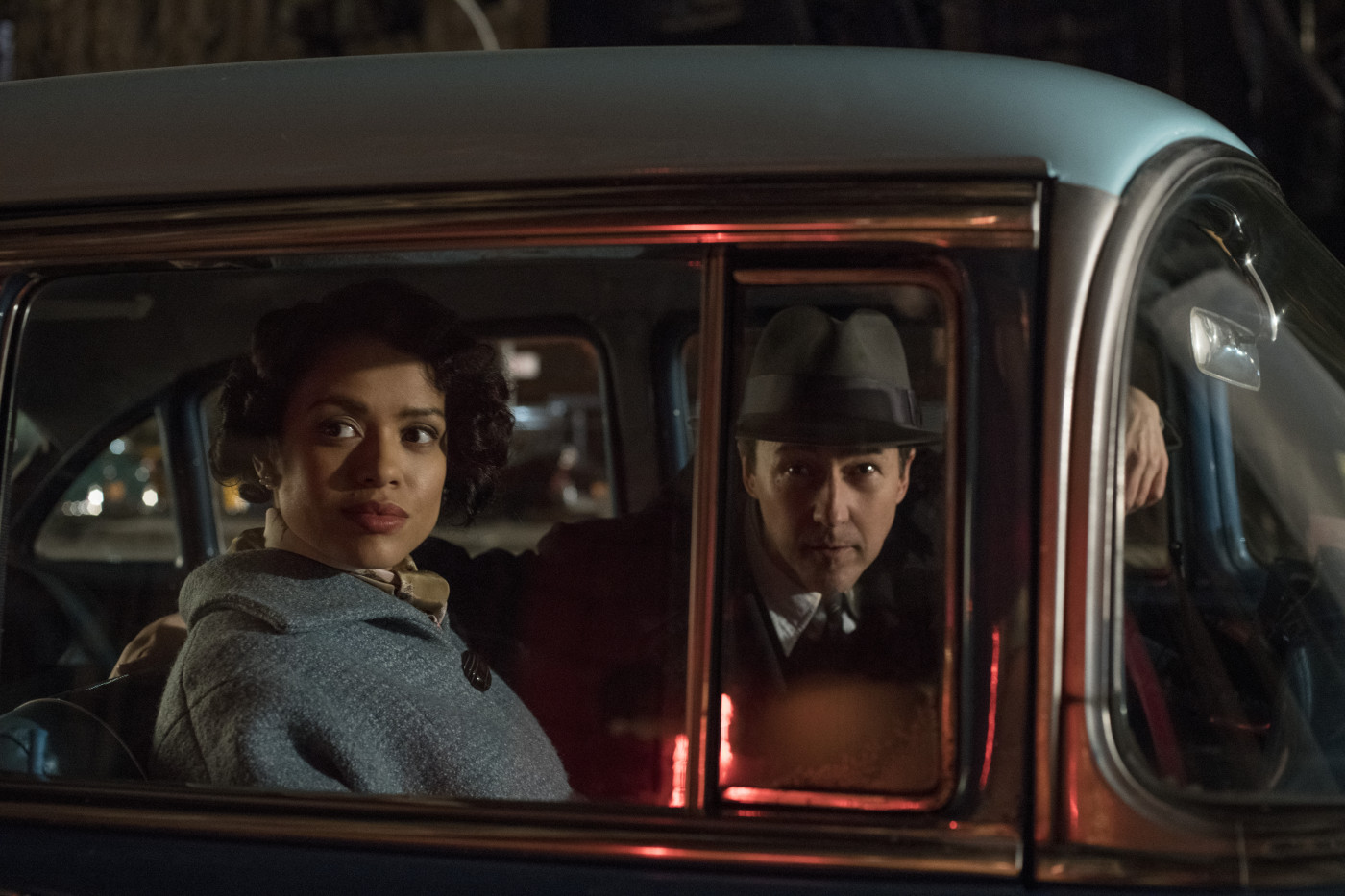
Almost twenty years after his first film In Anna's name (2000), Edward Norton once again dons his director's hat, and with Motherless Brooklyn, a re-adaptation of Jonathan Lethem's book of the same name. The result is a work of great beauty, sprinkled with humor, and set in an atmospheric jazzy and bewitching.
The story of Lionel Essrog (Edward Norton) takes place in the peculiar atmosphere of 1950s Brooklyn, with its suburban neighborhoods and old-fashioned automobiles. A young private detective suffering from Tourette's syndrome, Lionel attempts to solve the investigation that led to the murder of his friend and mentor Frank Minna (Bruce Willis). Although the story may seem basic, involving crooked politicians, secrets and betrayal, the director adds a truly innovative touch by harmonizing his film to the rhythm of jazz.
Between trumpet and double bass
Omnipresent, this musical style accompanies, contrasts, upsets or harmonizes the image. Every action in the film has its own musical sequence, with varying degrees of rhythm. From a frenzied dynamism to a slow languorous and sensual, the music provokes and transports us into a unique atmosphere and ambience. Woman In Blue by Wynton Marsalis, for example, provides a particularly nostalgic accompaniment to Lionel's long walks through abandoned neighborhoods where absence and chaos reign. Other tunes exacerbate the protagonist's solitude in his apartment during long, darkly lit shots. It's a feast for the eyes as well as the ears; our whole body is suddenly projected, invested in and by the film.
Over and above the musical choice, the voice over Lionel's voice (a voice that only the viewer can hear) lulls the film with remarks, questions and thoughts. His voice guides the viewer through the puzzle that is his investigation, urging us to empathize. Right from the opening, the first thing we discover about Lionel, and that he himself reveals to us, is his Tourette's syndrome. It's an element that's inseparable from his person, and one that we'll come to care about.
This illness characterizes the character as much as it contributes to the film. It may provoke laughter in funny situations, or embarrassment when his discomfort transcends the screen, but it's the feeling of stress that the illness amplifies the most. One of the film's first scenes illustrates this well: during a frantic car ride to the hospital, Lionel can't stop shouting and playing with the sound of words or having physical tics, while his mentor bleeds to death in the back of the car, all accompanied by dynamic editing.
A great among little ones
Sound casting is a brilliant cast of both renowned actors and rising stars. The soundtrack is intelligently crafted: it captivates and endows the film with a special character and atmosphere. And yet.., Motherless Brooklyn is not overly pretentious. The film is simply what it is. It lets itself go at length, taking its time with the viewer, imposing its often slow, musical rhythm and nostalgic mood. Although the story deserves, at times, a little more clarity, the film undoubtedly ends up seducing us. Not in the image of a passionate relationship, but rather in that of an old lost love. In the end, it's like Lionel says (quoting Frank): «Brooklyn is big, but there are things bigger».
Write to the author: melisa.oriol@leregardlibre.com
Photo credits: © Warner Bros

You'll also like




 French
  German
  English
Leave a comment