

Cinema Wednesdays - Special edition: The coronarétrospective du cinéma presents Tarkovski - Jonas Follonier
«What was it exactly? A falling meteorite? Visitors from the depths of the Cosmos? In any case, our country, which isn't very big, saw the appearance of something unheard of - what was called ‘the Zone‘. We began by sending troops there. No one came back. So we cordoned it off with large police forces... And we probably did the right thing. I don't know about the rest... It was a fragment of an interview with Nobel Prize winner Professor Walles.’
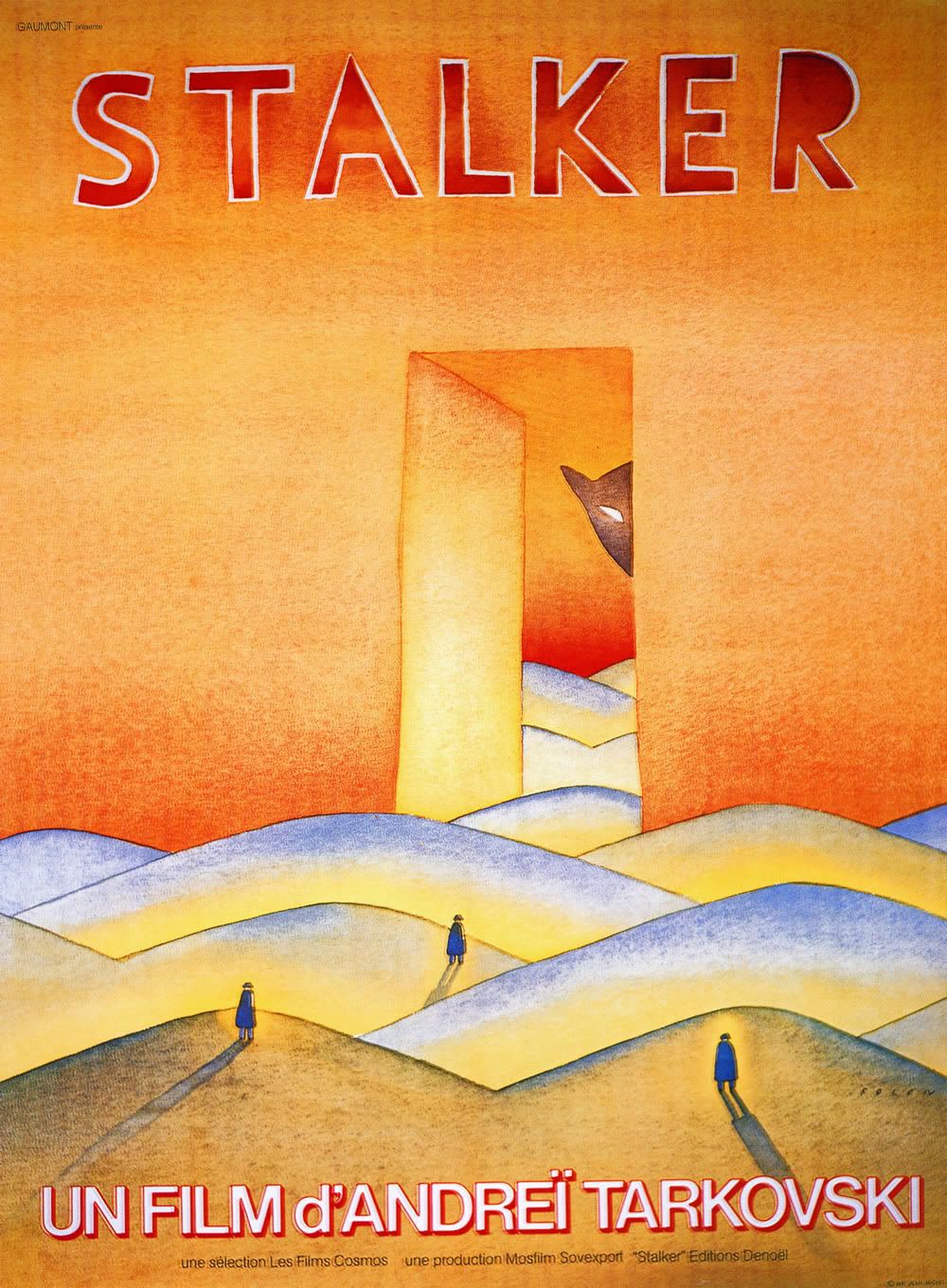
This excerpt from the novel Stalker begins the film of the same name, a free adaptation directed by the great Andrei Tarkovsky and released in 1979, after a long shot of a bistro, where a man is being served a drink. There's something magical about this atmosphere, magical because it's never been seen before. After the text on the black screen, a shot focuses again on a room - this time, presumably, a bedroom. An extremely slow camera movement to the left takes us from a shaking table - a passing train - to a reclining woman, then a reclining child, then a reclining man. He and she have their eyes open. We guess that they are sad, tired or crazy. The child reappears at the very end of the work.
In between, well, two and a half hours of slow-motion images, profound words, eerie colors and illuminated mystery. Two and a half hours of symbolism. At the center of this film-world is a territory where «there is no one and [where] it is impossible for there to be anyone»: the Zone. Like a kind of no man's land of which we know nothing about, right down to the causes. Atomic bombs, extraterrestrials, meteorites? Whatever the danger, a writer and a professor of physics venture into these lands, guided by a stalker («ferryman» in English). They set off in search of the room which, it is said, lies in the middle of the Zone and makes all their wishes come true.
A gigantic in camera show
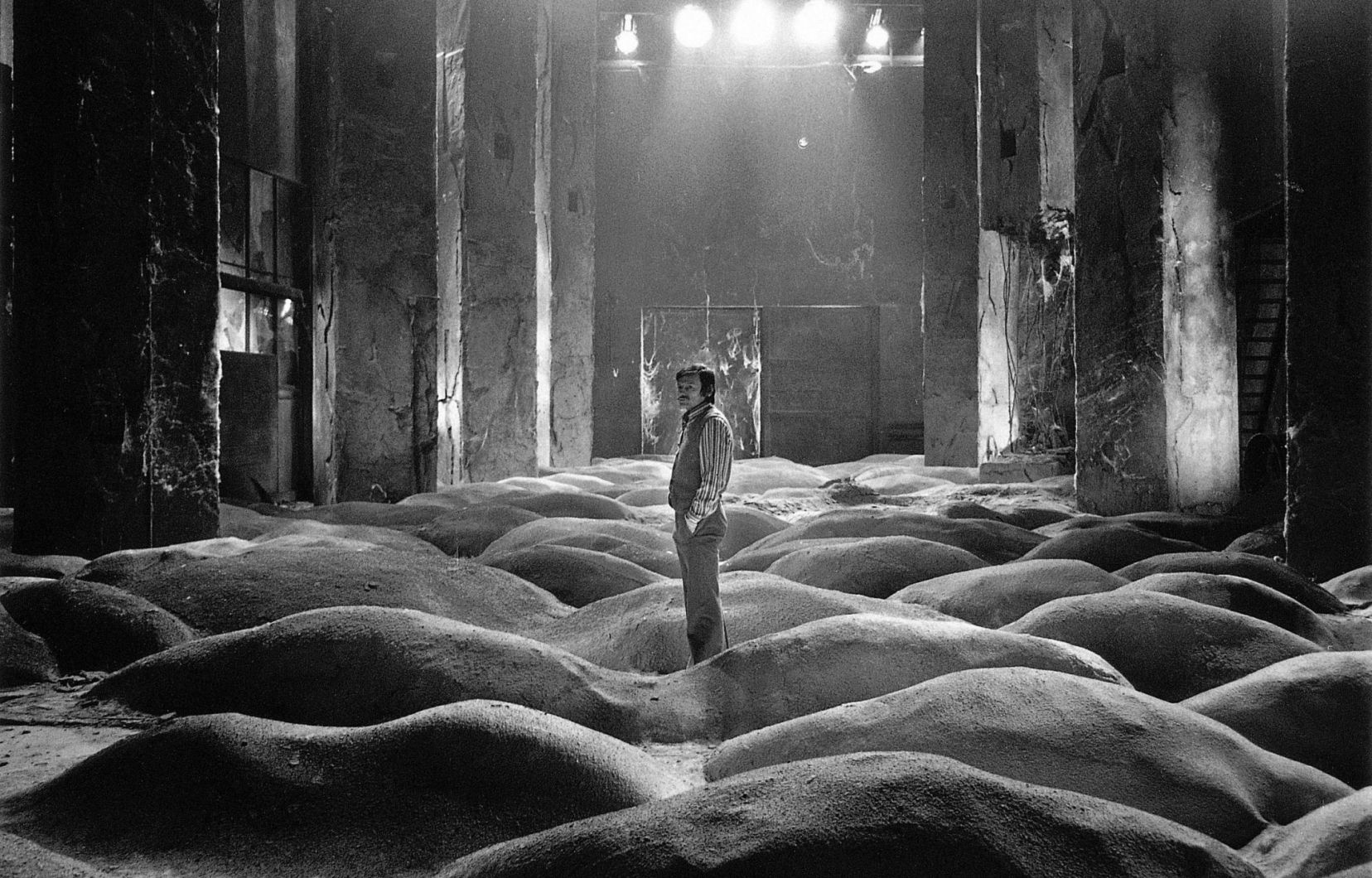
We quickly realize the importance of concrete elements in the Stalker, like doors and openings, walls and partitions. «I feel like I'm in prison everywhere. This sense of confinement is very well conveyed by the film's aesthetics. The characters are as if locked in rooms, but also in a form of madness and in their psychological limits. Caves and gorges follow on from inner chambers; in a way, they are outer chambers. At a higher level, it's the Zone itself that encloses the characters as it conceals secrets. The Zone as part of the world and a metaphor for the world. What makes Stalker a gigantic huis clos. Giant, because it's not confined to a house like we are now. And giant, because it's artistically grandiose.
A cinematographic process based on slowness. Stalker is a film that is itself a victim of imprisonment, namely imprisonment in slowness. You may say that my vocabulary is repetitive; it is, by design, intended to reproduce the film's boredom. Yes, you read me right. Stalker is a boring film, but in the right sense of the word: it dramatizes boredom to the point of identifying with it. So what better way for this Madame Bovary of Soviet cinema than a cinematographically Flaubertian form allied to the verb of Péguy, that other mystic than Tarkovski?
Read also: Faute d'amour, a film that speaks volumes about the ills of our times
Boredom is also present in the dialogue. It's impossible to overstate just how excellent the characters« lines are in Tarkovsky's cinema. In this film, it's the writer's lines that are particularly evocative. »I write and therefore everyone calls me the Writer, I wonder why. - And what do you write about? - About readers. I don't think there's any other valid subject. [....] I don't give a damn about inspiration. Do I even know what to call what I want? Do I know if I really don't want what I want at all? [...] Those who write do so only because they suffer, because they doubt. [...] If I didn't doubt that I'm a genius, why would I write?"
Reality, that fiction
This boredom, you'll have understood, is the boredom of living, which paradoxically drives us to create our world, to create our art. It is from discussion that this farce of truth is born. Hence the film's profound mise en abîme - to say the least in this environment of caves and cavities - which offers a reflection on cinema and, more generally, on the difference between reality and illusion. What difference? says Tarkovsky. If there is one, is it really watertight? Aren't we incapable of defining it? And don't those who claim to define reality serve us up platters of illusion? Doesn't reality make cinema? Visit stalker wouldn't that be Tarkovsky himself?
From these infinite reversals, the Soviet director has crafted a masterpiece, whose demanding, haunting aesthetic ultimately becomes the real subject. The orientalizing music, made up of scales neither major nor minor and exotic instruments such as distant flutes, is the best example of the details that make this feature film so rich. The subtle transition between black-and-white and color, too, questions the boundary between the Zone and the rest of the world, between dream and reality. The alcohol in which the protagonists are entangled finally brings yet another discredit to what the viewer sees, as in literature in Meursault, counter-enquiry by Kamel Daoud.
«Triangle ABC is equal to triangle A'B'C’. From this enigmatic phrase, which appears several times, we can derive a meaning that goes in the direction of equating reality and fiction (note also that there are three protagonists). It's also a way of showing the lies of the USSR, a totalitarian empire from which the filmmaker in the spotlight today quickly distanced himself in his career, to the point of losing the possibility of having his films financed by his country's government. So much the better. By refusing a cowardly and alienating pro-Soviet stance, Tarkovsky has become a legend. Etching his free spirit in the marble of the seventh art.
Watch the film in its original version with French subtitles:
Write to the author: jonas.follonier@leregardlibre.com
Crédis photos: © Mosfilm
 French
  German
  English