



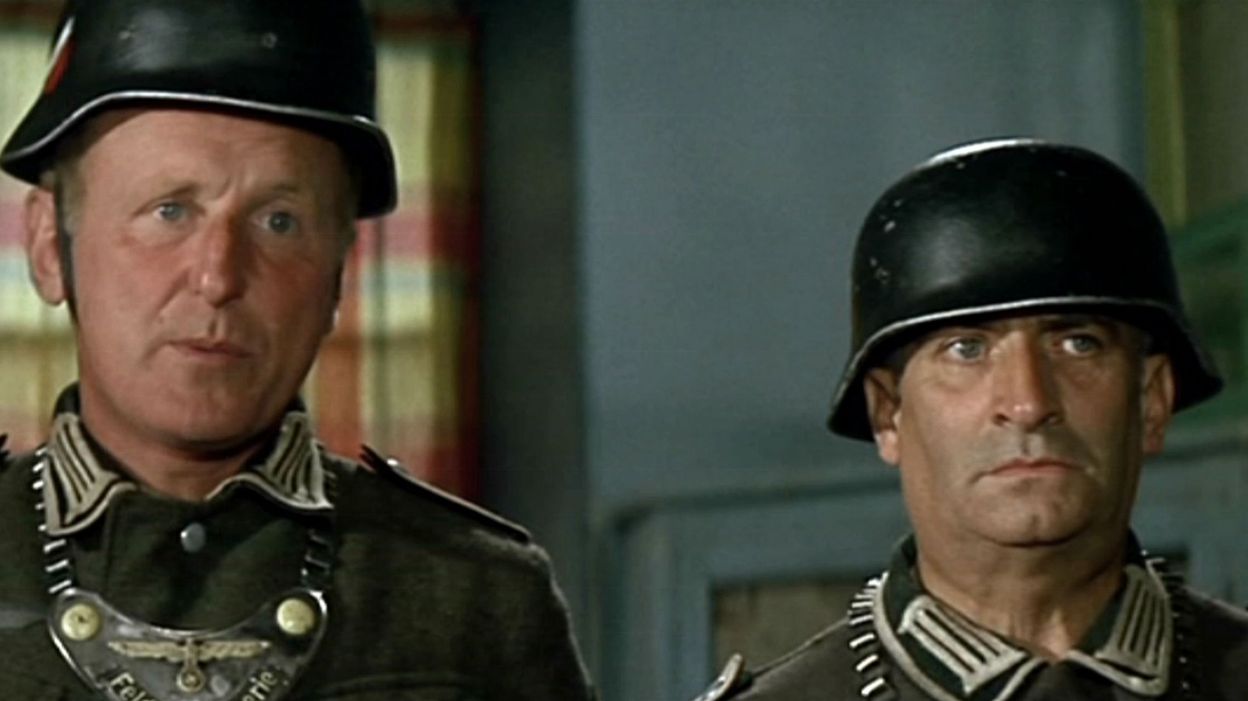
Terror becomes comedy with «La Grande Vadrouille».»
Cinema Wednesdays - Special edition: The coronary with Louis de Funès - Loris S. Musumeci
There wouldn't have been much to laugh about during the Occupation. And yet there was! One of the characteristics of comedy is to show reality while concealing its dramatic elements. There's drama when there's death; there's tragedy when there's transcendence; there's comedy when there's concealment. La Grande Vadrouille is one of the great cover-up films on the subject of the Nazi occupation of France during the Second World War.

What is comedy?
To conceal is not to reinvent, nor to lie. It's about looking the right way. Contrary to what you might think, comedy is the genre that needs to be the most meticulous. And modesty too. This is not understood by certain so-called comedians, cartoonists or humorists who make you want to shoot yourself rather than laugh. Uttering insanities is not comedy. Neither is gratuitous mockery, especially of the most vulnerable. Go and explain this to the good minds at Charlie Hebdo who have come up with tempting headlines, such as the one about Stromae's dismembered father, murdered with a machete during the Rwandan genocide, with the title «Papa où t'es? Go and explain it to fine minds like Dieudonné, who inflames his audience with »C'est quoi un Juif dans une chambre à gaz?« (What's a Jew in a gas chamber?).»
With La Grande Vadrouille, In a world gone mad with cackling, we're well protected from the excesses of a world gone mad with cackling. In addition to the assurance of the time, there's the assurance of Louis de Funès, who always refused roles he considered unbridled. And the assurance of the entire film crew, who in 1966 still knew what the Occupation was like, because they had lived through it. If they can laugh about it, let's laugh with them! But why do we laugh so heartily at this show, which was performed amidst persecution, tears, murder - in short, horror? Because this comedy, like so many others, respects the rules of the stage. ob-scène.
Concealment and selection
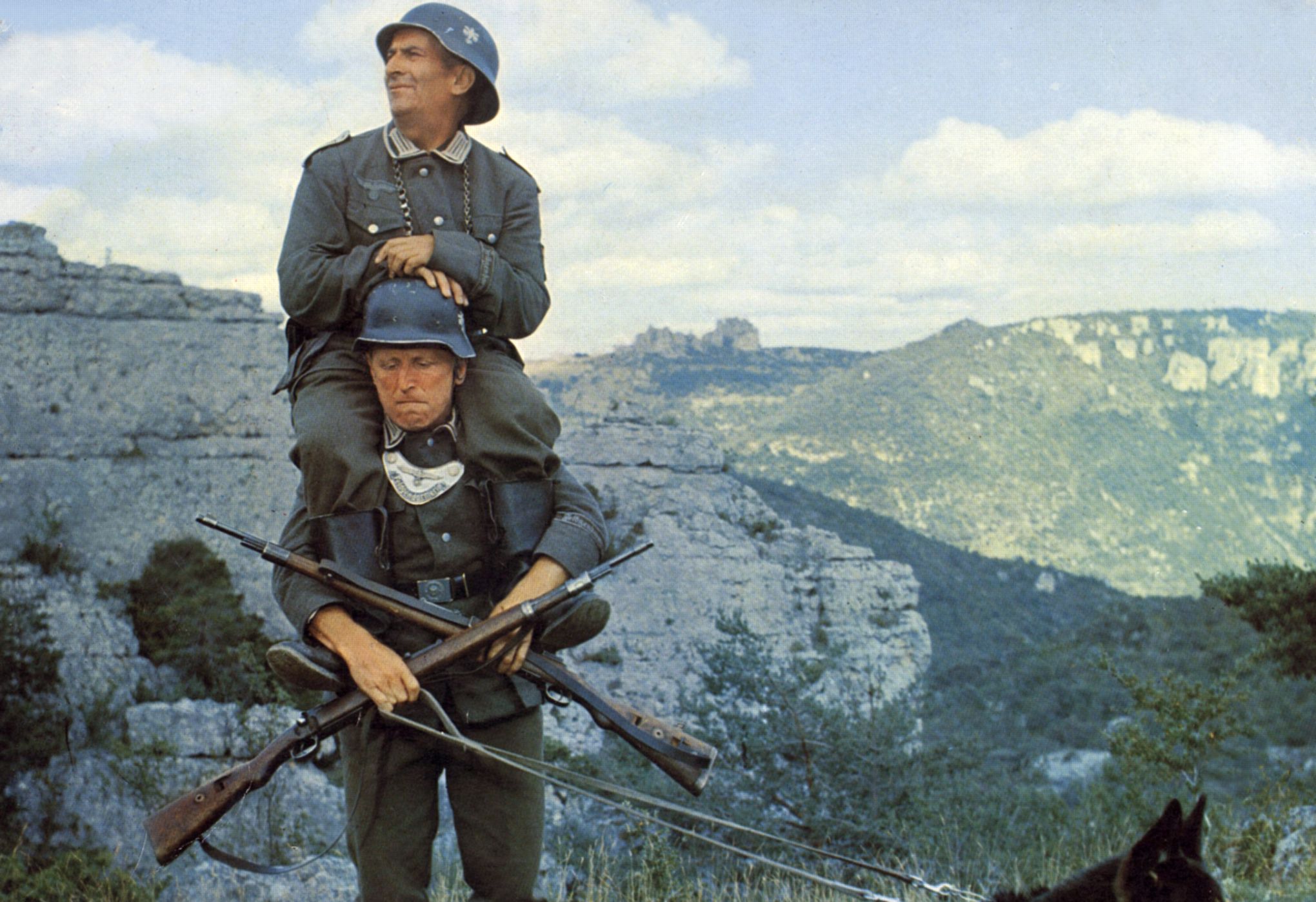
La Grande Vadrouille conceals, selects. It conceals the elements of a truly dramatic nature, namely death and raw violence. Right down to the smallest detail. When British soldiers set fire to the Stamm Nazi soldiers near the Free Zone, a shot shows us that just before they flee, they cut the rope with which they had tied up some German soldiers. In this way, the viewer doesn't have to worry about their deaths, nor does it hinder the adventure in any way, because no sooner have they freed them than they're already out of the picture. Or when the squinting Nazi soldier, struggling to aim, bombs a German plane rather than the good guys', a single shot again shows the German airman parachuting away. And the plane crashes unharmed.
La Grande Vadrouille selects. That's not to say that she only wants to show what's pretty-pretty-rigorous during the Occupation. No, in fact, nothing is really cute in this context. Under Gérard Oudry's watchful eye, the film strikes a balance between the dose of adventure and adventure that suits the plot and the burlesque elements. The result is a wholesome, clean, funny, entertaining and successful film with a cult following.
The elements of burlesque are drawn from the vices and negative traits of the characters. Not necessarily morally negative, mind you. Burlesque can be drawn from a difficult situation, a flaw, a certain clumsiness or a stroke of bad luck. As a result, the two main characters, the orchestra conductor Stanislas (Louis de Funès) and the house painter Augustin (Bourvil), are mostly funny for their clumsiness and character traits - the dreamy naiveté of Augustin, and the easy-going choleric outbursts of Stanislas.
Ja, ja, ja!
But it's in the Nazis - or in Augustin and Stanislas' imitations of Nazis - that we find the greatest source of comedy in this play. This, incidentally, is what made La Grande Vadrouille always so funny, never tiresome. The Nazis are the embodiment of terror, but selecting their ridiculous characteristics, the film turns them into buffoons. Terror becomes comedy. Leu(r) manièèèrr te z'exprrrimer en französich notamment est très très riticulé, alo(rs) nous riré peaucoup!
Or when Bourvil and de Funès imitate them in their ill-fitting SS uniforms, which is hilarious because they retain only the most ridiculous Nazi features in their imitation, i.e. their robust, falsely refined allure as they spout «Ja, ja, ja» with a smile or «Heil Hitler!» with a stick up their ass, or when they scream incomprehensibly to make a point. as if. The comedy is both behavioral and linguistic. Where does this widespread comic usage of shouting a Germanic-sounding language to imitate the Nazis come from? Nazi military language. As supermen, soldiers have to shout, even if nobody understands them.
La Grande Vadrouille, a comedy that purges. Comedy that liberates. A comedy that ridicules the executioners while respecting the victims. A comedy that pays homage to those who fought in the Resistance. A fine comedy by Gérard Oury, born of intelligent, demanding work on the script. A comedy that sees the shock duo Bourvil-de Funès for the second time. A comedy in which «Heil Hitler!» no longer makes you tremble, but laugh.
Write to the author: loris.musumeci@leregardlibre.com
Photo credit: © Archives du Septième Art
You'll also like

 French
  German
  English
Leave a comment