




«The Shape of Water: reveries of the invisible
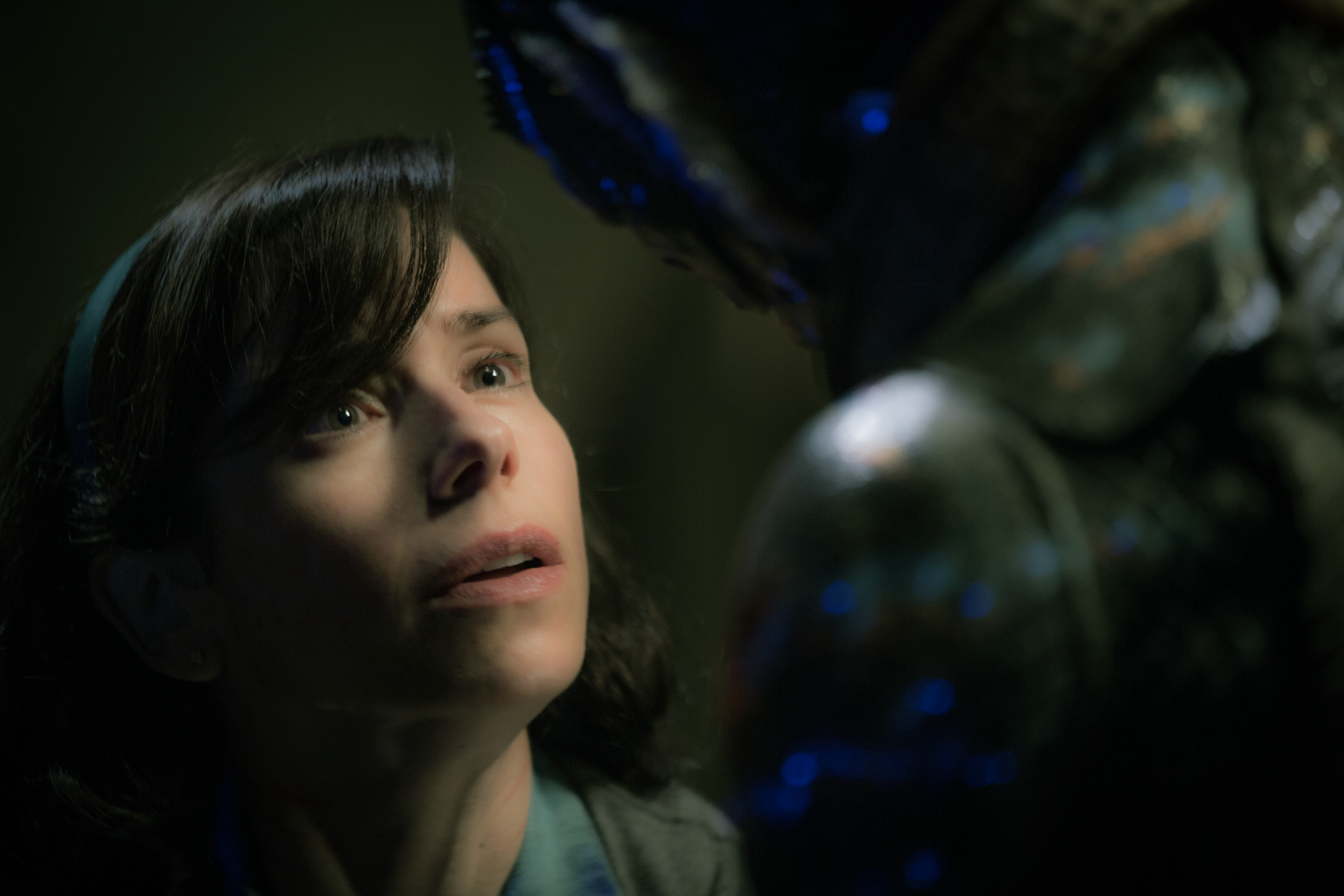
Sally Hawkins in the film *The Shape of Water*. Photo by Kerry Hayes. © 2017 Twentieth Century Fox Film Corporation. All Rights Reserved.
Cinema Wednesdays - Hélène Lavoyer
«Unable to perceive your form, I find you all around me. Your presence fills my eyes with love and humbles my heart, for you are everywhere.»
Elisa's (Sally Hawkins) day-to-day life is characterized by a meticulous routine and a solitude broken by the words of her two friends - her next-door neighbor Giles (Richard Jenkins) and her colleague, Zelda (Octavia Spencer), whom she meets late every day at the Baltimore government laboratory where they scour the day.
But the monotony with which Elisa seems to have come to terms—silent because of her muteness—is shattered by the arrival of the new American «asset» (Doug Jones), closely followed by his captor Richard Strickland (Michael Shannon) and Dr. Robert Hostettler (Michael Stuhlbarg). Chained in a saltwater pool far from his native Latin America, tortured by Strickland’s indifference and fear of otherness, the asset and the voiceless woman bond without words.
Soon, the amphibious creature—which no one but Elisa understands—is destined to die. But that’s without counting on the efforts of his beloved, who, through the power of her gestures and the strength of her love, will persuade Giles and Zelda to help her save him.
With continued support from Dr. Hostettler, an undercover Russian scientist, all these unique and solitary beings will rescue the phantasmagorical fish-man from his house of torture. In Elisa’s cramped bathtub, still hunted by the vile Strickland, the beautiful creature will taste the sweetness of love and glimpse the possibility of existing without his difference causing her to look away. As for her, she will find in him the joy of knowing that her silence will not erase him.
Image, sound, a dream
Guillermo del Toro didn't win an Oscar for superficial reasons. The director's attention to detail in both the visuals and the soundtrack manages to captivate the eyes, the ears, and the gut.
Bathed in a sea-green hue, the line between dream and reality disappears; from an opening that draws the viewer in to a poetic and tender conclusion—from eggs hardening in simmering water to the crunch of Strickland’s candies—every detail is meticulously crafted.
Furthermore, for a film so decidedly romantic, some might expect saccharine serenades. But French composer Alexandre Desplat—winning his second award—offers us a captivating musical world of remarkable diversity, keeping us on the edge of our seats and lending the film a great deal of personality.
Any regrets?
Beyond even the director’s imagination—or the way he managed to bring it to life on screen—these unique and solitary characters come together to form a very cohesive and diverse ensemble. Thanks to their personalities, which are all very different from one another, a beautiful sense of camaraderie comes through on screen.
However, despite the seemingly deliberate caricature of certain aspects of a particular American «culture» at that time, a few characters fall into the trap of stereotyping. Strickland, in his role as a ’hateful Yank,« is one example. Perhaps this is the only criticism worth making.
Write to the author: [email protected]
Photo credit: © Twentieth Century Fox
You'll also like





 French
  German
  English
1 comment
Long before the movie came out, I had a dream in which the blue creature was the opposite—that is, a woman. At theAt the time, I was writing this poem, addressing the Lord and lamenting all the injustices of this world. And then, mysteriously, when the movie came out—which resembled my dream—I came to believe in the existence of God. We cannot give Him a form, but He is among us. For me, I had my answer.
Leave a comment