
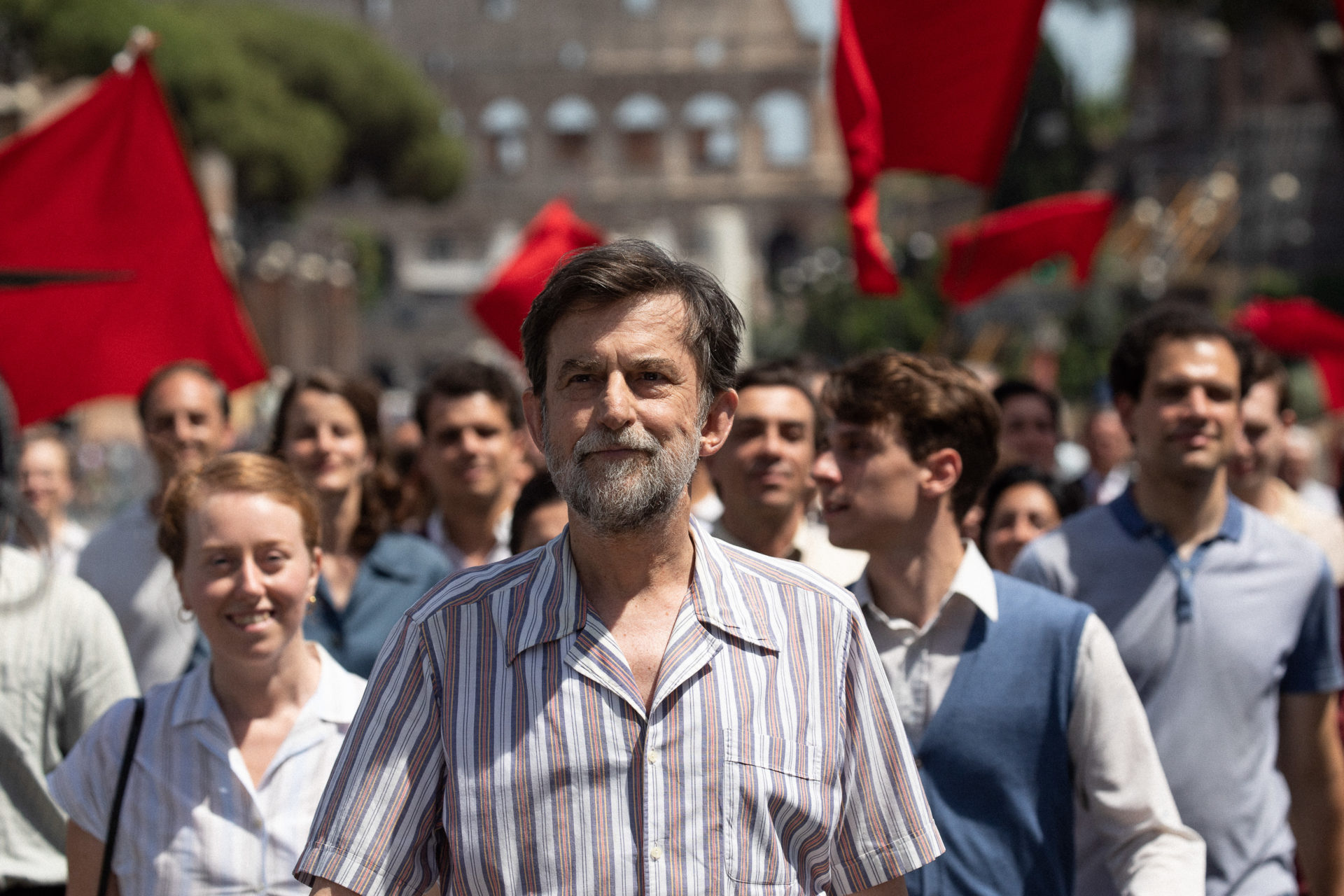
Fifteenth feature film by Nanni Moretti, Towards a bright future serves as a testamentary film. Beneath its false air of comedy, the film turns into a laborious lesson in cinema. But can you blame Moretti for doing Moretti?
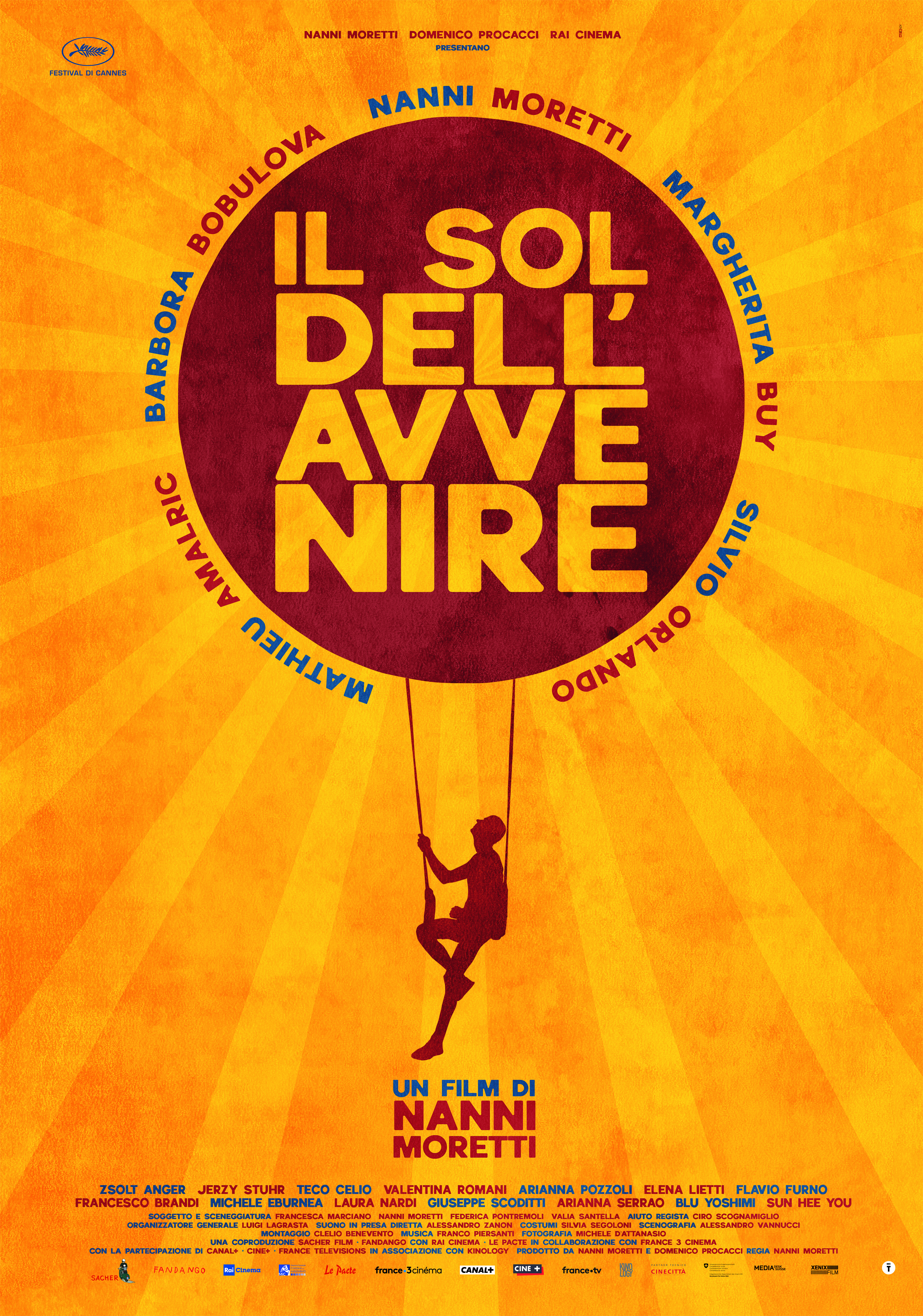
Thirty years earlier Diary, Nanni Moretti's most personal work. Director, actor and man became one. On the film's cover, we see him from behind on his Vespa. Thirty years later, Moretti is from the front on an electric scooter. He swaps Italy's iconic national symbol for a standardized, globalized means of locomotion. If Diary, While the title of the first film left no doubt as to its intimate, not to say navel-gazing, the second is a trap for the viewer, who expects a comedy and finds himself taken hostage by the verbose dissertations of a director at the end of his career.
Towards a bright future features Moretti's double: Giovanni. The latter is about to make a film about a historical period in Communist Italy, a period of which he is a great nostalgic. A process already used in The Caiman (2006), the filmmaker returns to the mise en abyme: a film within a film. What follows is a back-and-forth between the story of the film and Giovanni's existential concerns. His wife wants to leave him, his daughter is neglecting him, his lead actress has a mind of her own, and his producer is over-indebted and desperate to land him a Netflix appointment that he loathes. In addition to these boring, hackneyed subjects, the filmmaker inflicts on us, in a heavy display of self-mockery, the comments of a man consumed by nostalgia. All of this is interspersed with musical pauses where the actors, for the time being, reunite in a choir.
Ego-trip
For neophytes unfamiliar with Morettian cinema, Towards a bright future is an ordeal. For the insider, the ordeal was predictable. The filmmaker has always nourished his films with his personal life. Director, actor and man regularly come together as a single unit, sometimes playing with his own children, or in his real apartment. His radical subjectivity and «first-person» cinema make Moretti a unique filmmaker. Since the 2000s, the filmmaker has established a greater distance between himself and his fictional subjects. Dramas such as The son's room (2001) or, more recently, Tre piani (2021). He even tried his hand at the documentary genre in 2018 with Santiago, Italia. Too little known, the subject of this work was Italy's role in welcoming Chilean political refugees after the coup d'état against Allende.
Moretti, when he moves away from self-fiction, can be good. In short, inhibiting Moretti gives rise to something other than Moretti. Alas, Towards a bright future is nothing more than a camera filming the navel of a director with nothing left to say. With his voice-over «in the field and out of the field», as he puts it, the tone, once judiciously moralistic, becomes moralistic. Comedy is merely a cover-up: Moretti is in fact imposing a lesson in cinema. When he's not cutting his actors off, he's invoking some of cinema's great masters - Kieślowski, the Taviani brothers, Fellini, among others - in pompous monologues. The presumed comedy turns into a didactic exercise we'd gladly have done without.
A sun that won't set
Moretti was always a good moralist, because he always managed to articulate the individual subject with his political, family or religious environment. Juggling private and public, political and existential questions, he manages to capture and reveal the masks of an individual torn between his or her desires and a larger generality - the Party in Palombella Rosa (1989), the Church in Habemus Papam (2015) or the family in The son's room.
Towards a bright future opens with an observation of the gap between Giovanni and those around him. One of the first scenes shows a young man at a shooting meeting expressing surprise that Italy had a Communist past. During the meeting with Netflix, the production company demands a «what the fuck» moment; his wife is now producing films of gratuitous violence. In short, Giovanni sees that the world has changed. Without him. Numerous close-ups of his bewildered face frame this painful realization.

But that's where the film draws its strength. Many authors could have gone down the reactionary route. But Moretti chooses the path of unbridled idealism. The ending opens with an uchrony: the triumph of communism. In other words, the triumph of his old dream already mentioned in Palombella Rossa. «Il sol dell'avvenire» became his political slogan. He carries his ideal to the end, even bending the neck of historical reality to see his dreams materialize. Even if no one listens to him anymore, Moretti will continue to sing.
Towards a bright future, It's also a global observation of the death of free auteur cinema in the face of giants like Netflix, whose creative standardization he deftly mocks. Moretti's great quality lies in his refusal to compromise and his constancy. The filmmaker has always refused the mafia financing of the Berlusconi family, and has safeguarded his independence through his own production company, Sacher Film. Moretti's utopia of true auteur cinema is one he has lived up to. As painful as it is to watch, Towards a bright future is the testamentary film of a director who has never ceased to be radically himself, while others strive to ride the wave of soft consensus. Even in the twilight of his career, Moretti is the red sun that won't set.
Write to the author: alice.bruxelle@leregardlibre.com
You've just read an open-access editorial. Debates, analysis, cultural news: subscribe to support us and get access to all our content!
 French
  German
  English